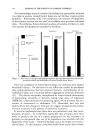
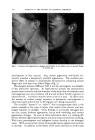
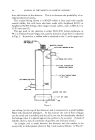
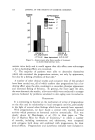
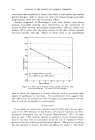
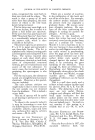
CEMENTING SUBSTANCE OF HUMAN HORNY LAYERS 115 anol. It was insoluble in acetone or ether, but dissolved in a mixture of alcohol and ether. It was miscible with perhydrosqualene, but not with squalene.* Its melting point was about 55øC. These physical properties clearly distinguished this lipid from sebum. Chemical analyses indicated the presence of protein. The free amino nitrogen was increased after hydrolysis, as further proof of protein. The lipid component contained considerable amounts of phosphorus, released upon hydrolysis or after charring. Choline was present in all specimens. Most interestingly, small but significant amounts of combined hexosamine occurred in all specimens. The areinc sugar was released on hydrolysis only. Preliminary data strongly suggest that there are marked qualitative and quantitative differences between the lipoproteins isolated from callus and some pathologic horny layers. DISCUSSION The analytical data indicate that the alcohol-soluble component of ether- treated human horny layers is a glycolipoprotein or glycoproteolipid, with phospholipid in the lipid portion. It appears that the cementing substance of the stratum corneum, as it occurs in situ, is a complex molecule which cannot be extracted in toto with common solvents. It seems that water, preferentially, extracts the mucopolysaccharide and protein fractions, alcohol the lipid and protein fractions with traces of the mucoprotein, while chloroform solubilizes the lipid component. Therefore the extracts contain various fragments of the "cement" and the total picture will have to be assembled from these components. Potysaccharide-protein complexes have been isolated from whole skin of guinea pigs and rats (8). These com- plexes represent primarily dermal components, but may give us an insight to the types of compounds that can be expected to occur in the epidermis. More recently, the composition of the phospholipids in human epidermis has been subjected to a detailed study by Swedish authors (9). The lipoprotein acts as a cementing substance, as tested by measurements of flow rates through standardized columns of powdered horny layers. In a previous study (10) we found that the flow of liquids through pathologic scales was greatly retarded and could not be lowered to normal values by pretreating the scales with water or "keratolytic" agents. However, when pathologic scales are first extracted with water, then with alcohol, the flow rates become normal, indicating complete or almost complete removal of the "cement" (Fig. 1). Isolation of this tipoprotein from horny layers has significance for derma- tologic research workers, clinical dermatologists and cosmetic chemists. * Squalene and perhydrosqualene (Robane©) were obtained through courtesy of Robeco Chemicals, Inc.

116 JOURNAL OF THE SOCIETY OF COSMETIC CHEMISTS For dermatologic research workers the finding that presumably defatted (i.e. ether or acetone treated) horny layers are not fat-free, creates certain problems. Fortunately, with a few exceptions, the amounts of lipoprotein in the stratum comeurn are too small to invalidate most previous analytical data. Nevertheless, future chemical analyses of keratins will have to take into account the lipoproteins attached to the fibers. Ether-extracted Ether-alcohol extracted CALLUS SQUALENE PERHYDRO- SQUALENE PSORIASIS #1 PSORIASIS •2 SQUAI.,ENE PERI IYDR O- SQUALENE PERHYDRO- SQUALENE Figure 1.--Flow rates of squalene and perhydrosqualene through ether-extracted and alcohol- extracted normal and pathologic pulverized human horny layers. From the standpoint of clinical dermatology, our chemical data support Swanbeck's theory. On the basis of x-ray diffraction studies he postulated that scaling dermatoses had two common features: crystallization of in- terfibrillary lipids and a resulting deficient aggregation of keratin filaments (11). This theory was greatly strengthened by recent clinical observations of keratinizing anomalies in patients taking large doses of triparanol (MER-29), a hypocholesteremia pr•oducing agent, which prevents the con- version of desmosterol to cholesterol (12). Reversible hair loss and ichthyosiform skin changes in these persons suggest disorganized formation of horny structures in the absence of cholesterol synthesis. It must be emphasized that these data are preliminary and their inter- pretation tentative. It is therefore regrettable that attempts have been made to promote the use of a topical preparation for the treatment of psoriasis, on the ground that one of its ingredients was miscible with the lipoprotein of the scales. Chemical findings cannot be simply converted to clinical data. In this instance, controlled double blind studies have clearly
Purchased for the exclusive use of nofirst nolast (unknown)
From: SCC Media Library & Resource Center (library.scconline.org)