ULTRAVIOLET ABSORBERS AS STABILIZERS IN THE COSMETIC INDUSTRY By M. R. LEBowrrz and F. B. L^NE* Presenled December 4, 1962, New York Cily ABSTRACT Ultraviolet radiation is primarily responsible for the degradation in sunlight (and in fluorescent light) of many chemicals, plastics, oils, fats and colorings. In the cosmetic and pharmaceutical industry this degradation is of great concern, and it is necessary to use stable broadly absorbing ultraviolet absorbers in order to protect both the product and the substrate such as skin, hair, etc. Ultraviolet absorbers of the type currently used in suntan lotions are not satis- factory for use as stabilizers in preventing degradation. They are purposely designed to absorb in a narrow range (not above 310 to 320 millimicrons) and have rather poor light fastness. To date, only three classes of compounds have been found which are strong UV absorbers and are stable in a compatible medium. These classes are: (a) 2-hydroxybenzophenones (including salicylates) (b) 2-hydroxy- benzotriazoles and (c) substituted acrylonitriles. Most colors used in the cosmetic industry do not have a high degree of stability under the influence of UV and visible wavelengths (350 to 450 millimicrons). Ac- cordingly, stabilizers, which absorb strongly in this region, are necessary to protect cosmetic products. Factors influencing the choice of a suitable absorber for use as a stabilizer in any specific application are discussed. In addition, methods of use and the latest available absorbers are reviewed. ULTRAVIOLET (UV) radiation, though comprising only 5% of the radiant energy reaching sea level from the sun, is chiefly responsible for the degradation of many chemicals, plastics, oils, fats, colorings, perfumes, etc. Of course, it should be recognized that there are other sources of degrada- tion besides UV light, such as oxidation, heat and ordinary visible light. Since a UV absorber will protect only against UV degradation, often a com- bination of stabilizers is necessary to satisfactorily safeguard a product. However, UV light is in many cases the major cause of degradation. It can either initiate a decomposition that then proceeds by another mecha- nism such as oxidation, or it can be absorbed as UV energy and be directly responsible for the decomposition. In both types of degradation, a proper UV stabilizer will prevent this de- composition to a large degree. Members of the cosmetic and pharmaceuti- * Arttara Chemicals, Acetylene Chemicals Dept., Div. General Aniline & Film Corp., New York 14, N. Y. 217

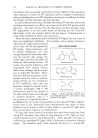
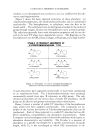
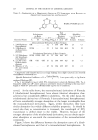
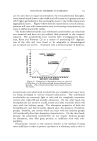
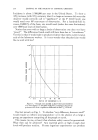
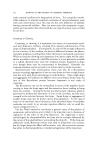
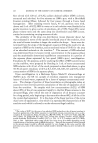
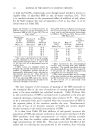
218 JOURNAl. OF THE SOCIETY OF COSMETIC CHEMISTS cal industry who are greatly concerned over the stability of their products when exposed to sources of U¾ radiation, such as sunlight or fluorescent tubes, are finding the use of U¾ absorbers convenient as stabilizers for both the product and the substrate, e.g., hair and skin. It can be demonstrated that a broadly absorbing UV absorber, when used in proper concentration in a filter, can screen out all of the UV portion of the spectrum. It is then obvious that the ideal way to protect products from UV degradation is to have some means of filtering out all of the UV light before it hits the material which will decompose. Unfortunately, it is not always possible to achieve this in practice. There are many substances which will absorb UV light, but only a few of them are satisfactory stabilizers. For example, many organic substances will absorb UV light, but practically all of these will be decomposed by U¾ energy. Some substances, such as optical brighteners, are very strong absorbers of ultraviolet radia- tion but convert this energy into visible light and thus are stable for relatively short periods of time. Of course, the cosmetic industry is well acquainted with suntan lotions, which were amongst the first prod- ucts to utilize UV absorbers. How- ever, the chemical structures of com- pounds currently used in ordinary suntan lotions are not satisfactory as UV stabilizers, since they are purposely designed to absorb witlain a narrow wavelength (290 to 310 millimicrons) and do not absorb in the region which causes most damage to cosmetic products. Also, it is not necessary, as reported by Gantz STABLE ULTRAVIOLET ABSORBERS OH R2 Hydroxybenzophenones HO Hydroxyben zot rlozoles R2• / C=N C= C Substituted Acrylonltriles Figure 1.--Basic chemical structures that are strong UV absorbers and stable to long exposure to UV light. and Roberts (1), for suntan type absorbers to have good UV light stability. Actual tests in our laboratories have demonstrated that many of these products lose as much as 50% of their ability to absorb UV light after only several hours exposure in a Fadeometer. To date, only three chemical structures have been found which are both strong UV absorbers and stable to long exposure to UV ]ight t(at ]east several hundred hours in the Fadeometer). These absorbers function as stabilizers by absorbing UV light, which is dissipated as harmless infrared energy. The absorber itself, when properly dissolved in a compatible
Purchased for the exclusive use of nofirst nolast (unknown)
From: SCC Media Library & Resource Center (library.scconline.org)