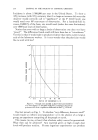
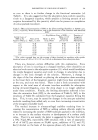
PROPOSAL FOR TOXICITY-TESTING OF DRUGS 23l toxicity in his experimental animals at some outrageous dose level, does this imply that the drug is not useable, at all ? I would like to give the suggestions, with some minor modifications, of a colleague (8). Consider the idea of"virtual safety." That is, if you could find a dose level which would produce a defined toxic response in say 1 in 100,000,000 would you accept this as "virtual safety ?" I do not particularly like a fixed level, because I think costs must be related to the illness or con- dition for which the drug is to be used. "Virtual safety" for an anti- cancer drug may be at the level of 1 in 100 (or higher, perhaps). "Virtual safety" for a decorative cosmetic may have to be set at less than 1 X 10 -8. However, if we can agree that a concept such as "virtual safety" is ac- ceptable, recognizing that it may be operationally different for every dif- ferent material examined, we may be on the way to a realistic experimental determination of a "safe" dose. The determination of "virtual safety" might have to come about as a result of a bargaining process between Carson (9) and Eckardt (10) or other such equally involved people. It is something that one would hope reasonable people working with each other could agree upon. Perhaps a third party might be necessary. In general this is the procedure: Take the existing experimental data. Say that at some fixed dose, N• persons have been observed, and that n• have shown the toxic signs we are concerned with. Find the Pu (read as "p, upper") value of a proportion, p, which could experimentally have given n•/N• as its lower 99% limit. (For example if N• = 100, n• = 0, then a little algebra shows pu = 0.045.) From this value ofp• extrapolate down- ward a response curve with a suitably shallow slope. Mantel (8) suggests a linear dose response curve with a slope of one probit (one normal deviate per tenfold dilution). For this configuration the "virtually safe" dose (at a level of 1 per 100,000,000) is 1/8300 of the dose at which there were 0/100 toxic responses. The larger the experiment (which shows n• = zero toxic responses) the higher the "virtually safe" dose will be. By a rather ingenious handling, Mantel also shows how data from several experiments can be combined and how results where there is some observed risk (including "natural" re- sponse) can also be used. Here is a procedure that makes sense. It recognizes that guarantees of absolute safety are impossible. It makes no demands for "proof" where proof is impossible. It aims for goals that reasonable men can agree upon. It does require facing the real issue of costs versus gains, to set these goals. These are subjective, and they embody value judgments. We cannot es- cape them except in scientific sterility. This leaves at least one more problem. What does one do when the "virtually safe" dose turns out to be much lower than any possible thera- peutic dose? Here, I would join the American Medical Association (if they

232 JOURNAL OF THE SOCIETY OF COSMETIC CHEMISTS would have me) and say, "Don't use it." Here we must be like Caesar who, when asked why he parted with his wife because of gossip about her be- havior, replied, "I wished my wife to be not so much as suspected" (11). (Received December 4, 1962) REFERENCES (1) Drug for Appetite is Banned in Italy, New York Times, November 25, 1962. (2) Italy Bans Use of Drug Tied to Deformities, Washington Post, November 24, 1962. (3) Five Nations Act to Bar Drug Deformities, Washington Post, November 27, 1962. (4) "The Soft Sell," New EngL y. Med., 267, 1098 (1962). (5) A.D. Blackader, Can. Med. Atssoc. y., 2, 872 (1912). (6) "Experimental Medicine," Brit. Med. y., ! 108 (1962). (7) J. Cornfield, personal communication (1960). (8) N. Mantel and W. R. Bryan, 7. NatL Canceroenst., 27, 455 (1961). (9) R. Carson, Silent Spring, Houghton Mifflin Co., Boston, 1962. (10) R. E. Eckardt, Cancer Research, 22, 395 (1962). (11) Plutarch, Lives (as translated by John Dryden and revised by Arthur Hugh Clough), The Modern Library (Random House, Inc.), New York.
Purchased for the exclusive use of nofirst nolast (unknown)
From: SCC Media Library & Resource Center (library.scconline.org)