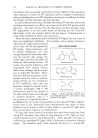
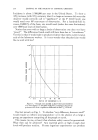
ULTRAVIOLET ABSORBERS AS STABILIZERS 223 an outside filter is usually more efficient than direct incorporation. No matter which method is used, a number of factors determines the choice of stabilizers. Unfortunately no single stabilizer has yet been found that will solve all problems, so a specific stabilizer has to be chosen for each particular application. The following factors should be kept in mind when deciding which absorber to use: 1. The ultraviolet wavelength to which the product is sensitive--In the case of cosmetics this is usually in the area of 350 to 4:50 millimicrons. Ac- cordingly, an absorber is necessary that will absorb strongly close to the visible, and even partly into the visible region. This is particularly im- portant because most colors which are Absorption of 2, 2'-dlhydroxy-4,4' dimethoxybenzophenone, 0.025 g./liter 6O $0 -- •:30 I½ 3 0 0 •0 4 O0 W.welen½ilh Figure 5.--Shift of absorption curve toward the visible with de- creasing polarity of solvent. permitted by federal regulations do not have a high degree of stability in the presence of UV and visible wavelengths. These colors degrade rapidly in the region close to the visible, and accord- ingly an absorber with peak absorption as close to the visible as possible is de- sirable. 2. Solubility--In order for an ab- sorber to act effectively as a stabilizer it has to be soluble in the system in which it is used. The type of solvent used will also affect the absorption curve of each absorber. The curve is shifted toward the visible in going from a polar solvent to a nonpolar solvent, the effect being most marked in the case of 2,2'-dihydroxy-4,4'-dimethoxy- benzophenone. Figure 5 shows the curves of this absorber in a polar sol- vent, such as methanol, and in a less polar solvent, such as toluene. A suggested explanation for this unusually large shift is that in toluene this compound assumes a completely co-planar (and therefore more conjugated) configuration. In hydroxy solvents, one chelate ring is broken by chelation of the carbonyl of the absorber with the hydroxy solvent. In addition to this effect on absorption characteristics of the solvent, if the absorber is not dissolved in the system, it will not func- tion as a stabilizer. In fact, if the absorber precipitates out of solution or exudes out of a fihn it is very rapidly degraded and will last only a very short time (4). On the other hand, if it is soluble, it can last for very long periods

224 JOURNAL OF THE SOCIETY OF COSMETIC CHEMISTS of time without decomposition. Absorbers that are soluble in different solvents, including water are commercially available. 3. Compatibility--The absorber has to be compatible with the ingre- dients of the system. If it reacts with the materials in solution, it may lose its efficiency. For example, alkaline pH will reduce the efficiency of hydroxybenzotriazoles and hydroxybenzophenones. If the absorber is used in a coating on a glass bottle or in a plastic film or bottle, the absorber must be compatible with the polymeric material used so that it does not exude out of the film. Moreover, the thermal and chemical stability of the absorber must be taken into account for any specific conditions the product may meet. 4. Concentration--In order to stabilize effectively against UV degrada- tion, a certain minimum concentration of absorber is necessary. This con- centration varies with the thickness of the material in which the absorber is incorporated. In the case of clear solutions, low concentrations by weight are often satisfactory, because of the large amount of absorber present throughout the depth of the bottle. In the case of thin coatings, higher concentrations of absorber in the coating are necessary because of the rela- tively thin layer of film. In addition to the above most important factors, very often color of the absorber and, of course, toxicity or dermatological effects of the absorber are also critical. Gantz and Roberts (1) reported most of the commercially available absorbers do not cause skin or eye irritation and have low orders of toxicity under ordinary use conditions. These absorbers appear to be satisfactory for topical applications, since they do not cause skin irritation in effective concentrations. Regarding color, it should be realized that the closer to the visible presently available stabilizers absorb, the more yellow they may appear. In addition to protection of the product, the cosmetic chemist is often interested in protecting a substrate, such as natural hair, dyed hair, skin, etc. All these materials are sensitive to UV light and can be protected from UV degradation with the proper use of UV absorbers. Of course we all know of the effects of UV light on skin, and recent medical work by Knox (5) and others in this area has demonstrated that UV light is the major cause of skin aging, wrinkling and possibly even skin cancer. These workers (6) have urged the use of broadly absorbing UV absorbers, such as discussed in this paper, in everyday cosmetics in order to continually protect the skin against U¾ radiation. Knox (7) demonstrated that 3-benzoyl-4- hydroxy-6-methoxybenzene sulfonic acid was the most effective absorber in preventing this degradation. The reason for the efficiency of this absorber may be that it is substantive to skin and thus gives a greater amount of coverage and protection. In fact, Rose and co-workers (8) found that this same absorber was most effective in preventing the yellowing of wool by UV
Purchased for the exclusive use of nofirst nolast (unknown)
From: SCC Media Library & Resource Center (library.scconline.org)