PARAMETERS OF EMULSION STABILITY 237 nique exacting. The nature of the rate-determining step in the process is not yet established, whether it be rate of coalescence of drops, with the larger ones then moving upward, the rate of coalescence of the drops with the bulk oil phase, or the rate of transport of the drops through the creamed emulsion--the last certainly not describable in terms of Stoke's law. Most serious, however, is the difference in physical state between the "emulsion" present in the ultracentrifugal field and the original emulsion as it would exist in a container after preparation. In the ultracentrifuge the flocculated emulsion contains only trace quantities of water, which shows that the original spherical drops have been deformed to a space-filling shape. This may account for the relative insensitivity of the rate of sepa- ration of free oil--here defined as the ultracentrifugal stability--to the size distribution of the drops. Despite the absence of measurable quantities, some water does remain in thin lamellae in the flocculated emulsion in the ultracentrifuge so preserving the identity of the dispersed oil "drops," as shown by the opacity of the system, its coloration in the presence of Orange II, and its ease of redispersion to give an emulsion containing a proportion of fine drops of the same size as those in the original emulsion (2). This difference in state, however, implies that the results ofultracentrif- ugal analysis cannot be used directly to predict the behavior of a natural emulsion where both fiocculation and coalescence properties may be im- portant. Before use in this fashion it will be necessary to carry out careful shelf tests of considerable duration in order to establish some empirical cor- relations. But the ultracentrifugal method can yield a quantitative meas- ure of the effect of changes in operating variables such as the method of emulsification, the concentration of the emulsifier, the effect of addition of electrolytes, etc., and so help to identify what the rate-determining proc- esses are from a fundamental point of view. This understanding can then be applied qualitatively and semi-intuitively to the still more complicated practical situations. Ultracentrifugal Technique The method of using the ultracentrifuge to study the rate of separation of oil from oil-in-water emulsions has already been described (4, 5). In order that results on different emulsions should be truly comparable, the equilibrium concentration of emulsifier in the aqueous phase must be the same after emulsification of the oil and water. This necessitates prepara- tion of emulsions having the same drop size distribution, since otherwise dif- ferences in adsorption due to the differing interfacial areas will result in dif- ferent final states even though the initial compositions were the same. This is possible only if the initial emulsion is always prepared using the same mechanical homogenization of the same volumes of oil and water and a constant concentration of emulsifier. In our work 150 ml. of Nujol was

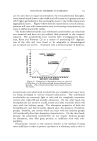
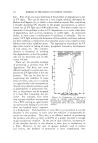
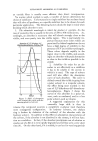
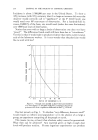
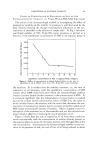
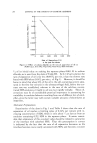
238 JOURNAL OF THE SOCIETY OF COSMETIC CHEMISTS first stirred with 120 mi. of 0.2% sodium dodecyl sulfate (SDS) (solvent- extracted and salt-free) for five minutes at 5000 r.p.m. with a Brookfield Counter-rotating Mixer, followed by four passes through a Cenco hand homogenizer. After standing twenty hours, 45 ml. portions were with- drawn and 5 ml. of 0.2% SDS in water or in salt solution were blended in by gentle inversion to give a series of emulsions, all of 50% Nujol-50% water phase volume ratio and the same drop size distribution and SDS concen- tration but containing varying amounts of salt. The similarity of the drop size distribution (mean diameter about 3u) was evaluated in terms of the specific interfacial area of the emulsion, since the total oil-water interface is larger the smaller the drops. Areas were de- termined from the slope of the Langmuir equation fitting the results for ad- sorption of SDS at the interface, and an assumed value of 50 3x 2 for the area of an adsorbed molecule at the interface.* The amount of SDS adsorbed was determined from its known initial concentration in the aqueous phase and the analytically determined equilibrium concentration in a portion of the aqueous phase separated by low speed (5000 r.p.m.) centrifugation. Emulsions for this purpose, and for studying the effect of SDS concentration on the stability, were prepared by blending in 5 ml. of more concentrated SDS solution with 45 ml. of the stock, prepared as described above, to give 50-50 oil-water emulsions with 0.2, 0.3, 0.35, 0.4, 0.45, 0.5 and 0.6% initial concentration of SDS in the aqueous phase. Upon centrifugation in a Beckman Spinco Model E ultracentrifuge at 39,460 r.p.m. the 0.8 ml. sample of emulsion separates into transparent layers of oil and water, separated by a layer of opaque concentrated emul- sion. The change of position of these boundaries on photographs taken at successive time intervals permits calculation of the rate of separation of oil from the emulsion. On samples with low concentrations (0.2%) of SDS about 20% of the oil was separated rapidly in the first fifteen minutes in the ultracentrifuge, after which the rate of separation of oil became constant for a long period, only beginning to decrease after about 60% of all the oil in the system had separated. It is the slope of the linear portion of the curve of per cent oil separated rs. time which is a reproducible characteristic of the emulsion and which is referred to as the ultracentrifugal stability. * The value of 50• 2 for the area of an adsorbed SDS molecule at the oil-water interface is based on application of the Gibbs equation to interfacial tension-concentration curves as dis- cussed by E.G. Cockbain, Trans. Faraday Soc., 50, 874 (1954) F. van VoorstVader,]bid., 56, 1067 (1960) W. Kling and H. Lange, Proc. Second ]ntL Congress Surface A/ctivity, Butter- worths Scientific Publications, London, (1957), p. 295 A. S.C. Lawrence and O. S. Mills, ]bid., p. 200. Individual values range all the way from about 30 to 80• 2 depending on the concentrations ofsurfactant and of added electrolyte. Since all the numerical values reported in the present paper would be affected similarly by any change in the value used for this molecular area, none of the conclusions reached would be altered if this area were revised in the future.
Purchased for the exclusive use of nofirst nolast (unknown)
From: SCC Media Library & Resource Center (library.scconline.org)