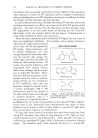
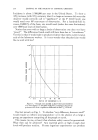
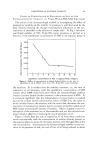
PROPOSAL FOR TOXICITY-TESTING OF DRUGS 229 people and illnesses being what they are, his incomplete evidence decisions usually turn out satisfactorily. The patient gets well and lives. Have this happen sufficiently often, and a man begins to get the feeling that he can intuit pretty well (and some can), and soon he may be willing to make decisions, to reach conclusions with incomplete evidence even when he does not have to and when he would be wiser not to. This becomes an occupa- tional illness and it should be treated as such--with care and kindness and not contempt. The physicians need help here, not snide remarks. In addition, the physician has several other problems that we can skirt. His laboratory animal is man, and as the British Medical •ournal recently wrote in a leader (6), quoting Bernard, "The principle of medical morality consists, then, in never performing on man an experiment which could be harmful to him in any degree whatsoever though the results may be of great interest to science--that is, of benefit to save the health of others." Since we lab types are anthropomorphic people and conceive of a God created in our own image, we are not restricted from experiments on mice, rabbits, guinea pigs, dogs, monkeys, etc., which could be harmful to them. The physician is limited. This limitation means that he must never test a new drug unless he is honestly and firmly convinced that it is at least as good on balance as the best existing drug. And he must come to a conclusion with a minimum experiment size. Under the Bernard proscription he certainly cannot test on man solely for toxicity. The problem raised earlier about the potential gains and losses, benefits and costs arises here again. Formal statistical decision theory, which is a common technique in "cost" problems, is ex- tremely difficult and perhaps impossible to apply here. Here we do not have a purely self-contained system. There are gains (or potential gains) to more than one party. There are losses or potential losses to more than one party. I do not know how one would balance the financial gains of a drug house against the physical, emotional and financial costs to a family with a deformed child. This is crudely put in the hope that it will make clear that the decision theoretic solution when the formulas are set down from the drug makers' point of view may be different from the decision theoretic solution arrived at by starting from the drug takers' point of view. In reporting the paper that appeared in the November 17, 1962, issue of the British Medical •ournal which said... "that two women who had taken Preludin gave birth to deformed babies," the New York Times (1) also re- ported that "Physicians said that it could have been a coincidence." And certainly it could have. How would one know? How would one go about finding out ? Figure 1 relates to this problem. It shows the results of computations (7) to find the sample sizes necessary to show an increased incidence of thyroid cancer. This is a rare disease, so the example may be extreme.

230 JOURNAL OF THE SOCIETY OF COSMETIC CHEMISTS Incidence is about 5/100,000 per year in the United States. To show a 50% increase (with 95% certainty that if so large an increase did occur the observer would correctly call it "significant" at the P 0.05 level) one would need over 106 man-years of observation. For a hundred-fold in- crease, 10,000 % of the base, one would need (under the same limitations) over 1000 man years of observation. Notice that even with so large a body of observation one does not have "proof." The differences found could still have been due to "coincidence." Yet this is what it would take to produce evidence that meets current stand- ards of the laboratory worker. Is it any wonder that the physician would like to work with less ? 5x•o • •r• 10 5 z O o_ 10 4 5 io z5 50 ioo RATIO OF INCIDENCE {-:1) Figure 1.--Sample sizes needed to show increased incidence of a rare disease (5/100,000) with 95% assurance that an ex- periment will show a significant difference at the P _ .05 level. One last remark on Fig. 1. To disclose "any difference, however small" would require an infinite sized population--or in the absence of so large a group, an experiment comprising all the people on earth. This means (to me, at least) that absolute safety cannot be guaranteed. What then can be achieved? Any material given at high enough dose levels will produce toxicity. If some ingenious experimenter can produce
Purchased for the exclusive use of nofirst nolast (unknown)
From: SCC Media Library & Resource Center (library.scconline.org)