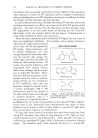
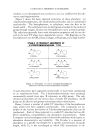
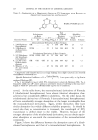
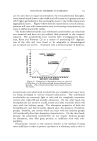
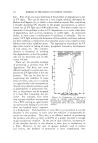
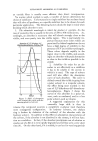
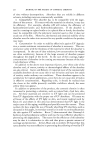
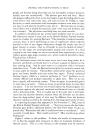
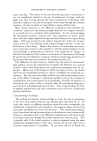
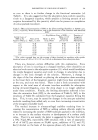
ULTRAVIOLET ABSORBERS AS STABILIZERS 219 medium, is not decomposed and continues to act as a stabilizer for the sub- stance requiring protection. Figure 1 shows the basic chemical structures of these absorbers: (a) 2-hydroxybenzophenones, (b) 2-hydroxybenzotriazoles and (c) substituted acrylonitriles. The benzophenones, or salicylates, were the first to be found useful. The salicylates have an alkyl group attached to the carbonyl group through oxygen, whereas the benzophenones carry aromatic groups. The salicylates generally have weak absorption properties and do not ab- sorb in the near UV where most degradation occurs. The R-groups on the benzophenones can be OH, alkoxy, halogen, or H groups, and a large number STABLE ULTRAVIOLET ABSORBERS OF 2 HYDROXYBENZOPHENONE TYPE 2,4 dlhydrozy -- HO 0 OH HO ON 2,2', 4,4' I,Irohydroxy -- 2 hydroxy,•,5 d,chlorO -- 2 hydroxy, 4 methoxy -- HO 0 OH ½H$0 0½H$ 2•dlhydroxy 4,4'd•melhOzy- so• 2 hydroxy, 4 melhoxy, 5 lulfo -- Figure 2.--Examples of various 2-hydroxybenzophenone derivatives that have been commercially available. of such derivatives have appeared commercially or have been synthesized on an experimental basis. The 2-hydroxybenzotriazoles were produced commercially several years ago R represents an alkyl group. The sub- stituted acrylonitriles are the newest class of stable UV absorbers the R group can be alkyl or aryl groups containing various substituents. Figure 2 shows a number of stable UV absorbers of the benzophenone type, which have been supplied commercially. The compounds are ex- amples of the various derivatives of 2-hydroxybenzophenone that can be synthesized. Each of these materials is a stable UV absorber but has dif- ferent solubilities, compatibilities and absorption characteristics. Table I compares such a homologous series of ultraviolet stabilizers with respect to absorption characteristics and solubility. The E-value is a measure of absorption at a specific wavelength for a specific concentration and path length, while T50 is the wavelength at which 50% transmission is ob-

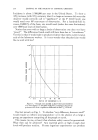
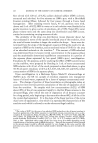
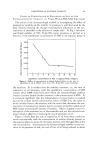
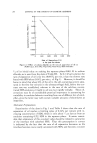
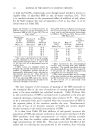
220 JOURNAL OF THE SOCIETY OF COSMETIC CHEMISTS TABLE I--CoMPARISON OF A HOMOLOGOUS SERIES OF UV STABILIZERS wrrH RESPECT TO ABSORPTION CHARACTERISTICS AND SOLUBILITY* O/H'"O C v 'B BASIC FORMULA (I) Chemical Name Substituents mg./100 mi. Solubility, on Basic Absolute •--% by wt.----, •-- Formula---, •--Et .... Methanol--- Ethyl A B C 350m•370m• 2.5 25.0 250 Acetate Toluene 1. 2,4-Dihydroxy- benzophenone 2. 2-Hydroxy-4- methoxybenzo- phenone Monosubstituted Derivatives of Basic Formula OH ...... 32 7 360 384 404 OCHg ...... 32 9 360 384 404 3. 2,2'-Dihydroxy- OCHa OCHa OH 4,4'-dimethoxy- benzophenone 4. 2,2',4,4'-tetra- OH OH OH hydroxybenzo- phenone 5. Mixture of (35, . ........ (4) and related isomers 25 1 28 52 Trisubstituted Derivatives of Basic Formula 41 23 384 409 427 5 5 57 32 384 409 427 20 1 45 26 384 409 427 10 1 * Absorbance and solubility data are average readings since slight variations are observed with different commercial lots. tSpecific Extinction Coefficient = E = Optical density 1 cm. quartz cell, c = 1 g./liter in c methanol, Beckman DU. :• %o = wavelength in m• at which 50% transmission is observed, Beckman DU %0 is frequently called "cut off" and is used as a convenient means of referring to the max. wave- length at which UV protection is afforded under a given set of conditions. served. As the table shows, the monosubstituted derivatives of Formula I (disubstituted benzophenones) have almost identical absorption char- acteristics but considerably different solubilities. On the other hand, the trisubstituted derivatives of Formula I (tetrasubstituted benzophenones) all have considerably stronger absorption at the longer wavelengths than the monosubstituted derivatives. Again, within themselves they have similar absorption but widely different solubility properties. It should be noted also that, as concentration is increased, the wavelength of 50% transmission is shifted closer to the visible. However, because of the stronger absorption of the trisubstituted derivatives, one can obtain equiv- alent absorption at one-tenth the concentration of the monosubstituted compounds. Figure 3 shows the difference between the absorption curve of a disub- stituted benzophenone and that of a tetrasubstituted benzophenone. It
Purchased for the exclusive use of nofirst nolast (unknown)
From: SCC Media Library & Resource Center (library.scconline.org)