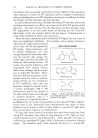
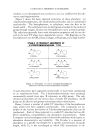
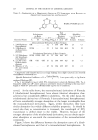
ULTRAVIOLET ABSORBERS AS STABILIZERS 225 light and compared their work with Knox's. Since wool and skin are similar in many respects, the substantivity of this water-soluble absorber to these materials would appear to be a factor. Hair can be protected from UV degradation in several ways. The ab- sorber can be incorporated into a hair spray or wave set so that, when ap- plied to the hair, a film containing the absorber will protect the hair. Or the absorber can be incorporated into hair tints and, when the tint is ap- plied to the hair, the absorber will stay in the coloring material to prevent fading of the color. The absorber can also be incorporated into shampoos for use on hair. In this case it is preferable to use a shampoo that leaves a film on the hair to give the hair greater manageability. Such a film will act as the medium for the absorber (9). A number of absorbers which can be used as stabilizers are commercially available under trade names such as "Uvinul ©" (Antara), "Cyasorb" (Cyanamid), "Tinuvin" (Geigy), and "Salol" (Dow). At present the most widely used stabilizers in the cosmetic industry are the benzophenones because a much greater variety of these is available. Compounds with dif- ferent degrees of absorption, solubility and compatibility are commercially available, and an absorber to fit a specific application can be chosen. In the future we can expect a greater variety of benzotriazoles and substituted acrylonitriles, which will enable the cosmetic chemist to have an even greater choice in selecting an absorber to fit a particular application. (Received December 27, 1962) REFERENCES (1) G. M. Gantz and S. M. Roberts, Encyclopedia of Chemical Technology, Second Supple- ment, Interscience Encyclopedia, Inc., New York, 1960, pp. 883-902. (2) R. E. Rossman et aL, y. Invest. Dermatol., 39, 449 (1962). (3) R. J. Holmes and A. C. Signore, Modern Packaging, 34, 144 (1960). (4) A. F. Strobel and M. R. Leibowitz, Modern Plastics Encyclopedia, 1953 Issue, 40, 497, Plastics Catalogue Corp., New York 21, N.Y., 1962. (5) J. D. Guin and J. M. Knox, Southern Med. y., 53, 1155 (1960). (6) J. M. Knox, y. Soc. Cosmetic Chemists, 13, 119 (1962). (7) J. M. Knox, ,•lm. Perruiner, 75, 42 (1960). (8) W. G. Rose et al., Textlie Research y., 31, 495 (1961). (9) A. Signore and F. E. Woodward, y. Soc. Cosmetic Chemists, 9, 358 (1958).

226 JOURNAL OF THE SOCIETY OF COSMETIC CHEMISTS HISTORICAL DOCUMENTS DR. FR^NK J. STEELE has been appointed by Society President Lester I. Conrad to write a history of the cosmetic industry of the 20th century. Only recently, Dr. E.G. McDonough pointed out that "the cosmetic industry of today is almost entirely a 20th century phenomenon. Most rapid development of our industry has taken place since World War I. Unfortunately, the scientific history behind this period of great expan- sion has not been recorded, and many of the men who have played a promi- nent role in developing our science and the products on which our industry is based are reaching a point in life where their historical insight may not be available much longer." Dr. Steele, who is Chairman of the Library Committee of the SOCIETY oF COSMETIC CI•EM•STS, has undertaken a program of writing a history of the cosmetic industry of the 20th century. Anyone who has pictures, records, biographies or other material which could be used for background material for this historical document is requested to communicate with Dr. Steele at 50 East Putnam Avenue, Greenwich, Conn. It is hoped that all mem- bers of the SociETY and all friends of the cosmetic industry will lend their support to this endeavor to insure the success of this history.
Purchased for the exclusive use of nofirst nolast (unknown)
From: SCC Media Library & Resource Center (library.scconline.org)