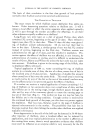
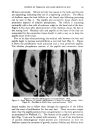
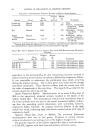
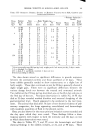
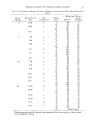
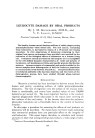
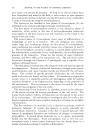
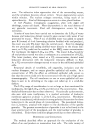
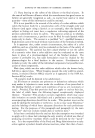
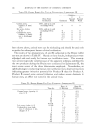
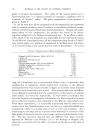
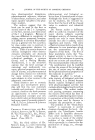
164 JOURNAL OF THE SOCIETY OF COSMETIC CHEMISTS used. Because of these and other possible variations, it is difficult to use data from this test to make predictive clinical judgments of the safety of products. Some typical examples from the experience of the authors will illustrate this point. Table I lists the results of a very mild product subjected to the Draize rabbit eye test. The numbers appearing in this and subsequent tables represent average scores obtained by adding individual scores of all rabbits and then dividing by the number of rabbits tested. The averages are used instead of the individual scores of each animal since they are less cumber- some and more easily represented in tabular form. It can be seen that there appears to be excellent agreement between different laboratories TABLE I--DRAIZE RABBIT EYE TEST (No WASltlNO AI•TER EYE INSTIL[ATION) Lab., Lab., Lab., I II III Time, hr. 10 Rabbits 3 Rabbits 3 Rabbits Corneal score, (opacity X area) X 5 Iris score, (value X 5) Conjunctiva score, (redness d- chemosis d- discharge) X 2 1 0 1.6 ... 2 0.5 ... 24 0.s ii• 48 0.5 0 •" 72-144 0 0 0 0 0 0 1'" 9.3 ... 2 •i• 24 3.8 51• •iq 48 1.0 6.0 6.0 72 0 4.0 2.0 96 0 1.3 0 120 0 0 0 1• o 0 o conducting the experiment. It is also apparent that Laboratory No. II is the most severe scorer of the three used. On the basis of these results, it would be concluded, however, that the Draize rabbit eye test, as con- ducted by different laboratories, yields reproducible data, at least in the case of mild preparations. Table II lists the results of Draize rabbit eye tests using a more irritating material. The test substance is a 15% aqueous solution of a commercial wetting agent commonly used in shampoos at this concentration. From these results the disagreement between laboratories conducting the test is clearly -- TM ' ß ev•cant. Laooratory I was not used to evaluate this particular substance.* Laboratory II again scores more severely than Laboratory III. Laboratory III, in this instance, cleared the detergent as safe for use, whereas Laboratory II reported this raw material as too irritating to be safely used. These results demonstrate the need for more reliable methods of procedure and standardization of interpretation. * It should be noted that Laboratory I consistently scores Draizc test data lbr a given product less severely than Laboratory 1I and more severely than Laboratory Ill.

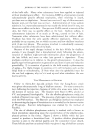
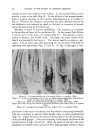
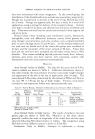
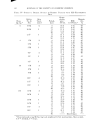
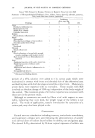
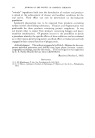
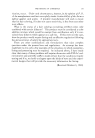
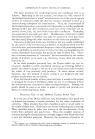
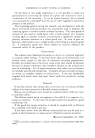
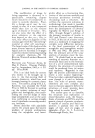
EXPERIENCES IN SAFETY TESTING OF COSMETICS TABLE II--DRAxZE RABBIT EYE TESTS 165 15% Active Com- mercial Wetting Agent Time After Lab. II, Lab. III, Instillation, 3 Rabbits 3 Rabbits hr. Unrinsed Unrinsed Undiluted Com- mercial Shampoo Lab. II, Lab. III, 10 Rabbits 3 Rabbits Unrinsed Unrinsed Cornea score, (opacity X 1 8.3 area) X 5 2 11.7 4 11.7 6 11.7 24 16.7 48 15.0 72 15.0 96 11.7 168 6.7 Iris score, (value X 5) 1 0 2 0 4 1.7 6 3.3 24 3.3 48 3.3 72 1.7 96 1.7 168 1.7 Conjunctiva score, (red- 1 12.7 ness+ chemosis + 2 13.3 discharge) X 2 4 13.3 6 13.3 24 12.7 48 11.3 72 8.7 96 7.7 168 4.7 0 0 0 0 ß . ß . . . •)'' 0 0 0 0 , . . . . . ß . . 6.0 2.7 0.7 0 13.5 ... 15.0 ... 15.5 . .. 15.5 16.0 •)' ' 16.5 0 19.5 0 20.0 0 12.0 0 0.5 ... 2.0 ... 2.0 2.s 3.5 0 3.5 1.6 2 0 (P)* 1.6 1.0 (P)* 0 9.6 ... 10.4 ... 12.2 ... 12.2 12.o 12.0 7.7 11.4 7.7 10.4 4.0 7.0 0 * P indicates pannus in at least 2 test animals. Another example is illustrated in Table II, in this case with results obtained from testing one of the most popular commercially available American shampoos. As before, Laboratory III reports this product safe, whereas the results from Laboratory II suggest that the product might be too irritating for distribution. Since this shampoo has been used for many years by millions of consumers, it might be reasonable to conclude that Laboratory II scores the tests too severely or that the test is not repro- ducible. Several years ago a detergent-containing neutralizer allegedly caused eye irritation in some users. The rabbit eye test (Table III), conducted by Laboratory III, indicated that this product was safe for its intended use. Obviously, the rabbit eye test in this particular case was very misleading and led to release of the neutralizer which was believed safe by the manu- facturer on the basis of an accepted animal testing procedure. Subse- quent]y, human eye tests were initiated to identify the agent or agents responsible for the reported cases of irritation. It appears now that the safety of products should not be based exclusively on animal tests. As has
Purchased for the exclusive use of nofirst nolast (unknown)
From: SCC Media Library & Resource Center (library.scconline.org)