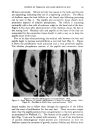
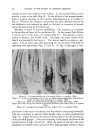
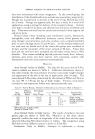
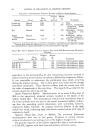
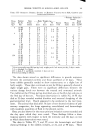
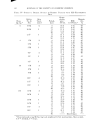
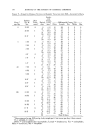
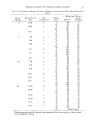
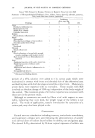
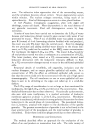
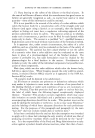
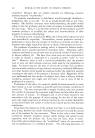
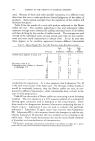
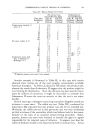
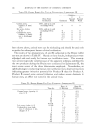
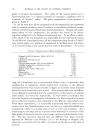
166 JOURNAL OF THE SOCIETY OF COSMETIC CHEMISTS T^BLV, III--DRAm•, R^BBrr EYF, T•,ST or NV, trTR^•nZV,•--I,aBO•ATO•¾ I11 3 Rabbits ....... 2 4 Time After Second Second Instillation Unrinsed Wash Wash Cornea score, 24 hr. and up to and (opacity X area) including 168 hr. 0 0 0 X5 Iris score, (value 24 hr. and up to and X 5) including 168 hr. 0 0 0 Conjunctiva score, 24 8.3 0 0 (redness q- chem- 48 6.0 0 0 osis q- discharge) 72 2.0 0 0 X 2 96 0.7 0 0 168 0 0 0 been shown above, animal tests can be misleading and should be used only as guides for subsequent human clinical evaluation. The results of two preparations (A and B) subjected to the Draize rabbit eye test are shown in Table IV. Based on these results, both products were adjudged safe and ready for human eye instillation tests. This assump- tion seemed especially valid because of the apparent mildness exhibited by the two products during the Draize test conducted by Laboratory II, the most severe scorer of the three laboratories employed. Nevertheless, an ophthalmologist conducting human eye instillation tests observed reactions indicating greater irritation potential for Product B than for Product A. Product B caused some corneal irritation and rather severe chemosis in human eyes, an effect not noted in the animal tests. TABLE IV--DRAIZE RABBIT EY•. TEST (UNI.INSEO--LABORATORY II) Prep. A, Prep. B, Time hr. 15 Rabbits 23 Rabbits Corneal score, (opacity X 1 0 0.9 area X 5) 2 0.7 0.7 4 1.0 0.4 6 1.0 0.2 24 0 0 48 0 0 72 0 0 96-168 0 0 Iris score, (value X 5) 0-!68 () 0 Conj unctiv:t score (red- I 6.0 6.5 ness q- chemosis q- dis- 2 7.5 8.7 charge) X 5 4 9.7 10.3 6 10.5 10.9 24 5.7 6.4 48 3.7 2.2 72 O.7 1.2 96 O. 1 0.3 168 0 0

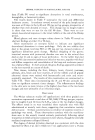
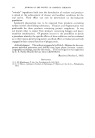
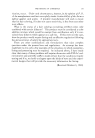
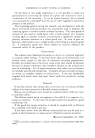
EXPERIENCES IN SAFETY TESTING OF COSMETICS 167 The basic procedure for conducting human eye instillation tests is as Follows: Depending on the test material, two drops of a 10% solution of the finished Formulation in water* are placed into one of the eyes of a group oF 10 to 25 volunteers, while the other eye remains untreated to serve as a control during subsequent eye examinations. Next, the concentration of the finished preparation is increased until the product is instilled undiluted. During the first day after instil]ation, both eyes of the volunteers are ex- amined at two, four, six, and twelve hours after instillation. Thereafter, eye examinations are made once daily. Modifications of this test in which the finished product is instilled once daily for a period of seven days have also been used, along with other variations on this basic test procedure. Variations of the basic human eye instillation test are usually established by the nature of the test material, probability of accidental entry into the eyes oF the user, and recommended frequency of'use of the potential product. There is, probably, no universal eye irritation test that can be applied to the variety of products that require this particular type of safety test. There- fore, it becomes necessary to "customize" the test procedure for the various groups oF products to be used, e.g., shampoos, rinses, dyes, eye creams, mascaras, etc. In the three examples presented here, the Draize rabbit eye test er- roneously classified a widely distributed shampoo as irritating, failed to predict the inherent danger in the use of a neutralizer, and could not select the milder of two relatively mild products. It seems almost certain, therefore, that this method of safety testing is not foolproof and may produce results which are not reliable. From the limited number of facts presented here, it would not be proper to disregard the results of the Draize rabbit eye test or to eliminate it from the armamentarium of predictive safety-testing procedures. Instead, the results should be used as an index or guide to justify and provide con- fidence in conducting human trials. Pr. ACT•Ca,• USE or TSE 48-Hour. C,•osEr) PaTes TEST As in the case of the Draize rabbit eye test, the prophetic skin patch test on humans has become a routine procedure for the safety evaluation of cosmetics. Many products have been classified as safe or unsafe solely on the results of these tests. Such results can be very misleading and confusing. Many variables must be taken into account in the interpretation of the results from occlusive skin patch tests. Thus, the complete absence of irritation during the closed patch test strongly suggests that the product has a very low irritation potential. However, the occurrence of positive re- * For safeness it is considered advisable when conducting human eye irritation tests to initiate studies for the test product in decreasing aqueous• dilutions.
Purchased for the exclusive use of nofirst nolast (unknown)
From: SCC Media Library & Resource Center (library.scconline.org)