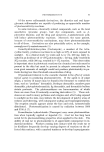
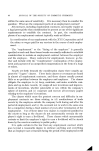
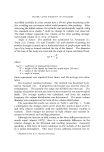
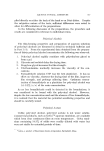
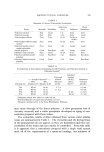
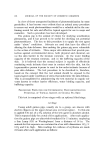
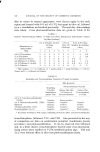
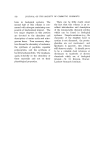
AQUEOUS TOPICAL ADHESIVES TABLE I Summary of Aerosol Concentrate Evaluations 119 Adherence Water Resin Strength Flexibility (hrs.) Tackiness Resistance Polyvinyl alcohol Fair Good 1-5 None Poor Polyvinyl acetate Fair Fair 24 None Good Polyvinylpyrrolidone Poor Poor 15-24 Tacky or Poor brittle Polyvinylpyrrolidone/vinyl Poor Poor 15-24 None Poor acetate Polyvinyl methyl ether/ Poor Poor 24 Tacky Good maleic anhydride Acrylic polymer Good Excellent 24 Tacky Good Ethylene oxide polymer Poor Good 15-20 None Poor Polyvinyl alcohol/acrylic Good Excellent 24 Slightly Excellent polymer Polyvinyl acetate/acrylic Good Good 24 None Excellent polymer TABLE II Formulations of Concentrates Containing Acrylic Polymers and Polyvinyl Alcohol or Polyvinyl Acetate • Formula No. Polyvinyl Polyvinyl Acetate Acrylic Polymers b----- Alcohol ( 54.5 % Plasticizer 46% 38% (Elvanol Gelva (Formal- Rhoplex B-5 Rhoplex B-85 51•05) • TS-71) b dehyde) 74-1 85 mi. 10 mi. 5.7 g .... 2.3 mi. 76-2 85 ml. 10 mi. 11.4 g .... 4.6 ml. 79-3 85 mi. 10 ml .... 21 ml. 2.3 ml. 81-4 85 ml. 10 ml .... 30 ml. 5.0 ml. Sufficient solvent was added to make 142 ml. For identification of commercial products, see text. Elvanol, a product of E. I. du Pont, Wilmington, Delaware. may cause cleavage of the linear polymer. A slow permanent loss of viscosity occurred, and a white precipitate developed on aging of con- centrates prepared with these resins. The evaluation results of films obtained from various water-soluble resins are summarized in Table I. The viscosities and the drying times of the preparations do not appear, as they are dependent upon the con- centration of the resins and can usually be controlled. From this table it is apparent that a concentrate prepared with a single resin cannot meet all of the requirements of a spray-on bandage, but mixtures of

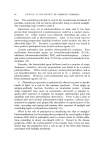
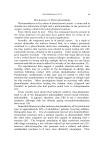
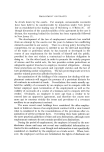
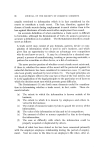
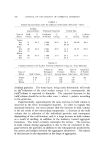
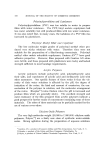
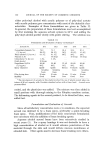
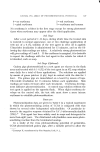
120 JOURNAL OF THE SOCIETY OF COSMETIC CHEMISTS either polyvinyl alcohol with acrylic polymer or of polyvinyl acetate with acrylic polymer gave concentrates with most of the desirable char- acteristics. Examples of these formulations are given in Table II. In general, the preparation of these formulations was best accomplished by first warming the aqueous solvent system to 60øC and adding the polyvinyl alcohol powder slowly with gentle stirring. The solution was TABLE III Formulation and Evaluation of Spray-on Bandages" Aerosol No. 10-1 13-2 14-3 15-4 16-5 Concentrate formula No. 74-1 74-1 81-4 81-4 81-4 (% by wt.) 38.5% 38.5% 54% 43.8% 41.8% Ethyl alcohol (% by wt.) 31.1% 31.1% 36% 26% 28% Pluronic L-61 ... 10 drops ... 10 drops 10 drops Chloroform (% by wt.) 1.4% 1.4% ......... Octyl alcohol 10 drops ............ Propellants 12/114 20:80 20:80 57:43 20:80 20:80 (% by,wt.) 30% 30% 10% 30% 30% Spray character Quick- Quick- Stream Unstable Quick- breaking breaking foam breaking foam foam foam Film drying time 10 min. 10 min. 10 min. 15 min. 10 min. Stability Good Good Poor Good Poor "The development of aerosols in this study involved the use of plastic-coated glass con- tainers of 80 ml. capacity with Precision standard valves with a foam head. Aerosols were pressure-filled. cooled, and the plasticizer was added. The mixture was then added in small portions with thorough mixing to the Rhoplex emulsion system. The defoaming agents in the aerosol product, to be described later, were added last. Formulation and Evaluation of Aerosols Since all satisfactory concentrates were o/w emulsions, the expected aerosol was destined to be a foam spray, preferably a quick-breaking foam spray. Thus, modifications of the basic concentrate formulation were necessary with the addition of foam breaking agents. Aqueous alcohol aerosol foams have been extensively studied in recent years (5). For a spray bandage it was not desirable to have a high concentration of alcohol as it would enhance penetration of the material through the skin and would irritate mucous membranes or abraded skirt. Other agents used to increase foam breaking were chloro-
Purchased for the exclusive use of nofirst nolast (unknown)
From: SCC Media Library & Resource Center (library.scconline.org)