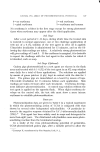
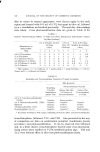
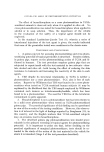
AQUEOUS TOPICAL ADHESIVES 121 form, octyl alcohol, and nonionic surface active agents, such as the Pluronics ©.* Examples of formulations of spray-on bandages and their evaluation are given in Table III. One of the serious drawbacks of a quick-breaking foam spray was the excessive amount of material present on application. Too much spray delayed the drying time of the bandage, for the outer layer of spray dried fast, and the film formed delayed further drying beneath it. Too much spray also caused a problem in holding the concentrate to the desired sprayed area after the foam broke. This necessitated experi- mentation with various propellants and valves. Some of the packaging changes which were investigated included the use of a dip-tube of narrow inside diameter, a modified foam head on the valve, and a mechanical breakup valve. None of these changes from a Precision standard valve t provided the desired spray pattern. These changes in the aerosol pack- age are still under investigation. Animal Testing of Spray-on Bandage A limited number of rabbit skin tests on normal and abraded skin of aerosol No. 13-2 were carried out. The spray-on bandage did not show any irritation or toxic reaction. There was no significant difference in healing time of abraded skin with or without the bandage. It was also noted that neutral or acidic drugs such as phenylmercuric nitrate, al- lantoin, or bacitracin were compatible with the bandage formulation. SUMMARY The development of a spray-on bandage with water-soluble resins has been attempted. The main drawback of such a product was the relatively long drying time of the film under the conditions of spray control employed. The best aerosols developed in this study are de- scribed in Table III. Formulations containing a mixture of polyvinyl alcohol and either polyvinyl acetate or acrylic resins were found to pro- duce the best film-forming concentrate. (Received August 20, 1965) * Pluronic, a product of Wyandotte Chemicals Corporation, Wyandotte, Mich. t Precision Valve Corporation, Yonkers, N.Y.

122 JOURNAL OF THE SOCIETY OF COSMETIC CHEMISTS REFERENCES (1) Haberle, J. E., and Sperandio, G. J., J. Am. Pharm. Assoc., NS1,306 (1961). (2) Ward, J. B., and Sperandio, G. J., Am. Perfumer Cosmetics, 79, 53 (1964). (3) Ward, J. B., and Sperandio, G. J., J. Soc. Cosmetic Chemists, 15,327 (1964). (4) Lange, W. E., and Gonet, F. R., Ibid., 16, 563 (1965). (5) Sanders, P. A., Freon Aerosol Report A-59, E. I. du Pont de Nemours & Co., Wilming- ton, Delaware, 1963.
Purchased for the exclusive use of nofirst nolast (unknown)
From: SCC Media Library & Resource Center (library.scconline.org)