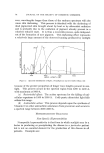
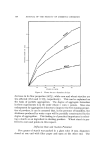
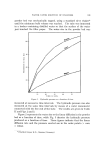
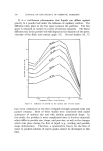
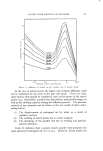
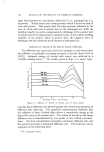
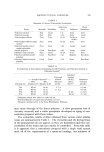
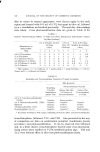
JOURNAL OF THE SOCIETY OF COSMETIC CHEMISTS ever, wavelengths longer than those of the sunburn spectrum will also cause skin darkening. This process is identical with the darkening of dead pigmented skin brought about by heat or by ultraviolet radiation and is probably due to the oxidation of pigment already present in a colorless reduced state. It is thus a reversible process, quite independ- ent of the formation of new pigment. This darkening effect represents a relatively large amount of the observed tanning produced by sunlight 4000 5000 6000 WAVE-LENGTH (,3,) Figure 2. Spectral distribution of light S-sunlight at sea level [after Blum (2)] because of the greater proportion of longer wave lengths present in sun- light. This process occurs in the spectral region from 3200 to 4400 A, with maximum at 3400 A. (c) Bactericidal effects: The action spectrum for the killing of uni- cellular organisms is 1850 to 2500 A. Cold quartz ultraviolet light falls within this range. (d) Antirachitic action: This process depends upon the synthesis of Vitamin D or other antirachitic substances from precursors and occurs in a spectral range between 2600-3200 A. HYPERSENSITIVITY REACTIONS Non-Specific Hypersensitivity Nonspecific hypersensitivity is that form in which sunlight may be a factor in producing or precipitating the disease in a particular patient but is not an essential element for the production of this disease in all patients. Examples are:

PHOTOSENSITIVITY 85 1. tterpes simplex: There is no question that the virus of herpes simplex can be "activated," or skin resistance diminished, by sunlight exposure, following which a typical crop of vesicles appear. 2. Degeneration of collagen and elastic tissues of the skin: In skin repeatedly exposed to sunlight, degeneration of collagen and elastic tissue fibers may occur. Such changes are seen in persons of any age who are exposed to the elements (so-called "sailor's and farmer's skin"). The skin changes manifest themselves clinically in thinning and atrophy of subcutaneous fat, so that the skin becomes dry, inelastic, wrinkled, and furrowed and assumes a dull brownish-yellow hue. 3. Chronic sunburn with or without keratoses: Repeated sunlight exposure may cause a permanent dilatation of the minute blood vessels of the corium and a chronic reddening. In chronically sunburned pa- tients, senile (actinic) keratoses may develop. These are precancerous lesions, the precursors of prickle cell cancers, and occur most frequently on the face and dorsa of the hands. There have been several reported cases of generalized tumor-like keratoses in the exposed areas due to sun- light (4). These tumors remain benign, although histologically they re- semble grade I squamous cell epithelioma, and may even disappear spontaneously if sun exposure is avoided. •. Epithelioma: Prolonged exposure to sunlight may stimulate the production of malignant tumors of the skin. The great majority of skin cancers occur on the exposed surface of the face and hands. There is strong evidence that the exciting wavelengths for the production of skin cancers are in the region of the sunburn spectrum.. 5. Lupus erythematosus.' Sunlight in some individuals may some- times precipitate local or systemic disease. The history of sun-exposure preceding the development of discoid lupus erythematosus or systemic lupus erythematosus is well known. Dissemination of lupus erythema- tosus has been observed following exposure of only a small patch of skin to the hot quartz ultraviolet light. A patient was observed who sud- denly developed photosensitivity of the skin of a type resembling sys- temic lupus erythematosus morphologically and pathologically this patient had bronchogenic carcinoma. Another patient had a cutaneous reaction to sunlight limited to the exposed portions of his body and resembling acute contact dermatitis--he had adenocarcinoma of the stomach. This relationship between visceral carcinoma and sudden onset of photosensitivity reactions of the skin is not too common.
Purchased for the exclusive use of nofirst nolast (unknown)
From: SCC Media Library & Resource Center (library.scconline.org)