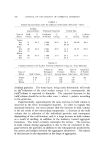
8O JOURNAL OF THE SOCIETY OF COSMETIC CHEMISTS In all the above examples sunlight is a factor in producing a disease process in certain subjects. Yet sunlight is not a factor in producing these same diseases in all patients. True Photosensitivity Reactions Here sunlight is the essential element in the pathogenesis of the disease process. Without sunlight the disease could not occur. 1. Phototoxicity is a quantitative hypersensitivity--an intensifica- tion of the normal sunburn response. The erythemic response of the skin is heightened so that the skin reacts to smaller than normal doses of ultraviolet light. This reaction requires (a) the presence of the photosensitizing chemi- cal in the epidermis and (b) a source of ultraviolet light which contains rays which are absorbed by the particular photosensitizing chemical. This process is manifested by erythema, edema, and--if the reaction is intense enough--vesiculation, limited to the sunlight exposed areas it results from exposures that normally would cause little or no reaction. The photosensitizing chemical may be administered topically, orally, or parenterally. Among the orally or parenterally administered agents are certain tranquilizers (e.g., chlorpromazine), thiazide, and related sulfonamide diuretics, the oral hypoglycemic agents (chlorpropamide, tolbutamide), sulfonamide antibacterial agents, antibiotics (demethylchlortetracycline hydrochloride), antifungal agents (griseofulvin), antihistamines (pro- methazine hydrochloride), and miscellaneous agents (quinidine, gold, barbiturates, furocoumarins). Shelley (5) points out that chlorpromazine and its host of later congeners are simple derivatives of phenothiazine, and hence all produce predictable photosensitivity reactions. This list includes Thorazine, Vesprin, Compazine, Sparine, Temaril, Trilafon, Dartal, and Pacatal, as well as the related antihistaminics, Phenergan, Theruhistin, and Pyr- rolazote. It is interesting that many cross-sensitivities have been demonstrated between compounds in this grouping. Particular note has been made that Phenergan sensitizes topically but usually not when given systemically. These dye (methylene blue) derivatives, then, all show the common potential of photosensitization. The thread of con- tinuity goes back to the original dye photosensitivity reactions to eosin observed in 1900 (2).

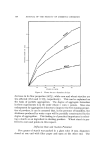
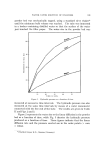
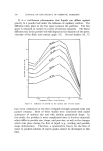
PHOTOSENSITIVITY 87 Of the newer sulfonamide derivatives, the diuretics and oral hypo- glycemic sulfonamides are capable of producing an appreciable number of photosensitivity reactions. In some instances, chemically related compounds, such as the local anesthetics (procaine group), hair dye components, such as p- phenylene diamine, and the drug and sunscreen, p-aminobenzoic acid, will induce photosensitivity reactions. Moreover, the same patient, because of cross-sensitivity mechanisms, may show photosensitization to all of these. Derivatives are also potentially active, as for example, monoglycerol p-aminobenzoate (5). Demethylchlortetracycline (Declomycin), a member of the tetra- cycline family, produces reactions in as high as 25% of users exposed to sunlight. In a clinical study by Cahn and Levy (6), 600 mg. daily re- sulted in an incidence of 15-25% phototoxicity 450 mg. daily resulted in 3% reaction, while 300 mg. resulted in 0-1% reaction. This observation is important since in phototoxic reactions the chemical not only must be present in the skin but must be present in adequate concentration, for even great amounts of sunlight would not produce phototoxicity in pa- tients having less than threshold concentration of drug. Of paramount interest to the cosmetic chemist is the effect of certain topical agents in producing photosensitivity. If the agent is of plant origin, a variety of names may be found in the literature to confuse the issue, such as "perfume" dermatitis, Berloque dermatitis, meadow grass dermatitis, phytophotodermatitis, fig dermatitis, and dermatitis bullosa striata pratensis. The photosensitizers are furocoumarins, of which there are more than 20 naturally occurring derivatives (5). These sub- stances are used in many perfumes and colognes and, after being exposed to sunlight on the skin, may initiate the development of patchy areas of redness and blistering, with subsequent scaling and hyperpigmentation. The eruption usually appears about the face and neck, symmetrically distributed. Photosensitization is caused by radiation between 3100 and 3700 A (7). Promethazine hydrochloride (Phenergan) may cause photosensitiza- tion when topically applied or ingested (8). Coal tar has long been noted for its photosensitizing properties when applied to the skin. The ability of coal tar to photosensitize is of appreciable consequence in in- dustrial medicine. Workers coming into contact with the crude tar or its distillates frequently develop varying degrees of reaction on the af- fected skin surfaces, with a marked tendency to develop hyperpigmenta-
Purchased for the exclusive use of nofirst nolast (unknown)
From: SCC Media Library & Resource Center (library.scconline.org)