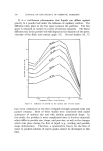
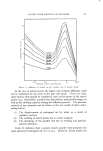
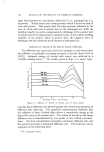
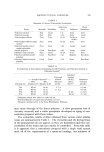
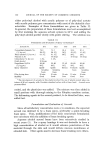
GUINEA PIG ASSAY OF PHOTOSENSITIZING POTENTIAL 12,0 The effect of hexachlorophene as a cross photosensitizer to TCSA- sensitized animals is observed only when it is applied in olive oil. No cross photosensitization was noted for hexachlorophene when applied in alcohol or in soap solution. Thus, the importance of the vehicle in the evaluation of the safety of a topical agent should not be neglected. In the standard Landsteiner-Jacobs Test (8), wherein a series of intradermal injections of the test agent is given, the results indicated that none of the germicides tested were sensitizers in the classic sense. DISCUSSION AND CONCLUSIONS 1. A guinea pig test for assessing photosensitizing and cross photo- sensitizing potential of topical germicides is described. Results confirm, in guinea pigs, reports on the photosensitizing action of TCSA and bi- thionol in humans. The test procedure employs guinea pigs that are subjected to repeat insult with the test material in two solvents--abso- lute alcohol and olive oil--both having the effect of reducing the skin resistance to toxicants and increasing the reactivity of the skin to such agents. 2. TBS despite its structural relationship to TCSA is neither a photosensitizer nor a cross photosensitizer. TCC also is free of such action. Reports by Wilkinson that TBS was found to be a cross photo- sensitizer when tested on TCSA-sensitized human subjects (4) may be explained by the likelihood that the TBS sample employed by Wilkinson contained such isomers as tetrabromosalicylanilide, which has been found to be a photosensitizer. The need for TBS free of the tetrabrom contaminant is quite apparent. 3. Hexachlorophene is not a photosensitizer but has been shown to be a mild cross photosensitizer when tested on TCSA-photosensitized guinea pigs. The practical significance of this finding can be questioned in view of the severity of the testing conditions. However, this observa- tion is of interest in the light of findings reported by Baughman (10), in this country, and the English workers that TCSA-sensitized subjects may, on occasion, react to hexachlorophene. 4. The described guinea pig photosensitization test should prove valuable in the primary screening of topical agents for photosensitizing potential. It is important to point out that, before deciding on the practical significance of marginal photosensitizers, tests should be ex- tended to the study of the action of the test material in the vehicle for which it is intended (Stage 3 of the test procedure described).

130 JOURNAL OF THE SOCIETY OF COSMETIC CHEMISTS 5. If the results of the guinea pig photosensitization test and the Landsteiner-Jacobs test are both negative, the test material probably can be tested on humans with good assurance that no photosensitization problem will develop. If an agent passes both tests but shows cross photosensitizing activity, additional tests on the preparation in the intended vehicle should be conducted. (Received October 8, 1965) ACKNOWLEDGMENT The authors are indebted to Dr. Henry Lemaire of the Lever Organic Section who prepared samples of halogenated salicylanilides reported here. (9) (lO) REFERENCES (1) Stowers, J. H., Brit. J. Dermatol. Syph., 9, 285 (1897). (2) Klaber, R., Brit. J. Dermatol. Syph., 56, 193 (1942). (3) Steinberg, T. H., and Newcomer, V. D., The Evaluation of Therapeutic Agents and Cosmetics, The Blakiston Division, McGraw-Hill Book Company, New York (1964). (4) Wilkinson, D. S., Brit. J. Dermatol., 73,213 (1961) 73,295 (1962) 74, 302 (1962). (5) Calnan, C. D., Proc. Roy. Soc. Med., 54, 819 (1961). (6) Wynn Jones, D. W., Brit. J. Indust. Med., 19, 100 (1962). (7) Vinson, L. J., and Flatt, R. S., J. Invest. Dermatol., 32,327 (1962). (8) The Staff of the Division of Pharmacology, Food and Drug Administration, Department of Health, Education, and Welfare: Appraisal of the Safety of Chemicals in Foods Drugs, and Cosmetics, The Assodation of Food and Drug Offidals of the United States, Austin, Tex. (1959). Jillson, O. F., and Baughman, R. D., Arch. Dermatol., 88, 409 (1963). Baughman, R. D., Arch. Dermatol., 90, 153 (1964).
Purchased for the exclusive use of nofirst nolast (unknown)
From: SCC Media Library & Resource Center (library.scconline.org)