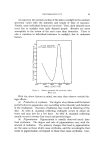
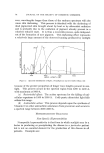
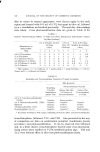
88 JOURNAL OF THE SOCIETY OF COSMETIC CHEMISTS tion. This sensitizing principle is used in the Goeckerman treatment of psoriasis, employi•_g coal tar and an ultraviolet lamp or natural sunlight. The sensitizing ra•_ge is 3900 to 5000 A. Sunscreens may act as photosensitizers in man, and it has been proven that monoglycerol p-aminobenzoate could be a contact photo- sensitizer (9). Other reports have followed, describing the esters of p-aminobenzoic acid as photosensitizers. Later, it was noted that the sunscreening preparation digallolyl trioleate could sensitize the skin to ultraviolet light (10). Recently, a persistent light reactor was found to have positive photopatch tests to both of these agents (11). Certain antiseptics may produce photosensitivity reactions. Four well-known bactericidal agents are tetrachlorosalicylanilide (TCSA), bithionol, tribromosalicylanilide (TBS), and hexachlorophene. Contact and contact photodermatitis from TCSA has occurred in hundreds of in- dividuals (12). Recently, the bactericidal agent bithionol used in a number of soaps, shampoos, cosmetics, and acne preparations was found to be a contact photosensitizer. TBS is rarely a primary contact photosensitizer, and as yet hexachlorophene has not been proved to be a primary contact photosensitizer. However, cross-sensitization may exist between all of these antiseptic agents (12-15). 8. Photoallergy represents a qualitatively altered reaction to specific bands of light, as a rule in the sunburn spectrum. These imply an antigen-antibody reaction, therefore an incubation period. Certain drugs (ingested) may cause an eczematous, urticarial, or papular re- sponse after exposure to sunlight, for example, sulfonamides, gold, and quinidine and some phenothiazine derivatives. There is also a class of patients who have chronic polymorphous light eruption, a disease char- acterized by papular and plaque-like dermatitis of exposed parts of the body, occurring each spring and summer after exposure of sunlight and resembling lupus erythematosus clinically (16). What is the role of porphyrins in sensitizing the skin to sunlight? Photosensitization by the porphyrins is produced by wavelengths of light between 3000-4500 A principally and to a lesser extent by visible radia- tions extending to about wavelength 6500 A. Except in the disease porphyria, either the erythropoietic or the hepatic type, it has not been shown that the porphyrins have a role in any of the other skin diseases associated with sunlight sensitivity.

PHOTOSENSITIVITY 89 MECHANISM OI* PHOTOSENSITIZERS Photosensitizers act by virtue of photodynamic action--a term used to describe the interaction of light and a photosensitizer in the presence of oxygen, causil•g a destructive photochemical reaction. Four criteria must be met. First, the compound must be present in the living epidermal cell and must have gotten there by virtue of ab- sorption either parenterally or by topical application. Secondly, the compound must be of specific nature. In a study of contact dermatitis the authors showed that, in a subject previously sensitized to a phe•.othiazine derivative co1•taining a chlorine atom in the ring, positive skin reactio•..s were elicited by patch testing only with compounds having a chlorine in the 2-position. Other atoms or radicals gave negative reactions. The structure of the side chain did not seem to be a critical factor in causing contact (allergic) sensitization. In this case exposure to strong mid-day sunlight did not bring out any latent reactions and did not seem to affect the severity of the skin reaction (17). The experimental data suggest a possible structure-activity rela- tionship, which may be a factor in the development of allergic skin reactions following contact with certain phenothiazine derivatives. Furthermore, sensitization of this type may be related to other side reactions the manifestations of which strongly suggest an allergic basis for this reaction. Other investigators found no reactions with other phenothiazine derivatives lacking the chlorine atom (Diparcol and Parsidol) in patients who had positive patch tests to chlorpromazine It has recently been shown that subjects could be cross-photosensi- tized to all of the halogenated salicylanilides tested except tribromo- salicylanilide. It appears, therefore, that TBS is not a cross-photo- sensitizer, although with the chlorine analog cross-photosensitization does occur (19). Demethylchlortetracycline induces photosensitivity of the phototoxic type in approximately 20% of ambulatory patients receiving ordinary therapeutic doses (6). It is of considerable interest why demethylchlor- tetracycline possesses such a marked capacity to photosensitize while the other three congeners are much less capable of inducing such a reaction (20). The frequent association of light sensitivity reactions with drugs containing a free chlorine radical has been pointed out (21) however, chlortetracycline also possesses such a radical, and photo- sensitization rea. ctions to it have been distinctly unc. 9,,m,,•,,.on. Thus
Purchased for the exclusive use of nofirst nolast (unknown)
From: SCC Media Library & Resource Center (library.scconline.org)