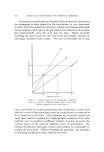
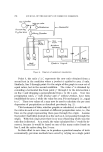
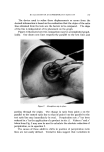
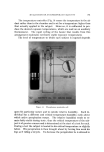
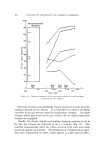
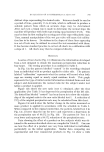
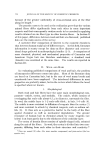
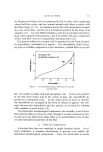
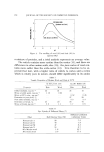
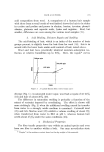
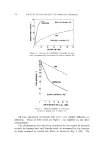
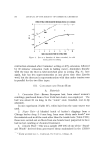
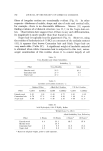
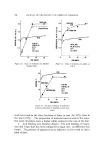
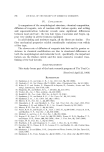
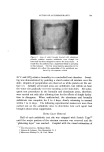
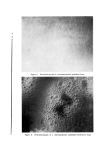
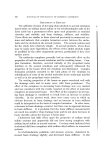
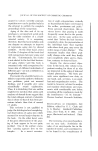
78O JOURNAL OF THE SOCIETY OF COSMETIC CHEMISTS -5 -10 -15 -2O Figure 8. MINS SETTING, 30 MtNS RELAXATION IN BOILING WATER, 40% EXTENSION • •'ø• o . J HAIR , • • L , ' •' 1'6 1 2 3 4 5 6 TIME IN COLD WATER PRIOR TO SETTING, HOURS Set as a function of time extended, in cold water, prior to setting contraction obtained after 2 minutes' setting at 40% extension, followed by 30 minutes' relaxation (both in boiling water), diminishes linearly with the time the fiber is held stretched prior to setting (Fig. 8) here again, hair has less supercontraction at any given time than Lincoln wool, but the decrease in supercontraction with time under tension runs in parallel for the two fiber types. III. CAUCASIAN AND NEGRO HAIR A. Materials 1. Caucasian ttair--Brown European hair, from mixed women's combings, purchased from a New York hair dealer, was employed. The hair was about 28 cm long, in the "remis" state (bundled, root-to-tip oriented). In one experiment (Table IV), white hair from the same source was used. 2. iVegro Hair--A blended batch of barber's clippings from a Chicago barber shop, 3-6 mm long, from some thirty male heads* was the material used in all the work other than the tensile tests (Table VIII) these were carried out on fibers from one female head, purported to have had no hot combing or chemical treatment. 3. Lincoln Wool--This was a sample (SW 296) of one of the "Stand- ard Wools" derived from pen-reared sheep maintained in the CSIRO * Kindly provided by J. L. Underwood, The Toni Co., Chicago, Ill.

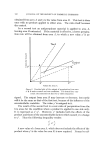
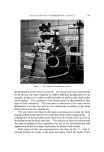
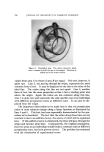
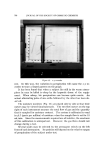
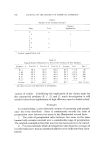
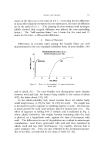
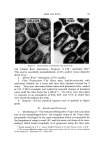
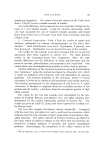
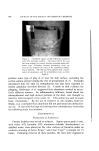
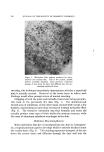
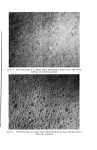
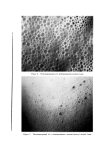
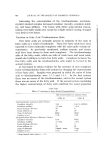
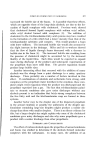
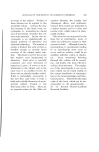
HAIR AND WOOL 781 Figure 9. Ian Clunies Ross .... 'NEGRO . .. •.•..?•:•.:r.,-..-:-p..-•.•..:. ' •' • .•" :'.•.. .. :•.• . •:. -:•.,_:.. :-•, ,:.: ...... •.•,....-.. . --. .,• ::• ':: .:? . . '.',:':., •½-. ..•.:.•,•:. '%•' . ..• '"?{•'.•'?•.' . ?:'- '•:':'" .•,..• .•.?.."• ...... ..... :.. . •:'•.•:•. •,:•.•: . .:• :•",.• •? •:':'•'•"•--•::.,. : ,,•. •:' : ----.. , •,:?•:.,½.:-2.. .:•: "':.. .... :•'.. '•,".5, • "¾. •.: .•' '): : :: ' ,•,"t:'•?:-' :Sp{•:•: :• ..?:...,y'" ..½:.•:z? .,.•... •.'J•'5 ::,:•:• -• . . ½,• --•T-•.. . :•"-• •,, •.• .. ,, .•..::•.. •. '.2•.. ' •:.: -:•. •: • .•:• Cross-sections of Caucasian and Negro hair Laboratory, Prospect, N.S.W., Australia (39).* This wool is essentially nonmedullated, of 36's quality (mean diameter about 40 t•). 4. Merino Wool--Australian, of 64's quality. 5. Fiber Preparation--The fibers were Soxhlet-extracted with methylene chloride for 4 hours and then with absolute ethanol for 2 hours. They were then rinsed three times with deionized water, soaked in 0.01 N HC1 overnight, and washed in repeated changes of deionized water until the rinse water has a pH of 5. The fibers were then dried by exposure to an atmosphere of 65% R.H. and 70 øF, in which they were stored throughout the work. 6. Reagents--All the chemical reagents were of purified or higher grade. B. Results and Discussion 1. Morphological--Two features distinguishes Negro and Caucasian hair at the morphological level: the irregular crimp of the Negro fiber, presumably developed by the same mechanism which is responsible for the formation of crimp in wool (40), and the more oval shape of its cross- section p which twists irregularly as it progresses along the fiber axis ___ * Kindly stopplied by J. F. P. James, CSIRO Division of Textile Physics, Ryde, N.S.W. • The average ellipticity indices (ratio minor axis/major axis) for the two hair specimens of tiffs study are: Caucasian 0.71, Negro 0.56.
Purchased for the exclusive use of nofirst nolast (unknown)
From: SCC Media Library & Resource Center (library.scconline.org)