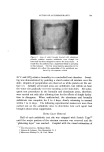
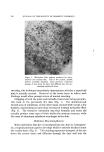
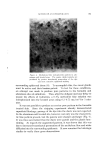
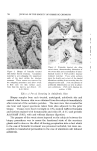
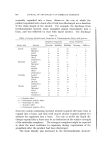
798 JOURNAL OF THE SOCIETY OF COSMETIC CHEMISTS development of the eccrine pore pattern produced by the iontophoresis of methylene blue and iii, forced sweating into the obstructed duets causes wide dilatation and the accumulation of PAS positive diastase resistant material. The actual nature of the occlusion is quite variable in the chronic dermatoses it is a hyperkeratotie or parakeratotie plug, in formalin produced anhidrosis an intraluminal mass resulting from the protein preeipitant properties of the chemical. In the sweat suppression by hydration, a functional poral closure alone is operative. Aluminum anhidrosis meets none of the requirements that demon- strate a high level blockage. Removal of the horny layer does not re- verse the sweat suppression and, rather than preventing formation of the methylene blue pattern, actually facilitates the staining. Forced sweating, rather than producing duetal dilatation, leads to periduetal inflammation and, in extreme instances, duetal disruption as in miliaria rubra. This total picture suggests that aluminum salts alter the epi- dermal duet and permit large amounts of sweat to pour into the sur- rounding tissue. Perspiration will not reach the skin surface, in the same way that a multi-punctured garden hose, regardless of the head of pressure, prevents water from reaching the nozzle. Interestingly, Sulzberger (5) had described the same histologie findings in his studies on aluminum salt anhidrosis. W•thout employing the sequential biopsy technique and forced sweating as above, he concluded that the leukoeytie infiltrate resulted from the "ehemotaxis" of aluminum or its products and that the inflammation then interfered with duetal transport of sweat. Finding miliarial lesions in several subjects parallels Shelley's experi- ence with aluminum salt anhidrosis (,3). This does not, however, mean that one should regularly expect to find rashes produced by underarm deodorants. As a matter of fact, these agents, primarily composed of aluminum salts, rarely cause such effects in practice. The explanation for this paradox rests in the fact that experimenters wisely choose gla- brous skin such as the forearm or back, not the axilla, to study eeerine anhidrosis. While aluminum efficiently prevents perspiration in these areas, its effects in the underarm area are reduced. Miliaria probably does not develop because the chemical does not exert its full effect. The reason for the failure is not dear. The forehead is another resistant area (1•), and it is interesting that both these regions (as well as the palmar surface) also do not permit easy development of eeerine pore patterns with methylene blue iontophoresis (8). It is necessary to state that these areas share a common difference which distinguishes them from the remainder of the body: The eeerine glands of the axilla, forehead, and

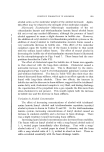
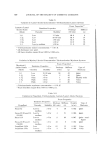
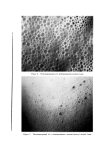
ACTION OF ANTIPERSPIRANTS 799 palm respond primarily to emotional rather than thermal stimuli. There is no evidence for anatomical differences between the eccrine units of the body. Therefore another yet unidentified variable is to be sought. SUMMARY Local eccrine anhidrosis was produced in human volunteers by appli- cation of 20% aluminum chloride, 10% formalin solutions, and water it- self, under oeelusive patches. It can be demonstrated that the sweat sup- pression of simple hydration and formalin is due to a high level obstruc- tion of the eeerine duct. Removal of the stratum eorneum relieves this type of anhidrosis. Methylene blue iontophoresis fails to produce a sweat pore pattern since the dye cannot enter the duets, and there is histologie evidence of duetal dilatation following sweating into the dosed system. A physical plug can be seen in the ease of formalin induced anhidrosis, while the water effect is temporary and due to a functional closure of the eeerine ostium. In aluminum salt produced anhidrosis, stripping off the stratum corncure does not bring about return of sweating, and an accentuated eeerine pore pattern results from the iontophoresis of methylene blue. Only after sweating is there an inflammatory infiltrate localized in the periduetal tissue surrounding the eeerine duet at the epidermal-dermal junction. It is concluded that aluminum chloride increases transduetal absorption of sweat. (Received May 10, 1966) REFERENCES (1) Shelley, W. B., Hurley, H. J., and Nichols, A. C., Axillary Odor. Experimental study of the role of bacteria, apocrine sweat and deodorants, Arch. Dermatol., 68,430 (1953). (2) Shelley, W. B., and Horvath, P. N., Experimental miliaria in man. II. Production of sweat retention anhidrosis and miliaria crystallina by various kinds of injury, J. Invest. Derrnatol., 14, 9 (1950). (3) Shelley, W. B., Experimental miliaria in man. V. The effect of poral closure on the secretory function of the eccrine sweat gland, J. Invest. Derrnatol., 22,267 (1954). (4) Ichihashi, T., The antisudorific effect of formalin by cataphoretic application and its practical use, J. Orient. Med., 25, 105 (1936). (5) Sulzberger, M. B., Zak, F. G., and Herrmann, F., Studies of sweating. ii. On the mechanism of action of local antiperspirants, Arch. Derrnatol., 60,404 (1949). (6) Blank, I. H., Jones, J. C., and Gould, E., A study of the penetration of aluminum salts into excised human skin, t•roc. of Scient. Sect. Toilet Goods Assoc., 29, 32 (1958). (7) Papa, C. M., A new technique to observe and record sweating, Arch. Derrnatol., 88, 732 (1963).
Purchased for the exclusive use of nofirst nolast (unknown)
From: SCC Media Library & Resource Center (library.scconline.org)