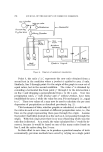
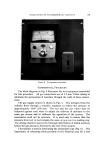
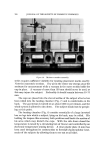
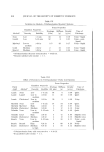
8O4 JOURNAL OF THE SOCIETY OF COSMETIC CHEMISTS Emulsion Viscosity An increase in the viscosity of the bulk phase when an alcohol is added to an aqueous surfactant solution is generally considered an indi- cation of complex formation between the surfactant and alcohol (4). In the present study, samples were prepared in glass bottles for visual observation. The approximate viscosity of the emulsions was esti- mated by inverting the bottles slowly and noting the flow characteristics of the emulsions. The viscosity was rated "low" if it was close to that of water and "high" if the emulsion was very thick. Products with viscosities in between these two extremes were rated medium. Emulsion Stability Emulsion stability was judged visually by the time required for phase separation to occur after the samples had been hand shaken. The samples were emulsified by a modification of the Briggs intermittent method of emulsification (23). The samples were shaken 20 times by hand, allowed to stand overnight, and reshaken 20 times immediately before stability determination. Phase separation, or creaming, is a common method for judging emulsion stability, even though it does not necessarily indicate coalescence of the droplets and breaking of the emulsions (24). Becher (25) has pointed out that, although creaming does not represent actual breaking of the emulsion, creaming is favored by large droplet size, and this may be an indication of a process which will lead to demulsification. Schulman considered phase separation to be sufficiently valid for comparison purposes when all the samples were prepared in the same way (3). As mentioned previously, Schulman found that complex formation could cause a considerable increase in emulsion stability. Foam St{l•ness Foam stiffness was determined with a Cherry-Burrell Curd Tension Meter as described in Reference 16. Foam stiffness values are reported in grams and indicate the relative resistance of a foam to deformation resulting from the downward penetration of a curd knife. Although it is difficult to place an exact physical interpretation upon foam stiffness, it is assumed to be an aspect of foam viscosity. Complex formation has been reported to increase the surface viscosity of foams, and in the present case an increase in foam stiffness resulting from the addition of a unionized polar compound was interpreted as an indication of complex formation

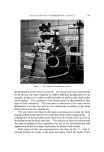
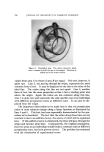
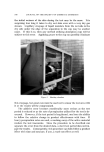
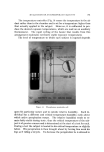
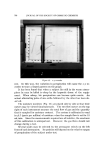
COMPLEX FORMATION IN AEROSOLS 805 Stiffness values below about 30 indicate that the foams have low viscosity and are quite thin. Typical aerosol shaving lather foams have stiffness values ranging from about 50 to over 100. Foam Drainage Rates One of the most common indications of complex formation is the de- crease in the rate of foam drainage that occurs with the addition of a polar compound to a surfactant solution. This is considered to be due to an increase in the viscosity of the liquid foam films, or laminae, that occurs with complex formation. Foam drainage rates were determined in the present work by discharging a known quantity of foam into a funnel and determining the amount of liquid that drained from the foam at various time intervals. With most series of foams, there were certain time intervals after discharge when the differences in drainage rates between the various foams were the most distinct. The comparative foam drainages that showed the greatest differences in the foams were selected. The time required for this varied with the different series of foams and is given in the tables. Drainage from foams results from gravitational forces on the liquid films, which causes thinning of the foam laminae without rupture, or from rupture and collapse of the foam structure itself (26). Thus, the liquid which drains from a foam can have two different origins. Foam Stability Foam stability has two aspects, foam drainage and persistence of the foam. Thus, a foam may drain and become quite thin but may retain its structure. Foams also may collapse as a result of rupture of the foam structure. In the present study, comparative foam stabilities were judged visually by discharging a series of foams onto paper towels and noting the appearance of the foams after various time intervals. The rapidity with which the foam wet paper was an indication of the drainage, and the rate at which the foam collapsed was an indication of the stability of the foam structure. It was possible to line up a series of foams in order of their relative stabilities by this procedure, but it was not feasible to place any numerical value upon the stability. Foam Density Foam density was determined by weighing a known volume of the foam as soon after discharge as possible. The volume of the vessel used for density determinations was 360 cc.
Purchased for the exclusive use of nofirst nolast (unknown)
From: SCC Media Library & Resource Center (library.scconline.org)