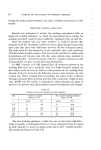
12 JOURNAL OF THE SOCIETY OF COSMETIC CHEMISTS In Tables II-IV we see that for the two nonionic detergents there is a good correlation between the results of the three tests, whereas the am- photeric detergent T 8, for instance, although it does not free any sul- phydryl groups, is the most irritating in the patch test. When using the washing simulator we did not find differences in the amount of amino acids that were washed out. For the other parameters, a sodium soap washed out more "soluble proteins" than the other detergents, among which there were no appreciable differences. The water and the anionic detergent T 1 which in the three other tests is in the medium or high brackets eluted less "non-soluble proteins" than the other detergents, which again did not show any appreciable mutual differences. After having obtained these results, Smeenk proceeded to test the in- fluence of detergents on the water soluble substances of the stratum corneum to which, as we have seen, valuable protective properties are attributed, e.g. with respect to the binding of water. He also wanted to determine which water-soluble substances are responsible for the water- binding capacity of the stratum corneum that might be washed out by detergents. I am very happy indeed that Smeenk has allowed me to present his data here, even though he has not yet published them. For exact information about Smeenk's methods and data I must refer you to his publications, which, I hope, will appear during this and next year. As a starting point for his models, Smeenk took the analyses by Spier et al (12) of the amino acid content, and the remaining water-soluble sub- stances of the stratum dysjunctum. First, the water-binding capacity of the amino acids was determined separately. It is remarkable that only three of the 17 amino acids can bind more than their own weight of water (Table V): Table V Water-binding capacity (in •o of the dry weight) of the various amino acids •of the stratum corneum at 95 •o R.H. Aspaffcic acid 1 Tyrosine 1 Glutamic acid 0 Citrulline 11 Glycocoll 7 Ornithine (HC1) 225 Serine 1 Histidine 2 Threonine 2 Lysine (HC1) 243 Alanine 1 Proline 2 Valine 2 Arginine (HCI) 142 Leucine 1 Tryptophane 2 Phenylalanine 0

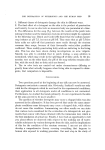
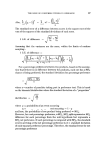
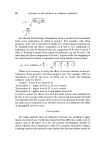
THE INTERACTION OF DETERGENTS AND THE HUMAN SKIN By adding the water-binding capacity of each of the amino acids in the proportions in which they are present in the water-soluble substances, the water-binding capacity of a mixture of these substances only would be 14%. Subsequently it was proven that the water-binding capacity of a mixture of amino acids in the proportions in which they are present in the skin, binds more water than would be expected from the sum of their in- dividual water-binding capacities. This mixture would produce a water- binding capacity of the water soluble substances of 105%. Addition of the other known substances increases the water-binding capacity of a mixture of all known water soluble substances to approx. 265%. This may be due to the presence of strongly hygroscopic substances, such as sodium pyrroli- done carboxylate and lactate. In fact, however, the water-binding capacity of extracts of scales scraped from normal skin is 310%. From these results it is clear that the amino acids have only a limited importance for the water-binding capacity of the water soluble substances of the horny layer. The other known substances also have hygroscopic properties and possibly the unknown rest (12) contributes to the water- binding capacity of the water soluble substances too. In another experiment, the amount of amino acids that could be extracted from scales was compared with the loss of water-binding capacity after extraction. Good correlation was found here, both when scales were extracted before their water-binding capacity was determined, and when the living skin was extracted and the water-binding capacity of subsequent scrapings of the stratum corneum was established (Table ¾I). Table VI Ratio between the extracted quantity of araino acids and the decrease of water-binding capacity of skin scrapings Duration of extraction 2• rain a. b. 15 min a. b. 90 rain a. b. 18 hr. a. b. Araount of amino-N •o of dry weight 0.90 1.08 1.41 1.44 1.63 1.73 1.73 1.77 Decrease in water-binding capacity ( % dry weight) 40.5 45.2 53.9 53.4 59.3 60.3 59.1 59.5 From these results it is clear that the loss of amino acids may be a parameter for the loss of water-binding capacity of the stratum corneum,
Purchased for the exclusive use of nofirst nolast (unknown)
From: SCC Media Library & Resource Center (library.scconline.org)