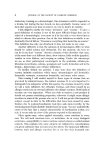
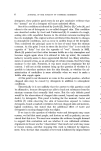
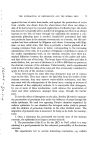
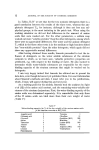
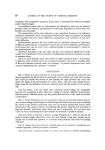
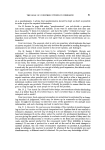
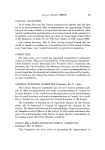
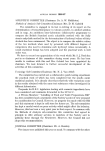
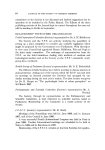
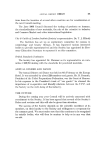
10 JOURNAL OF THE SOCIETY OF COSMETIC CHEMISTS laurate soaps enhance the penetration more than sodium lauryl sulphate and much more than Tweens. A second way to assess the action of detergents on skin is to determine the degree to which sulphydryl groups are liberated in keratin, a method proposed by van Scott and Lyon (13). A third is Vermeer's washing-simulation method. Vermeer et al (14) designed an apparatus by which a clearly defined area of skin can be washed under standard conditions of temperature, time, and washing strength, after which the washing solution is analysed with the Folin- Ciocalteu reagent. The same test is repeated after removing the non-soluble substances from the washing water by boiling with sodium hydroxide. As a rough measure of the action of detergents on skin, patch tests can be made. These certainly show whether there is a reaction in the form of irritation but, as in the other three methods, the results must be interpreted with great caution. The most reliable method of detecting the action of detergents without doubt is to give a detergent to panels of housewives for a certain length of time, with evaluation of the condition of their skin before and after this period. This method also offers difficulties, the greatest being that there are so many variables in the conditions under which the detergents are used that very large numbers of participants must be used. In another acceptable method volunteers immerse their arms daily for a given time in a solution of the detergent under investigation, the period of immersion and the concentration of the detergent being comparable to the average exposure of a housewife during the day. A similar method was used by Suskind (8). Many tests on experimental animals have also been proposed. These are discussed at length by Draize (14). He maintains that these animal tests are useful within certain limits. Skins of laboratory animals are, how- ever, dissimilar to human skin, e.g. because of the absence of a well- developed stratum corneum and the presence of many hair follicles, and such tests give only very rough information, in my opinion. In my department, my colleague Smeenk has made a comparison of the results obtained with a number of tests for nine detergents. At the same time, his aim was to assemble physiological data on the interaction of detergents and skin. The results have already been reported (15). At that time they could be summarized as shown in Tables H-IV.

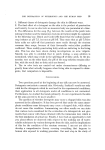
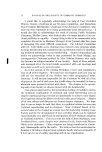
THE INTERACTION OF DETERGENTS AND THE HUMAN SKIN 11 Table II Products employed in tests T1. A sodium salt of alkyl benzene sulphonate with 12 C-atoms. Highly branched T2. A similar salt, unbranched, containing 10-13 C-atoms T 3. isoOctyl phenol condensed with 8-9 moles ethylene oxide T4. isoOctyl phenol condensed with 15 moles ethylene oxide T s. Sodium secondary alkyl sulphate with 8-18 carbon atoms in alkyl chain T 6. A pure fatty acid soap (Lux flakes) T 7. Sodium salt of sulphated ethoxylate of broad cut lauryl alcohol T 8. Coconut dimethyl amine oxide T 9. Sodium salt of sulphated broad cut lauryl alcohol anionic anionic nonionic nonionic anionic anionic anionic amphoteric anionic Table III Comparison of the results of three tests Low Intermediate Patch test T3 T4 T7 0.02 0.06 0.10 T2 T1 Ts 0.24 0.38 0.56 Permeation test T4 2.13 3.66 . Ts __ . 5.58 T• T2 T7 T9 7.15 7.28 8.06 8.09 Freeing of sulphydryl-groups High T 9 T 6 T s T 8 16.23 1.00 1.30 1.52 T6 34.95 T3 T s T 4 T 7 T s 0 0 0 0 Ts To 9 17 T• T2 26 22 Table IV Median values for amino nitrogen, "soluble proteins" and insoluble proteins in wash water (y/rail) Amino nitrogen Soluble proteins Insoluble proteins Dist. water 4.6 30.0 20.5 T• T 3 5.2 4.7 38.0 33.5 11.0 31.0 T5 T6 5.1 34.5 37.0 5.0 35.5 31.0 To each of the 3 sets of 6 x 24 determinations, the method of m-rankings of Friedman was applied. Amino acids: X2 (d.f. =5)= 3 (0.75 P 0.50) not significant "Soluble proteins": X2(d.f.=5)=30.4 (P•0.001) highly significant Insoluble proteins: XZ(d.f.=5)=24.1 (P0.01) highly significant.
Purchased for the exclusive use of nofirst nolast (unknown)
From: SCC Media Library & Resource Center (library.scconline.org)