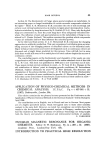
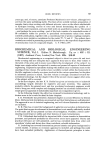
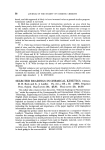
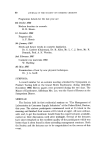
46 JOURNAL OF THE SOCIETY OF COSMETIC CHEMISTS in a pilot trial before using it in an actual test. Alternatively, two slightly different questionnaires could be used in a test, one for each half of the panel. In the example quoted for a multiple choice question above, the effect of reversing the order and placing "I disliked it very much" first could be tested. The effect of an overall preference question on subsequent prompted attribute questions could be tested by omitting the overall preference question on half the questionnaires. The actual order of questions on a questionnaire may be important: questions at the end being answered less accurately due to questionnaire fatigue or more accurately as a result of practice gained in answering earlier questions. In some cases there is a logical sequence of questions which follow the use sequence of the product. It would be more logical in a washing product test to ask about the washing process before asking about the whiteness of the dry clothes, etc. Upsetting the logical order may dis- concert panelists but might stimulate more thought. Unfortunately there are no hard and fast rules for questionnaires and often the shortcomings only come to light when the results are being examined. However, Payne (3) gives a lot of useful pointers for question wording. ANALYSIS OF RESULTS It is usually the case that a higher percentage of a panel will prefer one product to the other or that one product will obtain a higher mean score than the other. The question then arises as to whether the difference in preference or mean score is one that might occur frequently by chance, that is as a result of sampling variation, etc. If not then one might infer that the difference is due to a difference between the products. The usual test is to compare the difference with the standard error of the difference and consult t tables to establish significance levels. For a series of values x •, x 2, ß ß ß xn the standard deviation i=•l n--1 where Y. xi--• stands for the sum of the squares of the deviation i•l of each observed value of x from the mean ([) of the series of values and n is the number of values of x.

THE ROLE OF CONSUMER STUDIES IN RESEARCH 47 Also, • xi--• = • xi 2-- i•l i=l n The standard error of a difference between scores is the square root of the sum of the squares of the standard deviations of each score. / 1 S.E. of difference -• 4 nl n2 Assuming that the variances are the same, within the limits of random sampling:- 1 S.E. of difference = ( )i)( ) n 1 + n 2 2 For a percentage preference between two products, based on the assump- tion that if there is no difference between the products, each one has a 50% chance of being preferred, the standard deviation for percentage preference _75ø% x 50% n where n=number of panelists taking part in preference test. This is based on the binomial distribution where the standard deviation of a "proportion" distribution ---- .• pq n where p = probability of an event occurring q = , ....... not occurring = 1 - p and here, the probability of one product being preferred • 50%. However, for a net percentage preference, a 60% ! 40}/o split represents a 10% difference for each percentage from the null hypothesis but represents a 20% net preference. If each percentage is compared with 50%, the standard error in arriving at the net percentage preference is 2 X standard deviation of each separate preference percentage. Therefore, the standard error for net percentage preference
Purchased for the exclusive use of nofirst nolast (unknown)
From: SCC Media Library & Resource Center (library.scconline.org)