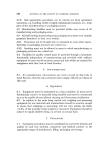
HYGIENIC MANUFACTURE AND PRESERVATION 729 3.3 Factory and plant design Design of the building in which plant is to be housed should ensure that walls, floors and ceilings have smooth, non-absorbent and easily cleaned surfaces with no hidden corners or ledges in which dust and dirt will collect. Provision should be made for efficient ventilation, preferably by means of filtered air giving a positive pressure with respect to the surround- ing atmosphere. The building should be designed as far as possible so that personnel moving from one area to another do not have to traverse the production floor. Changing rooms should be kept apart from the production area and lavatories should not connect directly with either changing rooms or production areas. Adequate washing facilities must be provided. The design of manufacturing plant should be such that stagnation of product residues in pipes, joints, pumps, pressure gauges and valves cannot occur these are some of the places where serious contamination is most likely to develop. Stainless steel of high quality is undoubtedly the most suitable material for the fabrication of pipe-work, but other construction materials may be satisfactory so long as they can be effectively cleaned and sterilized. Plastic hose is quite suitable when new but requires frequent examination for defects and for accumulation of residues on roughened surfaces. Pipe runs need to be kept as short as possible, avoiding right- angled joints in order to facilitate cleaning they should never run com- pletely horizontal but always slope towards a venting point. Complete and thorough removal of product residues is essential if machinery is to be left idle for even a short space of time. Joints in pipes should be made by welding or with plastic seals interchangeable dairy-type fittings are satisfactory but the packaging of pipework joints with hemp and grease is highly undesirable. Flexible piping offers the advantage that it may be disconnected, cleaned and sterilized between runs. Dead ends in pipework and traps in the lines must be avoided as far as possible, e.g. a by-pass to another plant or filling machine will serve as a "dead end" and lead to stagnation if it is only used occasionally. Adequate provision should be made so that sterilization either by steam or chemical means can be accomplished it is essential to provide a range of points at which steam or fluid may be vented, to ensure that air locks in the plant do not interfere with efficient cleaning and sterilization. All parts of manufacturing equipment likely to come in contact with the product should preferably be constructed of smoothly-finished stainless steel vessels should be double-jacketed to allow for heat sterilization and equipped with well-fitting lids capable of excluding dust particles and bacteria from the surrounding atmosphere.

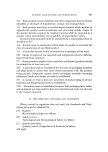
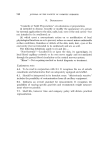
730 JOURNAL OF THE SOCIETY OF COSMETIC CHEMISTS Drain cocks, at the lowest possible level on the equipment, should be readily accessible and easily dismantled for cleaning. Pressure relief valves must be sited so that they are obviously visible and accessible for cleaning when such a valve has operated, deposits of product tend to be trapped and to create a microbiological hazard. Plug valves and pressure glands on gear pumps should be avoided, if possible, as also should glycerine-filled U-tubes on pressure gauges. Manifolds may be used to limit the necessary number of joints the number of right-angled internal bends will thus be limited, so that cleaning and sterilizing become easier and more effective. In choosing mixing, blending and homogenizing equipment, it is desirable to select designs where the product is unlikely to come in direct contact with glands which are often a serious source of con- tamination. Contamination may also result from inadvertent contact be- tween the product and the lubricants for bearings. In general terms, it is clearly desirable that the design of plant should take into account the need to avoid bacterial contamination the main requirements are that it should be easily cleaned and not provide dead ends and corners where contamination can escape attention. Plant which is ideal from an engineering standpoint is sometimes totally inadequate with regard to cleaning and sterilizing but these operations are essential for the achieve- ment of good hygienic standards. 3.4 Water supply One of the most likely sources of microbial contamination is the water supply used in manufacture, which may be filtered from the mains, de- mineralised or distilled. Strict control is necessary since the bacterial population of water may reach 106 bacteria ml-1 or more. Bacteria typically encountered in water supplies include Pseudomonas, Xanthomonas, Flavo- bacterium, A chromobacter and A erobacter. The most common places for bacterial contamination to occur are intermediate storage tanks, pipework joints and the resin beds of demineralizing plant trapped organic matter rapidly removes any chlorine in the mains supply and provides excellent growth conditions for micro-organisms. If filtered mains water is used, a bacteriological monitoring system is needed since organic matter collects in filters and renders the chlorine inactive. Filters should be renewed regularly in preference to attempting to sterilize them. Sterilization of ion exchange beds with 0.25% formalin (0.1% formalde- hyde) should be performed at regular intervals as necessary. Frequent bacteriological checks should be made since the count may be low on
Purchased for the exclusive use of nofirst nolast (unknown)
From: SCC Media Library & Resource Center (library.scconline.org)