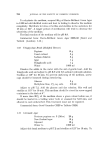
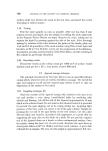
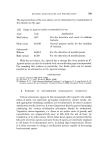
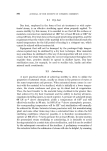
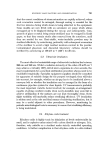
HYGIENIC MANUFACTURE AND PRESERVATION 773 have found general acceptance in the preservation of cosmetic preparations. The recommended level of preservative should be taken only as a general guide. The precise concentration required will depend largely on the type of preparation and the likely levels of exposure to micro-organisms. Each new formulation must be individually studied and the preservative rigorously evaluated by the appropriate method in the final pack. 4.31 Hydroxybenzoates Methyl, ethyl, propyl and butyl esters of p-hydroxybenzoic acid (often referred to as 'parabens') and their salts are widely used as preservatives in many preparations. 4.311 Properties Sparingly soluble in water, the esters are tasteless, odourless, stable on storage and of low toxicity. Each ester is most active against a different range of organisms. Activity increases with increasing chain-length and water solubility decreases in the same direction. The higher esters are more effective against moulds and yeasts. Combinations of esters are likely to be more effective than a single ester. The parabens are active over a relatively wide pH range although their effect on specific types of micro-organisms varies with pH. They are usually well tolerated on the skin, compatible with most cosmetics containing proteinaceous ingredients, and unlikely to cause significant discoloration of the formulation. 4.312 Disadvantages The parabens have low aqueous solubility they have inhibitory activity but are not usually bactericidal or fungicidal, and quite often they need to be supplemented with an additional preservative. Activity may also be reduced in the presence of oils and nonionic emulsifiers (e.g. Tweens). An increase of paraben concentration above the level of inactivation is necessary for achieving efficient preservation. A reconsideration of the type of non- ionic employed in the product may, however, prove beneficial. Tween 80 has the least damaging effect followed by Tween 60. Tween 80 will reduce antimicrobial efficiency to the greatest extent. Skin sensitization due to the parabens has been reported, although it seems to be comparatively rare. 4.313 Uses The methyl ester, which has the highest solubility in water, is commonly employed in concentrations of 0.1-0.3% while the higher esters are used in near-saturated solutions (0.01-0.025%). Combinations of the methyl, propyl and butyl esters are commonly employed (some of which are avail-

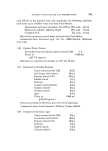
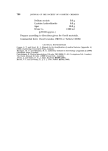
774 JOURNAL OF THE SOCIETY OF COSMETIC CHEMISTS able as proprietary preparations). The esters are usually incorporated in the preparation as a solution in boiling water, but in non-aqueous prepara- tions may be dissolved in acetone, alcohol, melted fats and oils, glycerine and triethanolamine, or incorporated in the emulsifier. The sodium salts of the parabens may be used to increase aqueous solubility. The soluble derivatives are suitable for preparing more concentrated solutions than is possible with esters but the solutions are strongly alkaline they cannot therefore be used in preparations with an acid reaction, since the less soluble ester would be precipitated. In nonionic systems, propylene glycol is reputed to form synergistic mixtures with p-hydroxybenzoic acid. Formaldehyde used at a relatively low level is claimed to be a useful supplement for the parabens and will in- crease activity generally. 4.314 Proprietary preparations based on p-hydroxybenzoates The following blends are supplied by Nipa Laboratories Ltd.: Nipasept. A mixture of the methyl, ethyl and propyl esters of p-hydroxy- benzoic acid. Use up to 0.$%. Nipasept Sodium. A water soluble form of Nipasept. Nipastat. A mixture of the methyl, ethyl, propyl and butyl esters of p-hydroxybenzoic acid. Use up to 0.$%. 4.32 Bronopol (2-bromo-2-nitro propane 1,$-diol) 4.321 Properties Colourless, odourless, crystalline solid, highly soluble in water, only slightly soluble in oil. A good bactericidal agent unusually active against Pseudomonads. Bactericidal activity is not affected by nonionic surfactants. 4.322 Disadvantages The compound is unstable to light, though it is stable in acid solution if protected from light. It is unstable in alkaline solution with formation of formaldehyde. 4.323 Uses Bronopol should be used either in acid solution protected from light or in alkaline solution as a bactericide to achieve a rapid effect. In alkaline solution it may sometimes be used to greater advantage in conj unction with a more stable preservative. It is recommended particularly as a preserv- ative for shampoos and may be used at concentrations of 0.01-0.02%. Dye fading or darkening may result if Bronopol is used at higher levels.
Purchased for the exclusive use of nofirst nolast (unknown)
From: SCC Media Library & Resource Center (library.scconline.org)