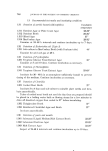
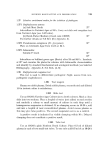
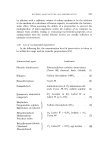
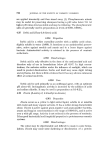
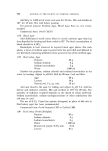
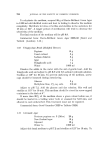
IIYGIENIC MANUFACTURE AND PRESERVATION 751 by dilution with a sufficient volume of culture medium or by the addition to the medium of a substance of known capacity to neutralize the bacterio- static effect. When assessing the ability of a preparation to prevent the multiplication of micro-organisms within the confines of its container (as distinct from sterility testing or evaluating bactericidal properties of an antimicrobial) then the normal dilution factors are usually sufficient to minimize bacteriostasis. 1.41 List of recommended inactivators In the following list, the concentration level of preservative is taken to be within the range used in cosmetic preparations (4.$). A ntimicrobial agent Phenolic disinfectants Halogens Hexachlorophane Formaldehyde Quaternary ammonium compounds Merthiolate Oxyquinoline sulphate Merthiolate and phenol Hexachlorophane Dichlorophene Povidone iodine Benzalkonium chloride Chlorbutol Phenylethanol Inactivator Polyoxyethylene sorbitan mono-oleate (Tween 80), charcoal, ferric chloride (1) Sodium thiosulphate 0.05% .... (2) Tween 80 ........ (3) Ammonium ions, 0.1% ammonia as cell- wash, Tween 80, 6% sodium sulphite (4) 2% Lecithin in 3% Lubrol W or Lubrol W up to 10% ...... (5) Sodium thiosulphate (2%) .... (6) 1% Lubrol W d- 0.5% lecithin d- 1% Tween 80 ........ (7) 1% Lubrol W + 0.5% egg lecithin . . (8)

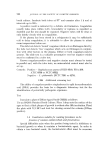
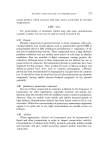
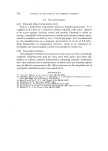
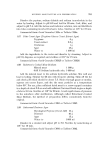
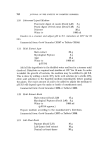
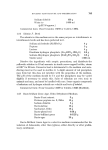
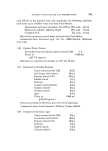
752 JOURNAL OF THE SOCIETY OF COSMETIC CHEMISTS Alcohol Chloroform Chlorbutol Phenol and derivatives Esters of p-hydroxy- benzoic acid Benzoic acid Sorbic acid Hydrogen peroxide Mercurials A general dilution of 1 part of sample to 100 parts of rec- overy medium Addition of poly- sorbate 20 or 80 (Tween) to a level of 10% is an add- itional safeguard (9) Catalase, sodium thiosulphate Sufficient thioglycolate present in Brewer's or U.S.P. medium i.e. 0.05-0.1% REFERENCES (1) Flett, L. H., Haring, R. C., Guiteras, A. F. and Shapiro, R. L. J. Bacteriol. 50 591 (1945). (2) Weber, G. R. and Levine, M. Amer. J. Publ. Health 84 719 (1944). (3) Lawrence, C. A. and Erlandson, A. L. J. Am. Pharm. Assoc. 42 352 (1953). (4) Nordgren, G. Acta. Path. Microbiol. Scan& 1 (Suppl. xl) (1939). (5) British Standard Specification 3286: 1960. (6) Acta. Pharm. Hung. 87 235 (1967). (7) Lowbury, E. J. L., Lilley, H. A. and Bull, J.P. Brit. Med. J. (2) 531 (1964). (8) Anderson, K. and Crompton, D. Lancet (2) 968 (1967). (9) Kohn, R. S., Gershenfeld, L. and Barr, M. J. Pharm. Sci. 52 967 (1963). GENERAL REFERENCE A guideline for the determination of adequacy of preservation of cosmetic and toiletry formulations. Toilet Goods Assoc. Cosmet. J. 2, 20 (Winter 1970). 1.5 Routine bacteriological testing of water supply The necessary scale of testing depends on the general quality of the mains supply and the condition of the storage tanks and pipe-lines. Monthly examination will suffice if the whole system is in good order but, when this is not so, daily examination should be made. Special care is required if the preservative capacity of the formulation is limited with respect to its ability to cope with large inocula of waterborne organisms. 1.51 Sampling A 250 ml sample is taken aseptically in a sterilized container at least once per month from the water inlet to each mixer in use. If samples are transmitted to a consultant for examination, they should be transported on ice with minimum delay. If the water to be examined contains, or is likely to contain, chlorine or chloramine, sufficient sodium thiosulphate to neutralize these substances should be added. The thiosulphate should be
Purchased for the exclusive use of nofirst nolast (unknown)
From: SCC Media Library & Resource Center (library.scconline.org)