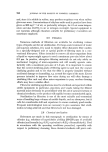
HYGIENIC MANUFACTURE AND PRESERVATION 745 micro-organisms is suspected, an inoculum from a plain broth suspension should be used. 1.2 Quantitative examination The problem of representative sampling has been discussed in 2.1 above and the value of quantitative studies will obviously depend to a consider- able extent on the validity of the samples examined. Quantitative test procedures generally involve the replication of experiments on several aliquots derived from a single initial sample but it should be stressed that the validity of a test procedure is greatly strengthened by ensuring that replicate samples are included as well as replicate aliquots from a single sample. 1.21 Plate count procedure All glassware and equipment must be chemically clean and sterile. When preparing serial dilutions use a fresh sterile pipette for each trans- ference. A considerable saving in 1 ml pipettes can be achieved by using an automatic syringe connected to a sterile Pasteur pipette. The special syringe* is pre-set to deliver 1 ml. A fresh sterile disposable Pasteur pipette is used for each dilution but the same syringe can be used for any number of operations since the diluent is not sucked into the barrel. 1.211 Diluent Use sterile 0.1 w/v peptone water at pH 7.0. Inoculation of media should be carried out within 30 min of the preparation of the dilution. When examining a sample for anaerobic bacteria use freshly prepared Reinforced Clostridial Broth as the diluent. 1.212 Liquid samples Pipette aseptically 10 ml of the thoroughly-mixed sample into a sterile glass bottle fitted with a ground glass stopper and add 90 ml of diluent to give a 1:10 dilution v/v. Alternatively, weigh with aseptic precautions 10 g of the thoroughly-mixed sample into the bottle and add 90 ml of diluent to give 1:10 dilution w/v. Prepare further serial decimal dilutions in 0.1% sterile peptone water as necessary. *R. B. Turner & Co. Ltd., Church Lane, London, N.2.

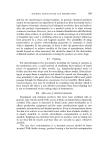
74t3 JOURNAL OF THE SOCIETY OF COSMETIC CHEMISTS 1.213 Powders Weigh aseptically 10 g of sample into a sterile glass bottle which is marked at 100 ml capacity and fitted with a ground glass stopper, to give a 1:10 dilution w/v or weigh 1 g of sample and make up to 100 ml to give a 1:100 dilution w/v. In the transference of powder aseptic manipulation can be more readily carried out by using a sterile E-mil weighing scoop. To mix, shake the suspension 25 times. 1.214 Creams Mix and transfer aseptically 1 g amounts of cream to sterile Universal bottles. Add 9 ml of sterile diluent and 6-8 sterile glass balls to each sample. Mix the contents on a Whirlimixer for 10 s. Prepare further serial tenfold dilutions as necessary. Mix the dilutions well and plate out immediately. For the treatment of emulsions with a hydrophobic continuous phase, method 3.36 (p. 765) is recommended. 1.215 Plating out Plate out in duplicate 1 ml of each dilution and add 10 to 15 ml of a suitable agar medium that has been liquefied and cooled to 45-47 ø. Mix well by rotating the plate clockwise and anti-clockwise several times, the plates being kept flat throughout the whole process. When the agar has set, invert the plate and transfer to an incubator. Do not stack plates more than six deep. 1.2113 Colony count of bacteria Use Tryprone Glucose Yeast Extract Agar, also known as Plate Count Agar. For routine colony counts incubate at 28-32 ø for 48 h intervals. Count the colonies. Actidione (cycloheximide) may be added to the medium at 0.001% to suppress moulds and yeasts. Actidione Agar (Oxoid PM 118) may also be used for this purpose. 1.217 Colony count of yeasts and fungi Use Malt Extract agar or Sabouraud Dextrose Agar. The medium may be acidified with lactic or citric acid to pH 3.5 + 0.1 to suppress the growth of bacteria. Once acidified, the medium should not be re-heated. See also Appendix C. For routine counts, incubate at 25 ø or other constant tempera- tures up to 30 ø. Inspect the plates at 24 h intervals. Count the colonies after five to seven days' incubation.
Purchased for the exclusive use of nofirst nolast (unknown)
From: SCC Media Library & Resource Center (library.scconline.org)