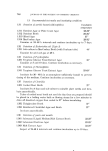
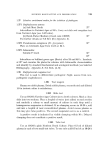
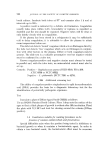
HYGIENIC MANUFACTURE AND PRESERVATION ?65 Pyrex glass chimney to contain the infected particles is useful for this purpose. REFERENCES Hill, E. C., Davies, I., Pritchard, J. A. V. and Byron, D. J. Inst. Petrol. õ3 275 (1067). "Tetrazolium salts" publication by British Drug Houses Ltd., Poole, Dorset. 3.36 Plate count technique for esti•nating viable organisms Aseptically transfer 1 g of emulsion to a universal bottle containing approximately six to eight glass bails, 8 ml of Peptone Water Diluent and 1 ml of sterile 1% Tween 80. Mix the contents on a Whirlimixer for 10 s. Prepare further tenfold dilutions, as necessary, with Peptone Water Diluent containing 0.1% Tween 80. Plate out 1 ml aliquots in Nutrient Agar or Plate Count Agar. The tip of the pipette must be inserted well into the middle or lower layer of diluent when the sample is drawn to ensure that it is free from solid material. Creams which are not miscible with water should be emulsified in Lubrol W broth according to the procedures previously described. REFERENCE Dunnigan, A. P. and Evans, J. R. Toilet Goods Assoc. Cosmet. J. • 38 (1969). 3.37 Membrane filtration method for the detection of small numbers of organisms For water-based emulsions, prepare the sample in 0.1% sterile surfac- tant in Nutrient Broth but in the case of w/o emulsions, dissolve 0.1 g material in 25 ml of isopropyl myristate and proceed as for water-based emulsions as follows: Prepare a 0.1% solution of Triton X-100 in Nutrient Broth. Dispense the solution in 25 ml quantities and sterilize by autoclaving. Prepare the sample by aseptically weighing 0.1 g of product into one of the bottles of surfactant. Warm to 47 ø on a water bath and shake well to disperse the oil droplets thoroughly. There should be no visible clumping. (The use of a Vortex mixer at this point is an advantage.) Pour approximately 50 ml of the sterile 0.1% surfactant at 47 ø into a sterile filter holder containing a sterile membrane (47 mm diam. 0.5 I•m pore). Add the sample solution to this as rapidly as possible, swirl and filter under vacuum. With the vacuum still applied, rinse the surface of the filter with 100 ml of sterile 0.1% surfac- rant solution at 47 ø to remove traces of oil from the filter. Follow this with a 100 ml rinse of sterile 0.1% peptone at 47 ø. When completely filtered place the membrane on Nutrient Agar for incubation at 28-32 ø and count colonies after 48 h or culture the membrane according to B.P. recommendations.

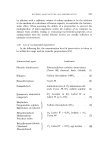
766 JOURNAL OF THE SOCIETY OF COSMETIC CHEMISTS 3.371 Materials Millipore Sterifil Filtration System. Cat. No. XX1104700 Oxoid Membrane Filters Size 47 mm. Code No. MF47 or Millipore Filter Discs 47 mm Cat. No. HAEG047AO, 0.45 Triton X-100. Nonionic wetting agent: Lennig Chemicals Ltd., 2 Mason's Avenue, Croydon, Surrey. REFERENCE Sterility testing of ointments and creams. Booldet published by Millipore U.K. Ltd., 109 Wembley Hill Road, Wembley, Middx. 3.4 Powders Powders, derived from natural earths, should be examined for yeasts and fungi as well as for aerobic and anaerobic bacteria with special refer- ence to pathogenic Clostridia. Talcs claiming deodorant or antiperspirant properties usually contain hexachlorophane, aluminium chlorhydrate or other antimicrobial compounds having a bacteria-inhibiting effect a suitable inactivating agent must then be included in the test media. 3.41 Detection of aerobic bacteria (qualitative) Using an aseptic technique shake 10 g of powder into 90 ml of Peptone Water Diluent. Plate out 0.1 ml aliquots on duplicate plates of Blood Agar, Nutrient Agar, and Malt Extract Agar. Spread the inoculum with a wire loop to obtain separate colonies. Incubate at 22 ø and 37 ø. Examine the Blood Agar and Nutrient Agar plates for sporing and non-sporing bacteria after 48 h incubation. Examine the Malt Extract Agar plates for moulds, yeasts and fungi at 24 h intervals up to seven days. 3.42 Detection of Clostridia (qualitative) Plate out 0.1 ml of a peptone water suspension (as in $.41) on the surface of overdried Blood Agar, Nutrient Agar and Reinforced Clostridial Agar. Inoculate freshly prepared Thioglycolate Medium and Cooked Meat Broth with 1 ml of the peptone water suspension introducing the inoculum well into the meat layer. Inoculate further samples of Cooked Meat Broth and heat at 80 ø for 10 min in a water-bath to kill non-sporing organisms. Incubate all samples for anaerobic culture at 37 ø . Examine after 3-4 days' incubation. Sub-culture broth medium to Blood Agar. Check that isolates will not grow under aerobic conditions. 3.43 Aerobic count Using a sterile E-mil weighing scoop, transfer 1 g of powder into 99 ml of Peptone Water Diluent. From this suspension (1:100) prepare a number
Purchased for the exclusive use of nofirst nolast (unknown)
From: SCC Media Library & Resource Center (library.scconline.org)