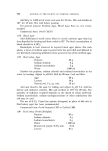
HYGIENIC MANUFACTURE AND PRESERVATION 727 activity. Particular attention should be paid to this problem in the case of products for use on newborn infants, on broken skin, or in the vicinity of the eyes. 3. REQUIREMENTS FOR HYGIENIC MANUFACTURE 3.1 General principles Hygienic requirements differ according to the objective sought if the final product needs to be sterile, the manufacturing process obviously differs from that required to attain a less rigorous standard. To achieve sterility, production must either (a) employ sterile ingredients which are handled in such a way as to exclude all risks of contamination, along with the employment of sterilized plant and packaging materials, or (b) utilize normal, clean manufacturing procedures, ending at the final stage (i.e. after applying the closure to the filled unit packs) with a reliable sterilizing procedure, such as an autoclaving process. The first alternative, generally described as "aseptic technique", demands an exceedingly high standard of specialized knowledge and ex- perience, along with complementary plant design to facilitate its successful achievement. It also calls for the most exacting sampling and control pro- cedure so that any failure to achieve sterility is rapidly identified. Such an expensive and skilled method of operation is sometimes unavoidable in the preparation of, for example, certain injectable pharmaceutical formulations but would not normally be feasible in the cosmetic industry. The more practicable approach to sterile manufacture for cosmetics will almost invariably be the conduct of operations in a clean manner, followed by a terminal sterilization process. Guidance on hygiene and sterilizing technique are given in this document and the principles discussed here can be adapted to a wide range of different types of product. Sterility is, how- ever, a criterion of an absolute nature and, if the product is one that calls for such a standard, proof of its achievement will be an essential feature that is, adequate sterility testing must be carried out by the control labor- atory and the product should be isolated and only released for sale when the tests have been completed. As previously indicated, cosmetic manufacture does not, and need not, usually aim at yielding a sterile product. The more limited target of "self- sterilizing" capacity or adequate preservation, calls for less demanding manufacturing requirements and control procedures appropriate to the

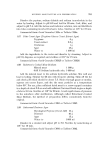
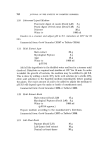
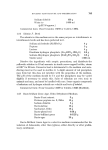
728 JOURNAL OF THE SOCIETY OF COSMETIC CHEMISTS objectives. Nevertheless, hygienic operating procedures require a high stand- ard of attention to a wealth of detail and many aspects will be discussed in this monograph. The extent to which the advice offered here needs to be applied in a particular manufacturing process will depend on the scale of production, the susceptibility to contamination of the formula concerned, and the extent of inoculation with contaminants to which it might be exposed if precautions are insufficient. For example, suggestions are given with regard to plant sterilization whether or not the plant needs to be sterilized before each batch of product is manufactured should be deter- mined by the microbial status of the resulting material. Microbiological quality control should always serve as the guide to the success of manu- facturing hygiene and as the warning-light to show when more stringent precautions are needed. 3.2 Hygienic methods Precautions should be taken to prevent micro-organisms from con- taminating a product at the various stages of manufacture. Even if a pre- servative is incorporated, there is still a risk that its antimicrobial capacity may be overwhelmed. Hygienic methods, are, in essence, procedures for maintaining a high standard of cleanliness but the necessary precautions are not obvious to everyone and are easily overlooked or misunderstood. The foremost need is, therefore, to inculcate the correct attitude into all operative and supervisory staff, with periodic re-education in the subject so that slipshod habits do not develop. There are also numerous points con- cerning factory and plant design where attention to detail will help to limit contamination. A vigilant attitude needs to be persistently maintained to avoid a sudden upsurge of contamination it often happens, for example, that current production needs call for modification of plant lay-out without delay and this may well result in serious contamination if the hazard is not recognised. The typical hygienic problems associated with cosmetic manu- facture may be exemplified thus: 3.21 Air and water are often important sources of contamination. 3.22 Any arrangement of plant or operating procedure that would allow dust to enter the product will also encourage airborne microbial contamin- ation. 3.23 Stagnant residues of product in the plant between the processing of successive batches may well lead to multiplication of micro-organisms. 3.24 Efficient cleaning and sterilization of plant is desirable, but bad plant design can make this difficult or virtually impossible.
Purchased for the exclusive use of nofirst nolast (unknown)
From: SCC Media Library & Resource Center (library.scconline.org)