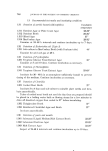
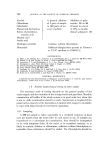
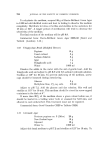
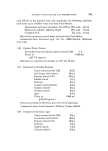
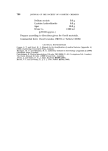
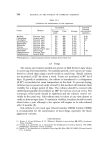
HYGIENIC MANUFACTURE AND PRESERVATION 780 The bacterial flora of the test surface can be determined by examination of the colonies on the agar. 1.22 Type MacConkey Plate count Range of Agaroid media recommended for use Code Application AG7 For the detection and count of coliform bacteria. AG183 General purpose media for the isolation of bacteria. Sabouraud: Maltose Malt extract AG41A For the detection of moulds/yeasts. AG59 For the detection of moulds/yeasts. With the seal intact, the Agaroid has a storage life of six months at 4 ø. Agaroid media can also be obtained with an inactivating agent incorporated. For sampling flat surfaces in particular, the Rodac plate can be recom- mended as an alternative to the Agaroid sausage. REFERENCES (1) British Standard 4285 36-37 (1968). (2) Ten Cate, L. J. Appl. Bacteriol. 28 221 (1965). (3) Bridson, E. Y. "Agar Sausage Sampling Technique" in Shapton, D. A. and Gould, G. W. Isolation methods for microbiologists. Technical Series $ (1969) (Academic Press, London). SUMMARY OF RECOMMENDED STERILIZATION CONDITIONS Various statements appear in this monograph with regard to the sterili- zation of plant, raw materials, packaging components, culture media, etc. and appropriate sterilizing conditions are recommended. In order to achieve satisfactory results, however, it is most important that the general principles underlying the various sterilization techniques should be understood. Vegetative micro-organisms, i.e. those in an active state of growth and reproduction, are comparatively easy to kill with the aid of heat, by irradiation, or by other means. On the other hand, spores are produced in the life-cycle of certain species and some forms of spores are extremely resistant to all forms of environmental stress, including high temperatures. Hence it is often necessary to design a sterilization process capable of destroying heat-resistant spores.

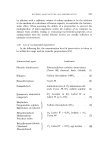
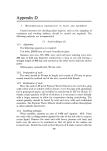
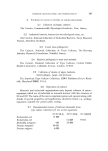
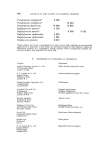
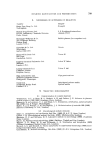
790 JOURNAL OF THE SOCIETY OF COSMETIC CHEMISTS 2.1 Dry heat Dry heat, employed in the form of hot air treatment or with super- heated steam, is an effective sterilizing agent when properly applied. To ensure sterility by this means, it is essential to see that all the surfaces or materials concerned are maintained at 160 ø for at least 60 min or 180 ø for at least 20 min. Dry heat does not have good penetrating properties, and the requirement that the whole of the material to be sterilized should reach the stated temperature for the full period of heating is a stringent one, which cannot be relaxed without serious risk. Equipment that will not be damaged by the prolonged high temper- atures required may be sterilized by a dry heat technique. Raw materials may sometimes be sterilized in this way if decomposition will not occur to ensure that the whole bulk reaches the correct temperature throughout the requisite time, powders should be spread in shallow layers. Dry heat sterilization may, for example, be used to sterilize talc, kaolin and other mineral earth constituents. 2.2 A utoclaving A more practical method of achieving sterility is often to utilize the properties of saturated steam, usually as steam in the presence of water at the same temperature and pressure. When saturated steam comes in con- tact with the material to be sterilized, which is initially at a lower temper- ature, the steam condenses and gives up its latent heat of evaporation. Thus, the heat transfer to the material being sterilized is far greater than that achieved by dry heat treatment and the ability to destroy all micro- organisms including spores, is much superior. A pressure of saturated steam 69 kN m-2 above atmospheric yields a temperature of 115 ø and will effectively sterilize in 30 min. At 103 kN m-2 above atmospheric pressure, the corresponding temperature will be 121 o and sterilization will normally be achieved in 15 min. Saturated steam penetrates well, but manufacturing plant and some other items may take a substantial time to attain the full sterilizing conditions whenever possible, it is therefore recommended to operate at 103 kN m-2 excess pressure for at least 30 min. In some systems for pressurized steam sterilizing or autoclaving, it is desirable to avoid leaving materials in a moist state after sterilization, and t[,is can be avoided by the subsequent evacuation of the sterilizer. A preliminary evacuation of the autoclave before the admission of steam will also be helpful, by ensuring
Purchased for the exclusive use of nofirst nolast (unknown)
From: SCC Media Library & Resource Center (library.scconline.org)