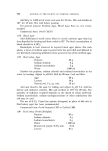
730 JOURNAL OF THE SOCIETY OF COSMETIC CHEMISTS Drain cocks, at the lowest possible level on the equipment, should be readily accessible and easily dismantled for cleaning. Pressure relief valves must be sited so that they are obviously visible and accessible for cleaning when such a valve has operated, deposits of product tend to be trapped and to create a microbiological hazard. Plug valves and pressure glands on gear pumps should be avoided, if possible, as also should glycerine-filled U-tubes on pressure gauges. Manifolds may be used to limit the necessary number of joints the number of right-angled internal bends will thus be limited, so that cleaning and sterilizing become easier and more effective. In choosing mixing, blending and homogenizing equipment, it is desirable to select designs where the product is unlikely to come in direct contact with glands which are often a serious source of con- tamination. Contamination may also result from inadvertent contact be- tween the product and the lubricants for bearings. In general terms, it is clearly desirable that the design of plant should take into account the need to avoid bacterial contamination the main requirements are that it should be easily cleaned and not provide dead ends and corners where contamination can escape attention. Plant which is ideal from an engineering standpoint is sometimes totally inadequate with regard to cleaning and sterilizing but these operations are essential for the achieve- ment of good hygienic standards. 3.4 Water supply One of the most likely sources of microbial contamination is the water supply used in manufacture, which may be filtered from the mains, de- mineralised or distilled. Strict control is necessary since the bacterial population of water may reach 106 bacteria ml-1 or more. Bacteria typically encountered in water supplies include Pseudomonas, Xanthomonas, Flavo- bacterium, A chromobacter and A erobacter. The most common places for bacterial contamination to occur are intermediate storage tanks, pipework joints and the resin beds of demineralizing plant trapped organic matter rapidly removes any chlorine in the mains supply and provides excellent growth conditions for micro-organisms. If filtered mains water is used, a bacteriological monitoring system is needed since organic matter collects in filters and renders the chlorine inactive. Filters should be renewed regularly in preference to attempting to sterilize them. Sterilization of ion exchange beds with 0.25% formalin (0.1% formalde- hyde) should be performed at regular intervals as necessary. Frequent bacteriological checks should be made since the count may be low on

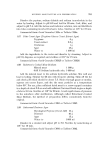
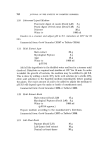
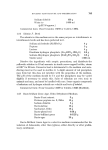
HYGIENIC MANUFACTURE AND PRESERVATION 731 one day and high on the next. When demineralised water has to be stored, it must be sterilized and stored in previously sterilized tanks fitted with lids capable of excluding aerial contamination. Sterilization should be carried out by boiling for 30 min, by the addition of formalin or chlorine or by ultraviolet irradiation. Care must be taken with ultraviolet sterilization to ensure that the water has a high uv transmission, for suspended matter will shield bacteria from radiation the efficiency of disinfection depends upon the intensity of the uv source, the transmission depth, and the rate of water flow. It is necessary to check by bacteriological tests that the water flow is not too fast and that adequate mixing of water is taking place by careful arrangement of the water inlet and outlet. It is preferable if water is to be stored continuously to recirculate it under a uv source. 3.5 Other sources of contamination Likely sources of contamination include sacks, bags, drums, vats, air- borne dust, straw, cardboard and the materials in which products are eventually packaged. Damp patches on ceilings and under stacks of raw materials should be rigorously avoided, as bacteria and fungi thrive in these conditions and eventually reach the manufacturing equipment and the product. Raw materials and packaging materials should be stored well away from the manufacturing area so that their flora cannot be disseminated into current production. All materials should be examined bacteriologically from time to time, preferably on a daily or batchwise basis if they carry a heavy load of micro-organisms, they should be sterilized either by ethylene oxide treatment or by autoclaving before transfer to the manufacturing area. Raw materials of mineral earth origin, including talc and pigments, may need to be sterilized before incorporation into cosmetics, to ensure the absence of tetanus spores in many instances, it may be preferable to purchase such ingredients already sterilized. Various forms of starch are also liable to be heavily contaminated. 3.6 Effect of processing conditions The operational procedures for manufacturing a cosmetic are normally determined by the need to achieve the desired product characteristics at an appropriate rate and output. Whilst it is unlikely that a process will be designed specially with the microbial status of the finished product as a prime consideration, attention to certain details may render the achieve- ment of good standards much easier than it would otherwise be. For ex-
Purchased for the exclusive use of nofirst nolast (unknown)
From: SCC Media Library & Resource Center (library.scconline.org)