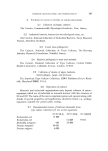
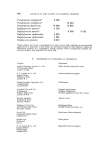
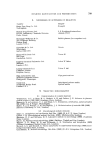
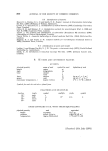
736 JOURNAL OF THE SOCIETY OF COSMETIC CHEMISTS 1. To check that plant hygiene is satisfactory. 2. To monitor the microbial contamination in raw materials. 3. To assess the microbial status of finished products. 4. To check that preservative capacity is adequate. To carry out such testing on every raw material supply and every batch of finished product, with daily or even hourly testing of the manufacturing plant and using all the possible test methods would be prohibitively ex- pensive and would cause unjustifiable production delays. It is therefore of great importance to establish a testing scheme appropriate to the actual circumstances in an individual production unit. The main aim will be to ensure gradually improving quality of output, along with early warning of adverse changes, rather than to "pass" or "fail" production batches in a purely routine fashion. Microbiological quality control should be initiated at the start of pro- duction with regular examination of plant in which the products are manufactured and proceeding to cover raw materials, including the water supply and packaging components. Frequent checks are desirable at all stages of a manufacturing process so that if contamination does occur, its point of onset is easily established and action can be taken to prevent a recurrence. Full records of all microbiological examinations will prove invaluable if complaints are received some time after manufacture and sale. The quality control programme for raw materials should include provision for quarantine on all items liable to be heavily infected until results are reported and evaluated, along with in-line testing on occasional product batches to determine microbiological changes in processing. Finished product testing should assess sterility or an acceptable microbial status for the particular product. Tests should be made for any pathogens previously encountered, unless the product has previously been shown to be self-sterilizing or unless production batches are found to be consistently sterile. The plant should be examined for the presence of specific pathogens and for micro-organisms, including fungi, likely to cause spoilage of the product or harm to the consumer. All valves, traps, pressure-relief valves and working surfaces should be swabbed periodically and the swabs cultured and counts performed. Pipe-lines should be taken apart where possible and washed through with sterile physiological saline or Ringer's solution viable counts should be performed on the washings, which should also be examined on selective media for the presence of potential pathogens. Manufacturing

HYGIENIC MANUFACTURE AND PRESERVATION 737 vessels should also be swabbed or washings should be taken and the same examination procedure followed. Particular attention should be paid to the bacteriological condition of filling equipment. Nozzles should be swabbed and pipe lines taken apart and washed through pumps should receive particular attention. All types of packaging material should be examined including cap wads and cartons, especially for the presence of fungi glass containers should be substantially free from bacterial or fungal contamination. The detailed application of the principles outlined here will depend on the intrinsic liability of the product to microbial contamination and the scale of manufacture, type of plant and process. It is therefore virtually impossible to suggest exact routines appropriate for all circumstances. Detailed suggestions are, however, given in Appendix B which may be adapted according to the prevailing requirements.
Purchased for the exclusive use of nofirst nolast (unknown)
From: SCC Media Library & Resource Center (library.scconline.org)