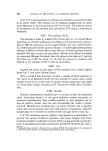
74t3 JOURNAL OF THE SOCIETY OF COSMETIC CHEMISTS 1.213 Powders Weigh aseptically 10 g of sample into a sterile glass bottle which is marked at 100 ml capacity and fitted with a ground glass stopper, to give a 1:10 dilution w/v or weigh 1 g of sample and make up to 100 ml to give a 1:100 dilution w/v. In the transference of powder aseptic manipulation can be more readily carried out by using a sterile E-mil weighing scoop. To mix, shake the suspension 25 times. 1.214 Creams Mix and transfer aseptically 1 g amounts of cream to sterile Universal bottles. Add 9 ml of sterile diluent and 6-8 sterile glass balls to each sample. Mix the contents on a Whirlimixer for 10 s. Prepare further serial tenfold dilutions as necessary. Mix the dilutions well and plate out immediately. For the treatment of emulsions with a hydrophobic continuous phase, method 3.36 (p. 765) is recommended. 1.215 Plating out Plate out in duplicate 1 ml of each dilution and add 10 to 15 ml of a suitable agar medium that has been liquefied and cooled to 45-47 ø. Mix well by rotating the plate clockwise and anti-clockwise several times, the plates being kept flat throughout the whole process. When the agar has set, invert the plate and transfer to an incubator. Do not stack plates more than six deep. 1.2113 Colony count of bacteria Use Tryprone Glucose Yeast Extract Agar, also known as Plate Count Agar. For routine colony counts incubate at 28-32 ø for 48 h intervals. Count the colonies. Actidione (cycloheximide) may be added to the medium at 0.001% to suppress moulds and yeasts. Actidione Agar (Oxoid PM 118) may also be used for this purpose. 1.217 Colony count of yeasts and fungi Use Malt Extract agar or Sabouraud Dextrose Agar. The medium may be acidified with lactic or citric acid to pH 3.5 + 0.1 to suppress the growth of bacteria. Once acidified, the medium should not be re-heated. See also Appendix C. For routine counts, incubate at 25 ø or other constant tempera- tures up to 30 ø. Inspect the plates at 24 h intervals. Count the colonies after five to seven days' incubation.

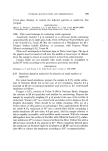
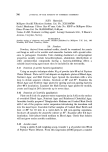
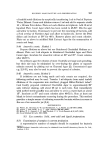
HYGIENIC MANUFACTURE AND PRESERVATION 747 1.218 Counting of colonies Colonies should normally be counted within 4 h of the end of the incuba- tion period, or the plates may be stored overnight at a temperature not exceeding 4 ø . Use an illuminated, preferably electronic, colony counter. Alternatively, a lens of a magnification not exceeding 2•- diameters, and a tally counter may be used to facilitate counting. Count all visible colonies on the plate including pin-point colonies beneath the surface. Where spreading organisms occur, count each "spreader" as one colony. Whenever possible, include only plates in which the dilutions have given colony counts between 30 and 300 for recording the results. To calculate the colony count per ml, multiply the number of colonies by the reciprocal of the dilution and determine the arithmetic mean for the replicates. Express results as colony count ml-1. If "spreaders" cover more than half the area, discard the plate concerned. The result will be of doubtful validity if one quarter or more of the plate is covered by a spreading organism. In such cases an approximate estimate of the count may sometimes be obtained by examin- ing a plate from another dilution. Multiplication of many organisms may be inhibited by high osmolarity or the presence of a preservative. Un- dissolved particles can complicate bacterial counts and must not be confused with colonies. It is sometimes more convenient to carry out a surface inoculation count (Method &SIS, p. 768). REFERENCE Postgate, J. R. Viable counts and viability, in Norris, J. R. and Ribbons, D. •V. g/[ethods in microbiology 1 (1969) (Academic Press, London). 1.219 Optimal temperatures There is a wide divergency in the optimal temperatures for the propaga- tion of various micro-organisms. Bacteria have been divided into three classes - psychrophiles, mesophiles and thermophiles - accordin k to their optimum temperature-requirements for growth. Psychrophilic bacteria may show activity at 7 ø or below with optimal growth at 10 ø to 20 ø. They do not reproduce at 40 ø. Mesophiles grow optimally at 37 ø to 40 ø. Growth does not occur at 55 ø or at 20 ø. The optimal temperature for growth of thermo- philes is 55 ø, but they may also grow at temperatures as high as 89 ø. They do not multiply at 40 ø . There is considerable overlapping in the divisions since some bacteria grow well over a wide range of temperatures whereas the optimal growth of others is restricted to a very narrow temperature range. It is advisable to incubate within the range of 22 to 32 ø as well as at 37 ø, for the isolation of spoilage organisms in cosmetics.
Purchased for the exclusive use of nofirst nolast (unknown)
From: SCC Media Library & Resource Center (library.scconline.org)