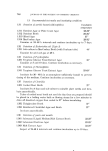
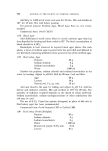
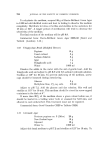
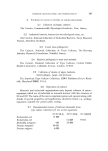
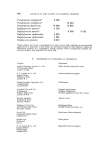
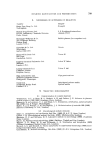
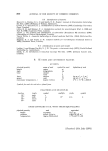
778 JOURNAL OF THE SOCIETY OF COSMETIC CHEMISTS 4.4 New preservatives 4.41 Phenonip (Nipa Laboratories Ltd.) This is a proprietary preparation based on p-hydroxybenzoates. It is supplied in the form of a colourless solution miscible with water, claimed to be active against bacteria, yeasts and moulds. Phenonip is stable on storage, compatible with proteinaceous, anionic and cationic systems, and is stated to maintain its activity over a broad pH range. It is recommended by the manufacturers as a shampoo preservative at levels of 0.5-1.0%. Each formulation or composition, however, needs to be examined in- dividually and bacteriological control tests should be carried out. 4.42 Preservative mixtures The principle of blends of several preservatives has not been extensively explored. Dehydroacetic acid has been used with sorbic acid esters (2): studies on various cosmetic formulations containing nonionic surfactants have also indicated that combinations of sorbic acid and hexylene glycol may be effective preservatives (3). Other references to the beneficial use of synergistic combinations have been made (4-7). REFERENCES (1) "Eurotox" Report, J. Soc. Cosmet. Chem. •lI1 322 (1962). (2) Manowitz, M., in Lawrence, C. A. and Block, S.S. DisinfectionSsterilization and preser- vation 555 (1968) (Lea and Febiger, Philadelphia). (3) Barr, M. and Tice, L. F. J. Am. Pharm. Assoc. 46 455 (1957). (4) Myddleton, W. W. Mfg. Chem. 81 256 (1960). (5) Gershenfeld, L. Am. Perfumer Cosmetics 78 55 (October 1963). (6) Maccacaro, G. A. _Progress in industrial microbiology8 (1961) (Heywood & Co., London). (7) Boehm, E. E. J. Soc. Cosmet. Chem. 19 531 (1968)

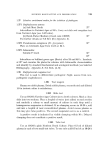
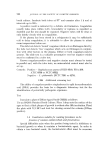
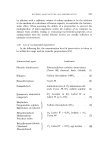
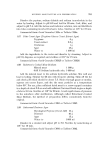
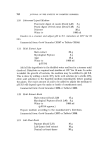
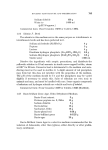
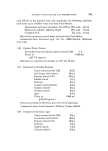
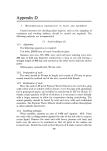
Appendix C Recommended culture media 1. FORMULAE Reference in this monograph to a culture medium identified by means of capital letters at the beginning of each word implies that the formula given in this Appendix should be employed and that the medium will have been sterilized at the stated temperature by autoclaving, unless otherwise directed. Water used for culture media should always be freshly distilled. Before use incubate samples from each batch of culture medium to check sterility and to test for growth promoting properties. 1.01 Nutrient Broth Beef extract 10 g Peptone 10 g Sodium chloride 5 g Water 1 000 ml Dissolve the ingredients by heating in the water. Adjust to pH 7.6-8.0 with 10 N NaOH and boil for 10 min. Filter. Adjust to pH 7.2-7.4 and sterilize at 115 ø for 20 min. Commercial form: Oxoid Granules CM67 or Tablets CM68. 1.02 Nutrient Agar Nutrient broth (pH 7.2-7.4) 1 1 Agar powder 15 g Dissolve the agar in the nutrient broth by autoclaving at 121 ø for 20 min. Adjust pH to 7.2. Filter through paper pulp. Distribute as required and sterilize at 121 ø for 20 min. Commercial form: Oxoid Blood Agar Base, Granules CM55 or Tablets CM56. 1.03 Blood Agar Base No. 2 Proteose peptone (Oxoid L46) 15 g Liver digest (Oxoid L27) 2.5 g Yeast extract (Oxoid L20) 5 g Sodium chloride 5 g Oxoid agar No. 3 12 g (pH 7.4 approx.) 779
Purchased for the exclusive use of nofirst nolast (unknown)
From: SCC Media Library & Resource Center (library.scconline.org)