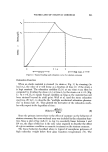
9.54 JOURNAL OF THE SOCIETY OF COSMETIC CHEMISTS ExrEmMENT•m The techniques are those described in Part I (3) with minor modifications if required. Generally, strips of stratum corneum (with the attached tabs) were immersed for one hour into the test material or solution. Thereafter the strip was floated onto a stainless steel wire mesh, drained, and carefully blot- ted. The strip was then air-dried and placed into the appropriate relative hum'•dity chamber for at least 24 hours before testing. Sometimes, the test substance was applied to the stratum eorneum with a cotton swab. Any ex- cess was carefully blotted off before the stratum eorneum was conditioned. For the determination of water sorption by humectants, 50% aqueous solu- tions of the humeetants were applied to small preweighed pieces of Gelman Type A glass filter paper. After conditioning at 0% RH, the weight of humee- tant was determined and the weight gain at a given RH was based on this "dry" weight. The glass filter paper was shown to absorb less than 1% of water at 90% RH, and this sorption was generally neglected. RESULTS AND DISCUSSION Mechanical Properties Many cosmetic materials are reported to soften skin and to act as emol- lients. It was expected, therefore, that these materials would exert some in- fluence on the mechanical properties of stratum corneum. Of particular inter- est is glycerol which is widely used by cosmetic formulatots as a humectant and skin moisturizer. It is generally recognized (2) that glycerol is hygroscop- ic and will absorb water until it reaches equilibrium with the ambient RH. Glycerol has been employed for many years to "heal" chapped skin, and this effect is attributed to its ability to hold water in contact with the skin. Values of the modulus AxE obtained at 22øC on strips of stratum cor- neum immersed in mixtures of glycerol and water are summarized in the curve shown in Fig. 1. The experimentally obtained values of AxE are nor- realized by dividing them by AxE of the same strip of stratum comeurn immersed in distilled water to yield the plotted value of E,. The results indi- cate that glycerol does not increase the elasticity of stratum corneum by itself but actually stiffens the stratum corneum at concentrations above about 30%, possibly by removing stratum corneum-hydrating water. These results are in accord with Blank's findings that water is the only plasticizer of horny material (4). It was considered possible that the interaction of the stratum corneum/ glycerol/water system under investigation was temperature sensitive. In order to study this aspect, the effect of temperature on the value of AxE was first determined by extending strips of stratum corneum, taken from the same specimen, under water maintained at various temperatures between 2 ø and

EFFECTS OF COSMETIC INGREDIENTS 255 9O • 7O =' •0' -g ß = 40, i,-,,, E 30, o 2O ß •o •o Jo 40 •o •o lO •6 •o '•do • •ate• Figure 1. Effect of water concentration on normalized modulus values of stratum comeurn (extended in glycerol/water mixtures at 22 ø C) 37øC. The values were divided by the value of AxE at 37øC under water, and the results are included in Fig. 2. It is apparent that the extensibility of human stratum corneum under the conditions of this experiment (immersed in water) shows very little change between 37øC and about 5 øC. Middleton and Allen (5) also observed only a modest change in extensibility of guinea pig foot pad stratum corneum between about 20 ø and 40øC under different experimental conditions (in air of RH between 60 and 80%). Below about 5øC, stratum corneum appears to be stiffer, i.e., harder to stretch. Figure 2 also includes the results of stretching in a solution of 1:1 water: glycerol (wt/wt) and a solution of 6M potassium iodide. The plotted data points were obtained by dividing the AxE values by the AxE values found at 37øC in the respective solutions. Glycerol was selected as a typical humec- tant, while potassium iodide (6M) is known to break the structure of water (6). In view of the' similarity of the results, it is likely that the effect of glycer- ol is due to the breaking of the water structure in the stratum corneum this might reduce hydration of the protein and make the stratum corneum stiffer or more difficult to stretch at temperatures below 18øC. The temperature dependence of stratum corneum elasticity observed here is probably too low
Purchased for the exclusive use of nofirst nolast (unknown)
From: SCC Media Library & Resource Center (library.scconline.org)