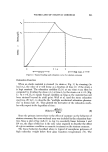
EFFECTS OF COSMETIC INGREDIENTS 255 9O • 7O =' •0' -g ß = 40, i,-,,, E 30, o 2O ß •o •o Jo 40 •o •o lO •6 •o '•do • •ate• Figure 1. Effect of water concentration on normalized modulus values of stratum comeurn (extended in glycerol/water mixtures at 22 ø C) 37øC. The values were divided by the value of AxE at 37øC under water, and the results are included in Fig. 2. It is apparent that the extensibility of human stratum corneum under the conditions of this experiment (immersed in water) shows very little change between 37øC and about 5 øC. Middleton and Allen (5) also observed only a modest change in extensibility of guinea pig foot pad stratum corneum between about 20 ø and 40øC under different experimental conditions (in air of RH between 60 and 80%). Below about 5øC, stratum corneum appears to be stiffer, i.e., harder to stretch. Figure 2 also includes the results of stretching in a solution of 1:1 water: glycerol (wt/wt) and a solution of 6M potassium iodide. The plotted data points were obtained by dividing the AxE values by the AxE values found at 37øC in the respective solutions. Glycerol was selected as a typical humec- tant, while potassium iodide (6M) is known to break the structure of water (6). In view of the' similarity of the results, it is likely that the effect of glycer- ol is due to the breaking of the water structure in the stratum corneum this might reduce hydration of the protein and make the stratum corneum stiffer or more difficult to stretch at temperatures below 18øC. The temperature dependence of stratum corneum elasticity observed here is probably too low

256 JOURNAL OF THE SOCIETY OF COSMETIC CtlEMISTS oo-'1- -t I I I '• I ool o-t- +l+l+l+l+l+l+l+l+l+l+l+l+l+lffl+l+l+l
Purchased for the exclusive use of nofirst nolast (unknown)
From: SCC Media Library & Resource Center (library.scconline.org)