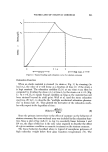
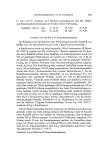
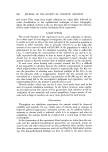
11.0 10.0 9,0 8,0 7,0 6.0 5,Q 4.,0 3.0 2.0 1,0 EFFECTS OF COSMETIC INGREDIENTS 257 -10 -5 0 5 10 15 20 25 30 35 Temperature tn øC Figure 2. Effect of temperature on normalized modulus values. Stratum corneum extended under solution and normalized to the value for water at 37øC -e-e-e-glycerol:water (1:1) to exert any influence on chapping or related skin disorders, since the temper- ature of the face and hands does not reach 18øC until the air temperature drops to about -12øC [extrapolated from data of Phelps and Vold (7)]. However, the temperature of the lower extremities can reach 18øC at an ambient temperature as high as 19øC (8). The effects of a variety of cosmetic ingredients and of a few chemical treat- ments on the physical properties of stratum corneum at 31% RH are summa- rized in Table I. In examining these data, it must be remembered that only horizontal comparisons are possible since the "control" and "treated" samples

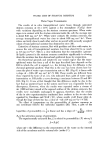
258 JOURNAL OF THE SOCIETY OF COSMETIC CHEMISTS are from the same stratum corneum specimen. A comparison within the vari- ous columns may lead to erroneous .conclusions. A decrease in the elastic modulus below that of the control (recorded as +) is indicative of an in- crease in the elasticity of the stratum corneum. In the case of the stress relaxa- tion modulus, an increase in the value over that of the control (recorded as +) describes the skin's ability to relieve a strain by viscoelastic response. The wide variations in the values for the controls are due to the fact that dif- ferent specimens of epidermis were used, but this in no way reduces the value of the data. Each value recorded in Table I represents an average of 4 to 6 determinations on the same specimen of human epidermis. Treatment with either acid or base increases the elasticity of the stratum corneum substantial- ly but does not appreciably alter its ability to relieve stress. Generally, the elastic and the stress relaxation moduli results after treatment parallel each other. Particularly noticeable is the remarkable "plasticizing" effect of dilute solutions of sodium pyrrolidone carboxylate and of sodium lactate. It is be- lieved that the influence of cosmetic ingredients on the mechanical perform- ance of stratum corneum correlates directly with their beneficial effect in skin preparations. Moisture Absorption The equilibrium moisture absorption of several important cosmetic mois- turizers on glass filter cloth was studied after equilibration at several relative humidities. The data in Table II show that sodium pyrrolidone carboxylate and sodium lactate are capable of holding relatively large quantities of water even at intermediate relative humidities, i.e. between 50 and 70% RH. It proved impossible to conduct similar experimentation with propylene glycol because of its unexpectedly high volatility. Data for stratum corneum and some hydrophobic materials are included merely as a matter of orientation. In view of the large effect of glycerin on the mechanical behavior of stratum corneum as a function of temperature (Fig. 2), it was considered conceivable that there is a specific interaction between glycerin, stratum corneum, and water which may increase the water-holding properties of stratum corneum. Similarly, the high hygroscopicity of sodium pyrrolidone carboxylate makes it possible that it too might impart some special water-holding properties to stratum corneum. In order to determine whether any such interactions occur, the isothermal absorptions of water by combinations of known weights of unextracted stratum corneum and glycerol or sodium pyrrolidone carboxylate were determined. The results shown in Table III clearly show that water absorption by stratum corneum is merely additive to that by the humectant. In other words, the moisture absorption by stratum corneum treated with a humectant is the sum of the absorptions of the individual components, with no evidence for any synergistic effects. These results are in agreement with the data reported by Fox et al. (9).
Purchased for the exclusive use of nofirst nolast (unknown)
From: SCC Media Library & Resource Center (library.scconline.org)