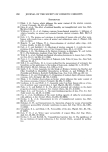
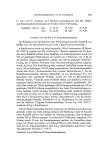
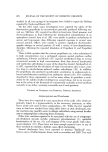
g60 JOURNAL OF THE SOCIETY OF COSMETIC CHEMISTS Material Table IV Vitro •Vater Vapor Transmission through Stratum Corneum Rate (mg cm -'• hr-•) Ratio Untreated Treated (Treated / Untreated) 25% glycerol 0.264 0.518 1.96 4% sodium lactate 0.294 0.372 1.27 4% sodium pyrrolidone carboxylate 0.142 0.227 1.60 4% propylene glycol 0.223 0.267 1.20 Light tech. mineral oil 0.274 0.205 0.75 Safflower oil 0.309 0.281 0.91 Lotion 78 a 0.335 0.1'81 0.54 "Formula 78 from Barnett (10). The results obtained here are only directional in view of several experimen- tal uncertainties: Experimentally, stratum corneum was first equilibrated in the diffusion cell against 0% humidity to yield an "untreated" rate. The mate- rial of interest was then applied to the exposed stratum corneum surface with the aid of a cotton swab. An effort was made to remove excess material while maintaining a continuous film, but there is no quantitation of the amount of substance actually remaining on the stratum corneum. The "treated" rate recorded in Table IV is the rate resulting after complete equilibration of the treated stratum corneum against the dry environment. As expected, lipid materials reduce water vapor transmission, whereas humectants cause a marked increase. The results with Lotion #78 confirm the in vivo data of Berube et al. who found that heavy application of this preparation was re- quired to produce the occlusive effect (11). It is particularly noted that the small amount of sodium pyrrolidone carboxylate remaining on the stratum corneum after applying a 4% aqueous solution still causes a very large in- crease in the rate of water vapor transmission. These results clearly confirm the earlier data presented by Powers and Fox (12) that humectants increase transepidermal moisture loss. Traditionally, humectants, such as glycerol, have been used for "improving dryness of skin and chapping." Published controlled clinical data attesting to the utility of humectants are missing, although the authors have access to a monadic clinical in-use study suggesting strongly that a preparation contain- ing a high concentration of glycerol without any occlusive properties allevi- ates the dryness/chapping syndrome (13). It is difficult to reconcile the evidently beneficial effects of glycerol with its ability to increase transepider- mal water loss. Only a very tentative hypothesis is offered here: Stratum cor- neum is commonly thought of as a homogeneous layer of cornified epithelial cells. The assumption is probably incorrect, since the outer portion of the stratum corneum may have suffered some damage due to wear and tear and the dissolution of lipid- and water-soluble constituents. As a result, the outer

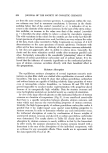
EFFECTS OF COSMETIC INGREDIENTS 261 barrier to the evaporation of water from stratum corneum is not the top of the stratum corneum but lies somewhere between the topmost and innermost cellular layers of the stratum corneum. Glycerol is known not to penetrate stratum corneum appreciably and presumably its application will result in the formation of a layer at or near the top of this epidermal structure. By virtue of its hygroscopicity, glycerol will unquestionably attract water from the low- er layers of the stratum corneum whenever ambient humidity conditions pre- clude absorption from the air. This will result in continuous migration of water molecules through all layers of stratum corneum towards the glycerol layer which, in turn, readily loses water to the atmosphere. The benefits de- rived from the application of glycerol then reside in its ability to move the evaporative layer of skin moisture from somewhere in the center of the strat- um corneum to the very top of the stratum corneum. CONCLUSIONS 1. The stress relaxation modulus and the elastic modulus are sensitive mea- sures of the ability of various cosmetic treatments to affect the viscoelastic behavior of stratum corneum. 2. The water-holding capacity of a system comprising a humectant and stratum corneum is the sum of the component parts. No synergistic effect could be demonstrated. 3. The application of typical cosmetic humectants to the exposed side of the stratum corneum increases the rate of transepidermal water loss. 4. A model to explain the beneficial effects of a moisturizer on the surface of the stratum corneum is proposed. ( Received November 13, 1973) REFERENCES (1) Blank, I. H., Factors which influence the water content of the stratum comeurn, J. Invest. Dermatol., 18, 433-40 (1952). (2) Chudzikowski, R. J., Skin versus the weather, Mir. Chem. Aerosol News, 44, No. d, 35-41 (1973). (3) Rieger, M. M., and Deem, D. E., Skin Moisturizers. I. Methods for measuring water regain, mechanical properties, and transe½idermal moisture loss of stratum corneum, .l. Soc. Cosmet. Chem., 25, 239-52 (1974). (4) Blank, I. H., Further observations on factors which influence the water content of the stratum corneum, J. Invest. Dermatol., 21, 259-71 (1953). (5) Middleton, J. D., and Allen, B. M., The influence of temperature and hmnidity on stratum corneum and its relation to skin chapping, J. Soc. Cosmet. Chem., 24, 239-43 (1973). (6) Hertz, H. G., and Klute, R., The slowing down of proton exchange in aqueous solu- tions of structure breaking ions, Z. Phys. Chem., Neue Folge, 69, 101-7 (1970). (7) Phelps, E. B., and Void, A., Studies on ventilation, I. Skin temperature as related to atmospheric temperature and humidity, Amer. J. Pub. Health, 24, 959-65 (1934). (8) Sheart, C., et al., Investigations on the exchanges of energy between the body and its ,environment, Trans. Amer. Soc. Heat Vent. Eng., 43, 115-20, (1937).
Purchased for the exclusive use of nofirst nolast (unknown)
From: SCC Media Library & Resource Center (library.scconline.org)