398 JOURNAL OF THE SOCIETY OF COSMETIC CHEMISTS it to the exterior surface where it evaporates. This process is known as trans- epidermal moisture loss (TEML) or insensible perspiration, and is governed by the laws of diffusion, an excellent discussion of which can be found in Scheuplein (9, 10). Hydration by occlusion is achieved by placing onto the surface of the skin a topical substance which has high diffusional resistance to water, thereby reducing the net water loss from the stratum corneum. One of the means used by cosmetic chemists to impart moisturization is by showing a reduction in TEML after the use of a topical substance. Methods [or Measuring TEML There are nearly as many methods for measuring TEML in vivo as there are investigators in the field. A few of the more important ones are found in: Thiele and Schutter (11), van Gosselt and Vierhaut (12), Spruit and Malten (13), Baker and Kligman (14), Frost et al. (15), Goodman and Wolf (16), Johnson and Shuster (17), Lamke (18), and Berube et al. (19). Evaluation o[ Topical Substances Several papers have appeared in which the effect of cosmetic materials on transepidermal moisture loss have been evaluated: Powers and Fox (20), Baker (21), Berube et al. (19), Spruit (22), and Mezei and Ryan (23). Whfie these papers provide inherent physical property data, they do not pre- dict what will happen under consumer use conditions. It was the main pur- pose of this study to provide a means for predicting the effect of product usage under consumer use conditions. EXPEBI1VIENTAL Instrumentation The instrumentation used is a modified version of that described in Berube et al. (19). Cambridge Systems Model 880 Dew Point Hygrometers* were used in this study. Skin temperatures are measured with a 10,000-ohm surface thermistor.i This thermistor is attached to the auxiliary channel in one of the hygrometers. Control o[ Variables Spruit and Malten (24) have divided the variables involved in these meas- urements into two groups: exogenous and endogenous. The exogenous var- iables are concerned with the environmental influences such as ambient tem- perature, relative humidity, and the psycho-environment. These variables were controlled with a Forma Scientific Environmental Room which can be controlled to -+0.1øC and +3% relative humidity. *EG&G, Environmental Equipment Div., Waltham, Mass. '[YSI Co., Inc., Yellow Springs, Ohio.

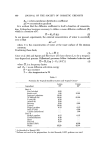
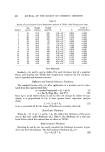
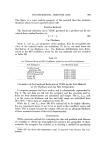
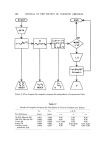
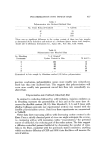
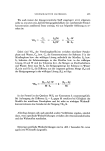
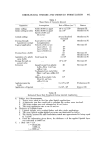
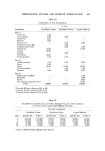
TRANSEPIDERMAL MOISTURE LOSS 399 The endogenous variables are concerned with the stratum corneum's con- tinuity, disease state, temperature, and hydration. All of these factors work- ing in complex interrelationships produce variations in TEML--from one re- gion of the body to another (13, 14), variation from one individual to another (25), and variation from day to day (13). Determination of TEML Response of Untreated Subiects The subiect is placed into the environmental chamber at 20øC and 20% relative humidity. The sampling probe is centered on the volar forearm ap- proximately 3 cm from the elbow. The thermistor is centered 0.5 cm below the probe. The subiect is allowed to come to equilibrium (about 0.5 to 0.75 hour). After equilibrium is obtained, the environmental temperature is grad- ually increased to give a slightly increasing skin temperature (about 1øC per hour) and the skin temperature and TEML are recorded. This is continued until sufficient data are collected to describe the subiect's TEML-skin tem- perature response. Determination of Topical Substance Response At the end of the above experiment, the probe is removed, the test sub- stance is applied, and the thickeness is determined as described in Berube et al. (19). The thermal-TEML response is again recorded. Several different thicknesses are applied to several different subiects. Test Materials Vaselined* brand Petroleum Jelly, 180 SUS Mineral Oil, and 70 SUS Min- eral Oil samples were obtained. A typical emollient lotion (Lotion 78) and a typical emollient cream (Cream 88) from Balsam and Sagatin (26) were prepared. The formulas are reproduced in Table I. Determination of Use Thickness (L•) A 20 cm by 5 cm square is marked on the volar forearm of a test panelist. The panelist is then given a preweighed sample of test material and asked to apply a•s much material as she likes to the area. The residual sample is re- weighed and the thickness calculated as described (19). RESULTS AND DISCUSSION Basic Dieusion Theory As noted by Scheuplein (10), the stratum corneum is permeated by water th•,ough biologically passive diffusion. It can be described by: ],• L,• = K,,• D AC (1) where Is = flux from subject L• -- skin thiekness *Chesebrough-Ponds Inc., New York, N.Y.
Purchased for the exclusive use of nofirst nolast (unknown)
From: SCC Media Library & Resource Center (library.scconline.org)