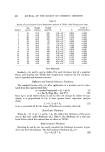
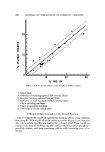
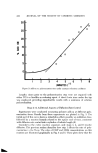
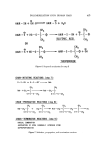
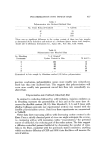
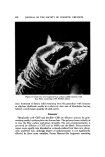
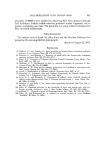
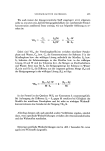
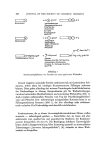
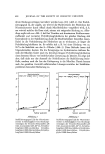
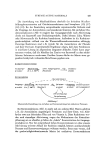
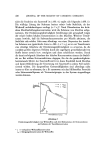
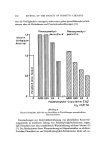
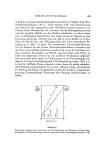
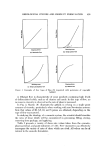
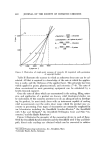
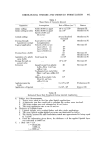
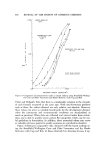
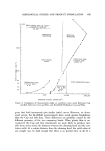
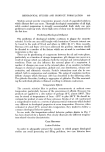
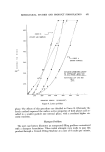
RHEOLOGICAL STUDIES AND PRODUCT FORMULATION 439 Shearing stress (a) Newtonian flow Shearing stress (b) Simple plastic flow Shearing stress (c) Simple pseudoplastic flow Shearing stress (d) Dilatant flow Figure 1. Examples of four types of flow (6) (reprinted with permission of copyright holder) 4. Dilatant flow is characteristic of some products containing high levels of defloccu]ated solids, such as oil slurries and muds. In this type of flow, an in?rease in viscosity is observed as the rate of shear is increased. In Fig. 2, Martin (6) illustrates the pitfalls in relying on a single point measure of viscosity, particularly when working with non-Newtonian systems. Note that values of 20, 8.5, 10, and 5 poises are obtained, depending on the type of flow encountered. In studying the rheology of a cosmetic system, the scientist should simulate the rates of shear which will be encountered in processing, filling, storing, removing from package, and applying. Table I presents a variety of shear rate values taken from the cosmetic, pharmaceutical, and paint industries (7-10). Few viscometers can effectively encompass the variety of rates of shear which are cited. All values can be of interest to the cosmetic formulator,

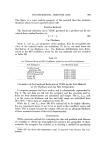
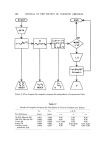
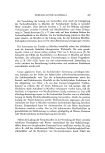
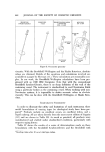
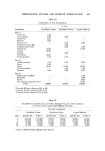
440 JOURNAL OF THE SOCIETY OF COSMETIC CHEMISTS 200 ' •/Newtonian = 4000 _ 20 poises 200 II •/pseudoplastic = 8.5 poises at point P Ue = 4000 - 2000 = 10 poises • 200 Up 4000 - 3000 = 5 poises = 200 100 - u0 10• 2•0 3000 4000 F (dyne-crn •) Figure 2. Illustration o[ single-point measure o[ viscosity (6) (reprinted with permission of copyright holder) Table II illustrates the manner in which an unknown shear rate can be cal- culated. All that is required is a knowledge ooe the rate at which the applica- tion is made, and the thickness of the applied layer. This principle has been widely applied in paints, pharmaceuticals, and cosmetics (7-9). The rates of shear encountered in most processing equipment can be calculated by a bright chemical engineer. Once the rates of shear which are encountered in the mixing, filling, extru- sion, and application of a product are known, valid rheologieal studies can be undertaken. If the cosmetic scientist is to do an adequate job in develop- ing his product, he must study shear with an instrument capable of making valid measurements over the entire shear range which the product may en- counter in processing. Four types of viseometers are commonly employed in our laboratories including the Brookfield Synehro-Eleetrie,* the Brookfield with T-Bar and Helipath,* the Brookfield/Wellington Cone and Plate Vis- eometer,* and the Haake Rotoviseo.* Figure 3 illustrates the geometry of the measuring device in each of these. With the Brookfield Synehro-Eleetrie and the Brookfield with T-Bar and Heli- path, direct scale readings are obtained which can be converted to relative *Brookfield Engineering Laboratories, Inc., Stoughton, Mass. ?Gebriider Haake, Berlin, Germany
Purchased for the exclusive use of nofirst nolast (unknown)
From: SCC Media Library & Resource Center (library.scconline.org)