PREPARATION OF MANUSCRIPTS 457 Copyright-Manuscripts and the data therein must not have been pub- lished previously. Upon acceptance, the manuscript becomes the property of the SOCmTY or COSMETIC CHEMISTS and may not be reproduced in part or as a whole without written permission of the Editor. Forwarding Address-Manuscripts submitted for publication should in- clude a covering letter and be addressed to the Editor, Dr. John J. Sciar- ra, St. John's University, College of Pharmacy and Allied Health Pro- fessions, Jamaica, N.Y. 11439. Preparation of Manuscript (a) Format: Manuscripts must be submitted in triplicate, an original and two copies. The manuscript must be double-spaced, typewrit- ten on good quality white bond paper, approximately 210 mm x 297 mm (81/2"x 11"). The title of the manuscript should include the names, academic degrees, addresses (including zip code), and af- filiation of the author or authors. The meeting and date at which the paper was presented should be fully identified. (b) Synopsis: Each article should be preceded by a brief abstract of 100 to 200 words. This abstract should include the pertinent new discoveries and conclusions which are presented in the article. This synopsis should be in a form similar to abstracts appearing in Chem- ical Abstracts. (c) References: References should be numbered in the order in which they appear in the text and should be listed in numerical order at the end of the article under "References." To assist readers, the complete title of the article should be included. Abbreviations of journals should be those used by Chemical Abstracts (cf. list of peri- odicals abstracted by Chemical Abstracts). References should appear in the following form: (1) The first name, followed by the initials and surname of the author(s). The names of all authors should be included. (2) Title of paper (all case letters except first letter in first word). (3) The name of the journal in italics, i.e., underlined once in the typewritten manuscripts. Standard abbreviations as in Chemi- cal Abstracts must be used. (4) The volume number in bold face type, i.e., underlined with a wavy line in the manuscript. (5) First and last page of the article separated by a hyphen. (6) Year of publication of the article (in parentheses) the month must be included for journals which do not use continuous pagination.

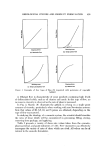
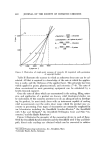
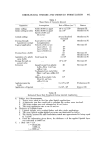
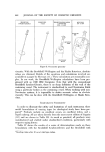
458 (d) (e) (f) (g) (h) JOURNAL OF THE SOCIETY OF COSMETIC CHEMISTS Correctly prepared journal references are shown below please note all punctuation marks: (1) L. E. Gaul, and G. B. Underwood, Relation of dew point and barometric pressure to chapping of normal skin, J. Invest. Dermatol., 19, 9-19 (July 1952). References to books are handled similarly and should include perti- nent page numbers: (3) S. Rothman, Physiology and Biochemistry ot the Skin, The University of Chicago Press, Chicago, IlL, 1954, pp. 494-560. References to books containing contributions from numerous au- thors appear as follows: (4) S. D. Cershon, M. A. Coldberg. and M. M. Rieger, Permanent Waving, in M. S. Balsam and E. Sagarin, Cosmetics: Science and Technology, vol. 2, 2nd ed., Wiley Interscience, New York, N.Y., 1972, pp. 167-250. Abbreviations: The metric system should be used. In accordance with modern practice, abbreviations such as cm, sec, rpm, ml, and mg are used without periods. It is requested that authors avoid all unusual notations, i.e., milligram per cent (mg %) or ppm mg/100 g and mg/kg are more acceptable terminology. Prefixes before names of organic compounds must be italicized (cis-, p-, tert-, etc.). Trade Names: A trade name must be followed by the sign "©." All common cosmetic ingredients should be referred to by the name indicated in the latest edition of CTFA Cosmetic Ingredient Dic- tionary, The U.S. Pharmacopeia (U.S.P.) and the National Formu- lary (N.F.) including specific manufacturer's designation as a foot- note. If a material is not listed then the proprietary or trade-marked name can be used with the chemical composition and the name and address of the manufacturer given in a footnote. Structural Formulas: Structural formulas should be used only if absolutely necessary and if the chemical in question is not well known to the reader. Structural formulas should be numbered and referred to in the text by Roman numerals. Tables: Tables should be numbered consecutively, using Roman numerals. Tables should include appropriate captions. Figures: Photographs and drawings (including graphs) are figures and are numbered consecutively using Arabic numbers (e.g., Fig. 3). On the back of each, the figure number, title of paper, author's
Purchased for the exclusive use of nofirst nolast (unknown)
From: SCC Media Library & Resource Center (library.scconline.org)