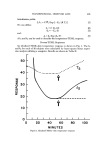
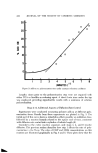
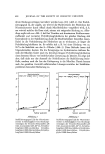
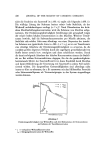
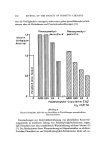
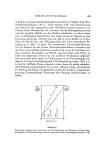
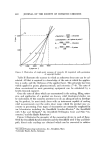
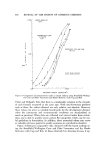
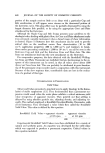
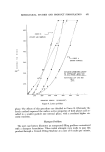
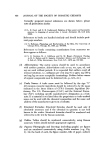
RHEOLOGICAL STUDIES AND PRODUCT FORMULATION 449 Modern aerosol powder concentrates present a level of suspended solids in which dilatant flow can occur. Thorough rheological examination of all higl• solids content suspensions is strongly recommended. Such study can save problems in scale-up work, where high rates of shear may be encountered for the first time. Predicting Rheological Behavior The prediction of rheological stability continues to plague the cosmetic scientist. It is the one area still fraught with frustration. Cosmetic interest can be traced to the work of Wood and others in 1963 (16, 17). More recently, Sherman (18) and Barry (19) have addressed the problem. Attention should be directed to a number of the factors which are at work in emulsions ancl suspensions as they age. There can be partitioning of components between the oil and water phase, particularly as a function of storage temperature. pH changes can occur as a result of storage which can influence both the internal and external phases of emulsions. These can also influence the external phase of a suspension. A number of changes can occur in the internal phase of an emulsion including changes in chemical composition, globule size, size distribution, volume con- centration, and ultimately viscosity. Particle interactions must also be con- sidered, both in suspensions and emulsions. The aging of emulsions involves definite changes which Sherman (20) has described in the following order. The globules flocculate, leading to aggregates of globules. The film surround- ing the individual globules is thinned, resulting in ultimate coalescence. Temperature El•ects The cosmetic scientist likes to perform measurements at ambient room temperature, particularly because of the convenience it affords. However, his products are applied to a skin surface of perhaps 35øC, almost 100øF. They may be stored at temperatures of h'om -20øF to plus 120øF. He should in- vestigate his product at some of these extremes. Boylan et al. (21) performed a comprehensive shady on a variety of pharmaceutical ointments which looked very different in rheological properties at room temperature. However, when evaluated at about 35øC, normal skin temperature, they tended to follow a cammon rheological behavior pattern. In our work, the temperature-related behavior pattern shown in Fig. 7 has been observed for a lipstick. This clearly illustrates the different tempera- ture related viscosity characteristics. CASE HISTORn•s Lotion Problem In order to adequately present the manner in which proper rheological studies can avoid processing and filling problems, two case histories have

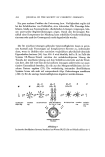
450 JOURNAL OF THE SOCIETY OF COSMETIC CHEMISTS R A T 0 F S H A R •gC -1 5000 4000 J 3000 2000 1000 35øC • / • 29øC 20,000 40,000 ,! 20øC t RATES OF SHEAR ENCOUNTERED DURING LIPSTICK APPLICATION 2,000-10,000 SEC -1 ROTOVISCO CONE PLATE ROTOR #2 i i T ........ I 60,000 80,000 100,000 120,000 SHEARING STRESS (DYNES-CM 2) Figure 7. Variation oflipstick viscositywith temperature been selected from experience. Figure 8 illustrates a problem encountered in the scale-up of a unique product. This particular product, as prepared on the bench, produced uniformly excellent results. However, as the process was scaled-up, problems were encountered with respect to viscosity. To establish the cause for these erratic, sometimes low, sometimes normal viscosities, the rheological behavior of several differently prepared samples was studied. The variable which was eventually recognized as being pivotal in this vis- cosity problem was the order in which surfactants were added to the oil and water phase, or to the oil phase alone. On the bench, polyoxyethylene stearate -40 moles of ethylene oxide was being added to the water phase and poly- oxyethylene (2) stearyl ether to the oil phase prior to melt-down and emulsi- fication (Curve A). In scale-up, processing time became a major considera- tion, and in the interest of saving time both surfactants were added to the oil
Purchased for the exclusive use of nofirst nolast (unknown)
From: SCC Media Library & Resource Center (library.scconline.org)