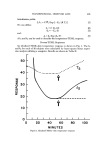
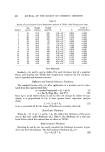
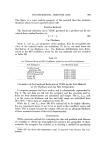
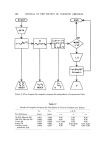
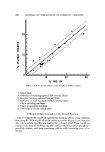
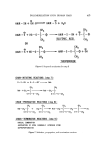
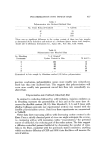
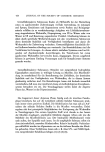
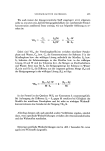
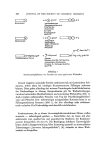
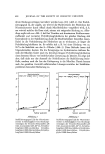
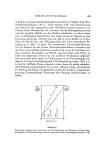
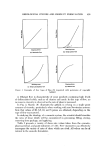
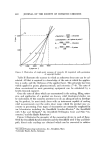
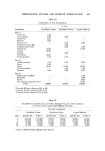
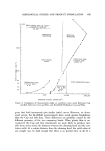
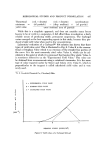
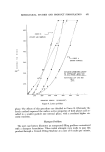
TRANSEPIDERMAL MOISTURE LOSS 401 Substitution yields: We can define: and: A kx and k2 can be used to describe the temperature-TEML response. Normal TEML Responses An idealized TEML-skin temperature response is shown in Fig. 1. The k• and k2 for each of 16 subjects were calculated by least squares linear regres- sion analysis utilizing a computer. Results are shown in Table II. 50 40 I.iJ o 30 2O I0 0 ß ß ß o ß ß ' T S ds I I I I I I I I I I 20 40 60 80 lOO MINUTES Figure 1. Idealized TEML-skin temperature response

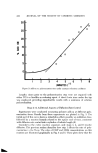
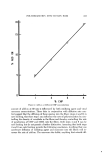
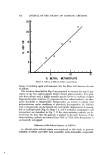
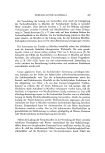
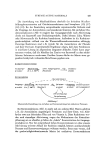
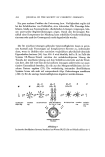
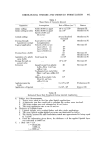
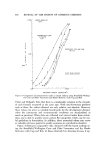
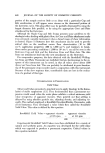
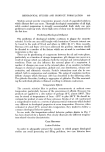
402 JOURNAL OF THE SOCIETY OF COSMETIC CHEMISTS Table II Results of Least Squares Linear Regression Analysis of TEML-Skin Temperature Data Age Height Weight Index of Subject (years) (inches) (pounds) k• k.o Determination l 18 67.0 100 3.56 x 10 -•ø 0.064 --0.992 2 21 64.0 105 2.35 x 10 --aø 0.219 --0.991 3 28 63.8 122 1.25 x 10 -• 0.176 --0.991 4 28 65.5 160 1.63 x 10 -•1 0.075 --0.992 5 29 60.0 110 2.82 x 10 .... 0.029 --0.990 6 29 62.0 140 1.14 x 10 -ø• 0.016 --0.989 7 30 66.0 157 1.84 x 10 -1.5 0.104 --0.992 8 31 58.5 125 8.91 X 10 --"• 1.980 --0.985 9 32 66.5 125 1.27 X 10 .... 0.012 --0.993 10 35 65.0 128 8.34 X 10 .... 0.015 --0.983 11 46 63.5 124 8.38 X 10 -•a 0.083 --0.990 12 50 64.0 121 1.42 X 10 -n 0.075 --0.990 13 55 63.0 159 6.30 X 10 -•'-' 0.153 --0.991 14 57 64.0 200 2.49 X lO -"• 0.164 --0.991 15 58 65.0 150 6.12 X 10 -•7 0.116 --0.991 16 58 64.0 151 6.01 X 10 -• 0.115 --0.992 Test Materials Similarly, a k,• and k4 can be defined for each thickness test of a material. These will describe the TEML-skin temperature response for the combina- tion of material and stratum corneum. Diffusion and Topical Substance Thickness The residual fraction of 1• (-) after application of a product can be calcu- lated from the experimental data: . = treated/untreated = (jr• + p)/IS (9) . = Exp - k)/Ts] (10) Since Lp is much thicker than Ls and Ls does not change by orders of mag- nitude, . is proportional to Lp. A least squares linear regression analysis shows L = ka (1/.) f k• (11) to be arcasonable fit for the range of thicknesses normally observed. Zero Order Thickness When k• = O, (1/,) = 1 and L = ks. We define this thickness of the prod- uct as the zero order thickness (L•). This is the thickness of a test ma- terial below which the material has no effect on TEML. Hal• Occlusive Thickness Knowing ks and k• one can easily calculate the thickness necessary to pro- duce any level of occlusion. The half occ]usive thickness (L0.•) i.•' Lo.. = (2) f
Purchased for the exclusive use of nofirst nolast (unknown)
From: SCC Media Library & Resource Center (library.scconline.org)