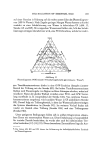
I. Soc. Cosmet. Chem., 27, 209-220 (May 1976) An Evaluation of Dispersing Agents in Aerosol Formulations. I: Synthetic Esters JOHN J. SCIARRA, Ph.D.,* ANTHONY IANNACONE, M.S.,* and LEE MORES, M.S.* Presented May 1, 1973, SCC Seminar, Cincinnati, Ohio Synopsis: This study is concerned with determining the effect that various DISPERSING AGENTS have upon the suspension and redispersibility of several solids commonly used in AEROSOL FORMULATIONS. Talcum, starch, and aluminum chlorhydroxide were used with various dispersing agents (including isopropyl isostearate, propylene glycol dipelargonate, 2-ethylhexyl pelargonate, methyl myristate, propylene glycol monoisostea- rate, isopropy] myristate, and hexadecyl alcohol). The effect of these materials upon the different formulations was determined by a study of the rate of settling and redis?rsibility of the product. Further attention was given to the relationship between the overall use- fulness of the dispersing agent in these formulations and its chemical structure. The so]u- bility in several epromonly used propellants of each of the fluids studied was also ob- served. In general, formulations containing the less polar dispersing agents settle rapidly, redisperse easily, and do not cake, while formulations containing the more polar com- pounds tend to behave in the opposite manner. In order to determine the effect of particle size, as well as the effect of coating the solid particles with dispersing agent, formulations were prepared whereby the powders were dispersed in a mixture of propellant and dispersing agent. The results of this study were then compared to the results obtained by intimately mixing the insoluble powder and dispersing agent and then adding them to the propellant mixture. In general, similar results were obtained. These results were then correlated with the solubility of the dispersing agent in the propellant mixure. *Brooklyn College of Pharmacy, Long Island University, Brooklyn, New York 11216. tSt. John's University, College of Pharmacy and Allied Health Professions, Jamaica, New York. Emery Industries, Inc., Fatty Acid Division, Cincinnati, Ohio. 209

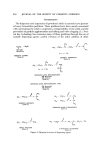
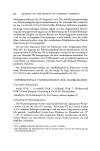
'210 JOURNAL OF THE SOCIETY OF COSMETIC CHEMISTS INTRODUCTION The dispersion and suspension of powdered solids in aerosols have present- ed many formulation problems. These problems have been mainly concerned with maintaining the solid in suspension, redispersibility of the solid, and the prevention of particle agglomeration and caking and valve clogging (1). Pres- ent day technology has overcome many of these problems through the use of suitable dispersing agents careful selection of the solid addition of other HRXADECYL ALCi•OL (Code B) (x + y = 14) ISOPROPYL ISOSI•RAT• (Code G) CH 3 O HO-CI-I CH 3 PROPYLENEGLYCOLMONOISOSTEARATB 52% Marioester 48• Diester (Code F) PROPYLENE GLYCOL MONOISOSTEARATE (90•) 90• Monoester 10• Diester (Code H) 0 CH 3 - (CH2)12 - C - O - CH CH 3 - (CH2) 7 - C - O - CH 2 CH3•- (c.2) 7 - c - o - CH ISOPROPYL MYRI STATE •H 3 (Code A) PROPYLENE GLYCOL DIPELA•GONATE (Code C) O O CH• ' (CH2) 12 ' C - OCH 3 CH 3 . (CH2)7 - C - 0 - CH 2 '7 - (CH2)3 - CH3 C 2 H5 !•THYL MYRISTATE (Code E) 2-ETHYLHEXYL PEI.ARGONATE (Code D) Figure 1. Chemical structure of dispersing agents
Purchased for the exclusive use of nofirst nolast (unknown)
From: SCC Media Library & Resource Center (library.scconline.org)