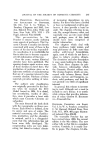
J. Soc. Cosmet. Chem., 27, 235-239 (May 1976) Recoating of Human Hair by Sebum Dr. HANS EBERHARDT* Synopsis-The results of two model experiments show that SERUM does not creep along the HAIR. Accordingly, the sebum which coats the hair does not originate from its FOLLICLE. It is assumed that the terminal hair picks up sebum mechanically from surrounding follicles. The hair and the S'EBACEOUS GLAND together form the pilosebaceous apparatus in both man and hairy animals. The hair protects the body from loss of warmth, while the sebaceous glands protect the hair by covering it with ]ipid. Therefore, we can as- sume that the sebum, which is present in the hair follicle, is coating the whole hair. Greasing of the hair, which takes place during its growth out of the sebum-filled follicle, is of minor importance, since the rate of hair growth is only 0.35 mm a day. Moreover, recoating of hair by sebum occurs within a few days. Therefore, creeping of the sebum along the hair, as has been assumed by some authors (1), (2), seems to provide a natural explanation for the process of hair greasing. INTRODUCTION The Creeping o[ Sebum Along the Hair The passive creeping of the sebum along the hair was examined in two experiments: the capillary experiment and the spreading experiment. These experiments will be discussed in the following two sections of this paper. EXPERIMENTAL AND RESULTS The Capillary Experiment A glass capillary was filled with freshly sampled, human sebum, and a hu- man terminal hair was threaded into the capillary. The temperature was held *Forschungslaboratorien der Dr. Karl Thomae GmbH, D-795 Biberach/Ri13, Bundesre- publik, Deutschland. 235

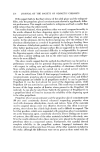
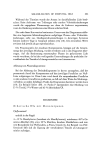
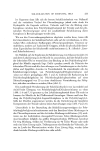
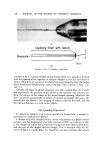
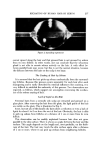
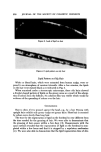
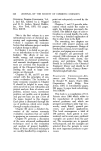
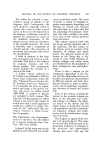
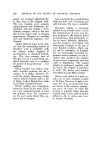
236 JOURNAL OF THE SOCIETY OF COSMETIC CHEMI?STS .... ?•'"..:.' ::•:'•4• :. ...... •']. •' -•:•... •4• ' .,.•.: 4•'• --'•--'•..•...•.•4•*•:•,.?•: :%.....::.:•.• .. ' :%:.]].• •... ' ...... ß .... ......'?.':.:' .... ..... ,•....:•:........•:•. '•'•-•r•.• •..:•:'• ....... ?.... (•) Capillary fi!lod with soburn .... ß ..... '-'"' Hair (b) constant at 35 ø C. Crystals of lipid soluble Sudan black were placed on the hair near the opening of the capillary to indicate whether or not any movement of sebum along the hair occurred. If sebum had crept along the hair, the Sudan black would have dissolved and colored the hair. This is shown i• Figs. i (a) and (b). Actually, the hairs remained unstained even after several days. In a modi- fied experiment, the pressure on the sebum in the capillary was raised to en- large the surface of the sebum in the funnel-shaped opening. Moreover, the hair was moved mechanically to imitate its natural movement. But again, the crystals did not dissolve. No creeping of sebum could be detected, and the hair did not function as a wick in the follicle. The Spreading Experiment To determine whether or not sebum spreads on human hair, a second ex- periment was conducted as follows. A_ droplet of freshly sampled human sebum was placed on a human termi- nal hair, and the temperature was kept constant at 35øC, as is shown in Fig. 2. The droplet of sebum did not spread over the. hair even after several days, and the size of the droplet did not change. This is identical with the be- haGor of lipids on textile fibers (7). Therefore, one may conclude that sebum
Purchased for the exclusive use of nofirst nolast (unknown)
From: SCC Media Library & Resource Center (library.scconline.org)