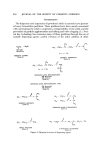
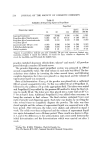
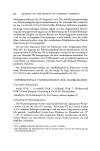
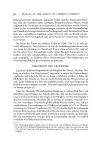
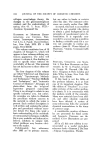
'210 JOURNAL OF THE SOCIETY OF COSMETIC CHEMISTS INTRODUCTION The dispersion and suspension of powdered solids in aerosols have present- ed many formulation problems. These problems have been mainly concerned with maintaining the solid in suspension, redispersibility of the solid, and the prevention of particle agglomeration and caking and valve clogging (1). Pres- ent day technology has overcome many of these problems through the use of suitable dispersing agents careful selection of the solid addition of other HRXADECYL ALCi•OL (Code B) (x + y = 14) ISOPROPYL ISOSI•RAT• (Code G) CH 3 O HO-CI-I CH 3 PROPYLENEGLYCOLMONOISOSTEARATB 52% Marioester 48• Diester (Code F) PROPYLENE GLYCOL MONOISOSTEARATE (90•) 90• Monoester 10• Diester (Code H) 0 CH 3 - (CH2)12 - C - O - CH CH 3 - (CH2) 7 - C - O - CH 2 CH3•- (c.2) 7 - c - o - CH ISOPROPYL MYRI STATE •H 3 (Code A) PROPYLENE GLYCOL DIPELA•GONATE (Code C) O O CH• ' (CH2) 12 ' C - OCH 3 CH 3 . (CH2)7 - C - 0 - CH 2 '7 - (CH2)3 - CH3 C 2 H5 !•THYL MYRISTATE (Code E) 2-ETHYLHEXYL PEI.ARGONATE (Code D) Figure 1. Chemical structure of dispersing agents

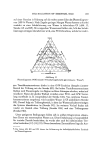
SYNTHETIC ESTER DISPERSING AGENTS gll agents such as talc, starch, bentonite, and silica derivatives and careful selec- tion of suitable valves (2). With regard to this, another important aspect is that the particle size of the solid to be dispersed must be about 50/.• or less (able to pass through a number 39,5 mesh screen). A combination of many of these factors is used in order to formulate suitable aerosols, which contain dispersed solids (3,4). In the past, various materials had been used as dispersing agents for these aerosols. They include isopropyl myristate, hexadecyl alcohol, mineral oil, and other similar substances. In addition, several surfactants, such as the sorbitan esters, have also been used as dispersing agents for these aerosols, although the use of these esters has been limited to those products containing very small quantities of powder such as is found in medicinal aerosols (5). Preliminary studies, which employed several other materials, which are po- tentially usehd as dispersing agents, revealed the possibility that the dispers- ing properties of the material may be related to the chemical structure of the compound. This observation has also been noted by others (6). Several materials were selected for this study. They included isopropyl my- fistate, hexadecyl alcohol, methyl myristate, isopropyl isostearate, g-ethyl- hexylpelargonate, propylene glycol dipelargonate, propylene glycol monoiso- stearate, and propylene glycol monoisostearate (90 per cent). The chemical structure of each of these materials is shown in Fig. 1. The effect of each of these materials upon the dispersion of aluminum chlorhydroxide complex, talc, and starch was determined. The solubility of each of the above materials was also determined in various propellants and propellant blends so that the solubility of the substance in the propellant could be correlated with its suspending properties. Since viscosity changes were noted when the dispersing agent was mixed with the solid (in particular, combinations of aluminum chlorhydroxide complex with silica products), the viscosity of these systems was determined. EXPERI1VIENTAL Development o[ a Simple Method for the Screening of Dispersi,g Agents This study was carried out to devise a simple technique for evaluating dis- persing agents, which are useful with solids in aerosol formulations. Further- more, it is desirable to effect this screening without the use of a pressurized aerosol system, thus allowing any laboratory without aerosol filling equipment to obtain a reasonable idea as to the potential performance of various prod- ucts in an actual aerosol formulation. It was felt that if a system in which a nonpolar solvent, such as petroleum ether, was substituted for the propellant in a typical aerosol formulation, measurement of suspension and redispersibili- ty properties of the solid material in this system would correlate to the same properties measured in an actual aerosol system. Several dispersing agents and
Purchased for the exclusive use of nofirst nolast (unknown)
From: SCC Media Library & Resource Center (library.scconline.org)