ASSESSMENT OF SKIN MOISTURIZATION 6O9 of dry corneum. Both Walkley (7) and Anderson et al. (5) hypothesized that the freezable fraction was held only by diffusional barriers, whereas the non- freezable (i.e., bound) fraction was strongly associated with •he polar groups of corneum proteins and NMF. Walkley further found that the effect of ex- tracting lipids with diethyl ether and NMF with water allowed for an increase in the portion of bound water from 0.29 to 0.41 mg/mg of dry animal foot pad corneum. Ether-water extraction caused a dramatic lowering of corneum dif- fusional barriers and allowed for a greater proportion of sorbed water to be bound by polar residues of the remaining proteins and lipids. In a study of swelling properties of unmodified and ether-water extracted stratum corneum via biomechanical analyses as is described below, Wolfram et al. (8) have confirmed Walkley's finding. C. Biomechanical Analyses As several investigators have pointed out (4, 6, 8, 9), the elastic modulus of stratum corneum is directly correlated with the amount of water retained in the tissue. Water retention, in turn, has been demonstrated to depend on the surrounding temperature and relative humidity and on the structural integrity of the cornified cells (10-14). It is widely observed th, at, in winter, the rate of moisture replacement from beneath the comeum becomes inadequate in com- parison to the rate of transpiration from the surface. Moreover, exposure to organic solvents or aqueous detergents damages the skin and allows for de- hydration of the outermost cell layers. As these cornified layers become pro- gressively more dehydrated, they become inflexible and less extensible than the deeper layers causing the surface to stiffen, flake, and crack, while the per- son involved perceives the tight, drawn, and itching sensations of chapped and dry skin. Changes in the reversible stretching properties of animal corneum may be evaluated by the method of Elfbaum and Wolfram (9) who used the extenso- meter.* Their results have been expressed as the work index (i.e., the ratio of the work required to reversibly stretch a strip o.f corneum to a 5 per cent dis- placement in a given solvent versus preliminary 5 per cent displacement of the same strip in water). In this way, aqueous dimethyl sulfoxide (DMSO) concentrations greater than 50 per cent cause a reversible stiffening (increase in the work index) of animal corneum together with exter•sive swelling in the cells of the cornified tissue. A conco•nitant increase in the tautness and hard- ness of the samples is observed at the macroscopic level. In a similar manner, ether-delipidized tissue has been water-swollen and reversibly stretched (8). Unlike the dimethyl sulfoxide treatment, exposure of stratum corneum to *Instron Corp., Canton, Mass. 02021.

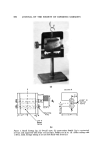
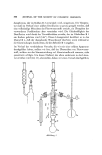
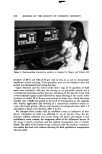
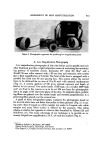
610 JOURNAL OF THE SOCIETY OF COSMETIC CHEMISTS ether and then water causes about a 30 per cent dry weight loss and nearly a two-fold decrease in stiffness as measured by the work index. A contacting probe balance, developed by E. M. Buras at our laboratory,* has been employed for measuring the cross-sectional swelling of specimens of stratum corneum (8). This instrument permits the rapid and accurate record- ing of the displacement of a probe placed in contact with the dry surface of dry cornified tissues. After measuring the dry state thickness, each sample is submerged in 0.1 per cent aqueous Triton X-100,* and the displacement due to swelling is continuously monitored. The final thickness is determin,ed after equilibrium is reached, usually within 10 min. The percentage swelling is calculated by comparing the initial displacement with that following imbibi- tion. Changes in the remaining two dixnensions (termed in-plane swelling) are measured directly for square samples (20 x 20 mm) before and after immer- sion in 0.1-per cent aqueous Triton X-100. After 16 h, all squares are removed, and their perimeters remeasured to the nearest 0.1 mm to determine the per- centage change. To test the effects of delipidization, squares have been pre- extracted with diethyl ether for 1.5 h, air dried, incubated as above for 16 h, and then remeasured. The pronounced weakening of the ether-pretreated specimens as reported in the Instron study correlates well with distinct increases in both cross-sec- tional and in-plane swelling. Ether-water extraction and concomitant loss of NMF causes about a 3-fold increase in thickness when subsequently re- swollen, but only a 5 per cent enhancement in area (8), as compared with xvater-soaked stratum corneum which is not preextracted. Ether pretreatment, therefore, alters not just the lipid content and moisture retaining capacity through loss of NMF, but the physical dimensions, strength, elasticity, and •nembrane permeability as well. The high swelling and reduction in the rate of strain recovery (i.e., decrease in the viscous component of elasticity) of the ether-treated samples may be explained by marked alteration in the confor- mation of keratin •nolecules, which is brought about by the breakdown of hydrogen bonds and accompanying aqueous exposure of previously buried *T,he probe balance consists of a freely moving aluminum arm suspended on aluminum- coated Mylar flexures. T'he balance has a 2 mm 2 probe at one end, which contacts the corneum specimen placed on a fiat surface. At the other end of the balance armø there is a position transducer which consists of a vane and a proximity probe. Displacement is measured by change in capacitance which varies with the length of a cylindrical probe inserted into the vane. The proximity probe of this dynamic balance is wired into a commercial driver unit, and then into the Y-axis of the recorder. An aluminum cylin- der coil fastened to the balance arm above a magnet constitutes a damping system. The instrument has also been used to measure diametrical swelling of hairs. ?Rohm and Haas Co., Philadelphia, PA 19105.
Purchased for the exclusive use of nofirst nolast (unknown)
From: SCC Media Library & Resource Center (library.scconline.org)