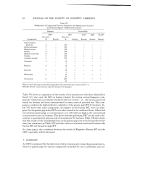
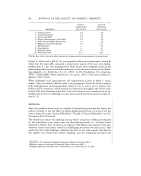
54 JOURNAL OF THE SOCIETY OF COSMETIC CHEMISTS the factors influencing contact sensitization in man and in the guinea pig, and by includ- ing all these factors in the same experiment, these authors developed a testing tech- nique which they called the maximization test (MT). With this technique, they found a close correlation between clinical experience and experimental results. The authors conclude that by testing compounds on laboratory animals under extreme experi- mental conditions it should be possible to detect the whole sensitizing potentiality of a compound. This statement should permit the assumption that the probability of a compound caus- ing sensitization in humans could be estimated. The authors emphasize, however, that it is impossible, on the basis of animal experiments alone, to formulate fully reliable predictions valid for humans. The purpose of our work, taking into account the knowledge acquired by Kligman and Magnusson, was to develop a testing procedure for guinea pigs convenient for testing new synthetic chemical compounds intended for use in fragrances and cosmetics. Spe- cial attention was paid to developing a test which would be simple to perform, would simulate the conditions in human use, would yield quantitative data, and would mini- mize the effects of subjective factors in evaluating the results. Like Kligman, we checked the reliability of our test by performing concurrently 3 other tests commonly used in this field. We tested a series of compounds with a well-known sensitizing ca- pacity for man, in order to establish whether or not a correlation exists between clinical experience and the results of our animal experiments. For the first step in these investigations, we chose 32 compounds described in the literature as being allergenic for man. These compounds were tested concurrently, on groups of 6 to 8 guinea pigs each, by the open epicutaneous test (OET), the Draize test (DT), the maximization test (MT) and an intradermal test with Freund's complete adjuvant (FCAT), all described below. II. MATERIALS AND METHODS CHEMICAL COMPOUNDS Thirty-two compounds used in the perfume industry were tested. All these compounds were tested under code numbers, their nature and potential allergenicity being un--. known to the experimenters prior to testing. :, : ANIMALS The animals used were male and female outbred Himalayan white-spotted guinea pigs ß bred at the Institute of Biomedi'kal Research, Fiillinsdorf, Switzerland. The guinea pigs weighed 400 to 500 g. They were fed on pelleted feed supplemented with green: vegetables, carrots and vitamin C in the drinking water, all available adlibitum. TESTING METHODS OET.' All the compounds were tested undiluted as well as dissolved in acetone, ethanol, diethyl phthalate, etc., at concentrations of 30, 10, 3, 1, 0.3, 0.1, and 0.03 per cent (or less when necessary) in order to establish a dose-response curve making it possible to determine the minimal irritating and the maximal tolerated concentrations on an "all or

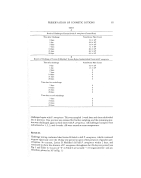
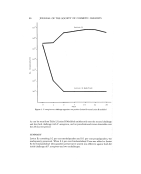
TEST METHODS FOR SCREENING FRAGRANCES 55 none" basis. This contrasts with another method still in use (11), where only one arbi- trarily fixed concentration is used, and its activity is evaluated subjectively according to the intensity of the lesions observed. Before the induction procedure (see below), we determined the skin irritation caused by a single application. For this purpose, we applied 0.025 ml of each undiluted com- pound and of its progressively diluted solutions to an area measuring 2 cm 2 previously marked with a circular stamp on the clipped flank skin of 6 to 8 animals per group. In each case, the liquid tested was applied uniformly with a pipette. After evaporation of the solvent, the application site was left uncovered. The reactions were read after 24 h using an "all or none" criterion, i.e., the dose-response curve was established by end- point determination. The minimal irritating concentration was defined as the lowest concentration causing mild erythema in at least 25 per cent of the animals of the group concerned, and the maximal nonirritant concentration as the highest concentration causing no macroscopically discernible reactions in any of the animals of the group. The highest concentration of a compound used in this local application test was de- termined by its solubility and skin irritating capacity. Most of the substances used could be applied undiluted. However, high concentrations causing strong reactions, e.g., ß swelling, necrosis, or ulceration, were not used for evaluation because the end-point determination was considered a more sensitive index of activity. The determination of the tolerance threshold on the guinea pig in the OET is mainly done for methodical reasons, in order to quantitatively realize an eventual sensitiza- tion, and besides it gives information on the concentration-dependent skin tolerance of -•: substances. Carrying over these results onto man is possible under restriction. Induction procedure.' On day 0 we applied 0.1 ml of each undiluted compound and of its progressively diluted solutions to an area measuring 8 cm z on the clipped flank skin of :'i:. 6 to 8 guinea pigs per concentration group, using 4 to 6 such groups for each corn- ' pound. The applications were repeated daily for 21 days, always using the same skin '?: site. The application site was left uncovered and the reactions were read 24 h after each application. The maximum nonirritant and the minimal irritating concentrations were :,:: determined by the same "all or none" criterion as described above. When necrotic or ulcerating reactions were provoked, the application site was changed. Generally speaking, the degree of the topically irritant effect after one single or after repeated application is characterized by the intensity of the skin reaction and by the :• magnitude of the minimal irritating concentration. For evaluation of the irritations, we applied the following scale: 0 = no skin reaction 0.5 = red spots 1 = confluent redness 2 = redness plus swelling 3 = redness, swelling, crusts 4 = necrotic skin alterations Challenge procedure.' To determine whether or not allergic contact dermatitis was in- duced, all the groups of guinea pigs previously treated for 21 days as described above, as well as 6 to 8 untreated controls for each compound, were tested on days 21 and 35 on the contralateral flank with the same compound at the minimal irritating concentra- tion and at some lower nonirritant concentrations. We used the minimal irritating
Purchased for the exclusive use of nofirst nolast (unknown)
From: SCC Media Library & Resource Center (library.scconline.org)