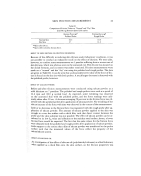
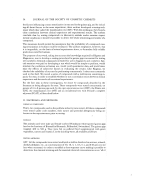
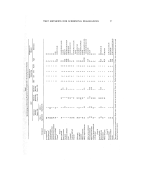
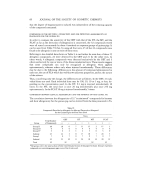
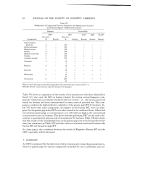
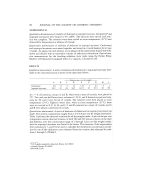
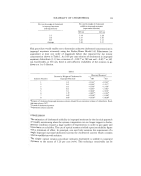
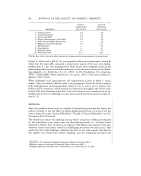
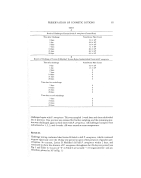
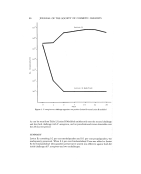
60 JOURNAL OF THE SOCIETY OF COSMETIC CHEMISTS that the degree of hypersensitivity induced was independent of the irritating capacity of the compound concerned. COMPARISON OF THE OET WITH 3 OTHER TESTS USED FOR DETECTING ALLERGENICITY OF FRAGRANCES FOR THE GUINEA PIG In order to compare the sensitivity of the GET with that of the DT, the MT, and the FCAT as far as the detection of allergenicity is concerned, the 32 compounds tested were all tested concurrently by these 4 methods on separate groups of guinea pigs. It can be seen from Table VI that, by using all four tests, 25 of the 32 compounds were found to be allergenic in one or more of these tests. Referring to the detailed data shown in Table I, it can further be seen that, of these 25 allergenic compounds, 22 were detected by the GET and 21 by the other tests. In other words, 4 allergenic compounds were detected exclusively by the GET and 3 others exclusively by one or more of the three intradermal tests. These results suggest that some compounds can only be recognized as allergenic when applied epicutaneously, whereas others only when injected intradermally. These differences may be due to the following: differences in the amount of compound administered in each test the use of FCA which has well-known adjuvant properties, and/or the nature of the solvent. Thus, considering only the dosage, the differences are as follows. In the GET, 21 indi- vidual doses are used. Each individual dose may be 100, 30, 10 or 3 mg, or less, de- pending on the concentration used. In the DT, 0.1 mg is injected intradermally 10 times. In the MT, the total dose is once 20 mg intradermally plus once 250 mg epicutaneously. In the FCAT 50 mg is injected intradermally 5 times. COMPARISON BETWEEN CLINICAL ALLERGENICITY AND THE FINDINGS ON THE GUINEA PIG The correlation between the allergenicity of 32 "incriminated" compounds for humans and their allergenicity for the guinea pig can be derived from the data presented in Ta- Table VI Compounds Described as Allergenic for Man and Detected as Allergenic a for the Guinea Pig by the Four Tests Used Group Tests GET DT MT FCAT Total Number of Compounds ..+ - + - + - + - Group II 18 18 0 7 11 15 3 17 Group III 4 4 0 0 4 0 4 0 4 Group IV 3 0 3 1 2 3 0 3 0 Subtotal 25 22 3 8 17 18 7 20 5 Group I 7 0 7 0 7 0 7 0 7 Subtotal 32 22 10 8 24 18 14 20 12 Total 32 32 32 32 32 •The group code is the same as that in Table I (see Results Section of this paper for data). Group I represents compounds not sensitizing guinea pigs in any of the 4 tests used.

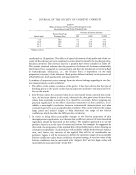
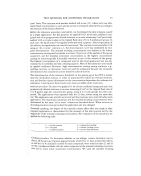
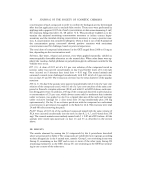
TEST METHODS FOR SCREENING FRAGRANCES 61 bles I and VI. Of these 32 compounds, 25 were found to be allergenic for the guinea pig in 1 or more of the 4 tests used. This includes 4 compounds found to be allergenic only in the OET and 3 compounds found to be allergenic only in 1 or more of the other 3 tests. The remaining 7 compounds were found to be nonallergenic in all 4 tests on guinea pigs. These 7 compounds are described in the literature (22) as sensitizing for humans, but without confirmatory data such as a positive history, a positive patch test or re-exposition. In view of our negative findings on the guinea pig, we consider that the reported allergenicity of these compounds for humans might perhaps reflect a possible cross-sensitizing capacity. It can be seen from Table I that all the compounds with a well-established sensitizing capacity for man were found to be allergenic for the guinea pig in one or more of the 4 tests used. This could be expected for compounds 6f the "incrimination" Types B, C, D, and E. By contrast, the test results for compounds of Type A were divergent. These compounds induced hypersensitivity in guinea pigs when the incriminating data were accurate, and failed to do so when their reported allergenicity was based on an assump- tion or on an unconfirmed observation. The nonallergenicity of the first 6 compounds of Type A listed in Table I, as well as that of thymol, all of which failed to induce hypersensitivity in the guinea pig in any of the 4 tests used, may be considered fairly well-established, because they were negative in the OET even when tested undiluted (benzophenone and thymol could not be tested undiluted because of systemic toxicity, see Table I) and were also negative in the intradermal tests. On the other hand, 4 other compounds of Type A were shown to be weak sensitizers because they were positive in the OET at a concentration of 30 per cent. IV. DISCUSSION The OET is a procedure proposed for testing on guinea pigs the skin irritating and allergenic capacities of chemical compounds intended for use in perfumes, cosmetics, and dermatics. In the OET, the compounds to be tested are applied undiluted and in a descending series of concentrations. By establishing a dose-response curve, the minimal irritating and minimal sensitizing concentrations of a compound can be de- termined quantitatively. The end-point reactions are read on an "all or none basis," thus largely excluding subjective bias in the evaluation of the results. A total of 32 compounds described in the literature as allergenic for man were tested by the OET. For purposes of comparison they were also tested by the DT, the test with "FCAT, and the MT described by Magnusson and Kligman (4, 5). The highest number ß of allergenic compounds were detected by the OET, somewhat fewer by the FCAT and the MT, and a few by the DT. However, certain compounds were detected exclusively by the OET and others exclusively by one or more of the intradermal tests (DT, MT and/or FCAT). The reliability of the OET, i.e., its predictive value for man, was investi- gated by us, as had been done by Magnusson and Kligman, testing on animals the sensi- tizing properties of fragrances known from clinical experience to be allergenic for man and some known to be innocuous. Of the compounds tested, all those with well-es- tablished allergenic'ity for man were detected by the OET (see Tables I and VI). On the other hand, compounds with an unconfirmed clinical allergenicity yielded divergent results in the animal tests, as expected.
Purchased for the exclusive use of nofirst nolast (unknown)
From: SCC Media Library & Resource Center (library.scconline.org)