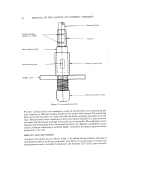
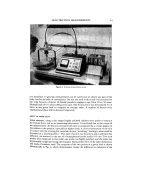
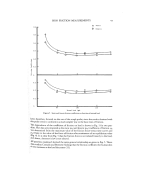
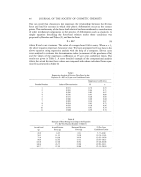
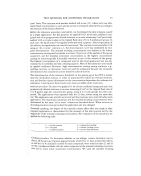
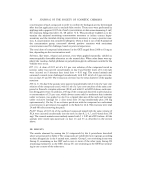
42 JOURNAL OF THE SOCIETY' OF COSMETIC CHEMISTS Rotating Shaft Screws Holding Adapter to Shaft Adapter Main Adapter Body Positioning Knob Sliding Connection Normal Load Stainless Steel Probe Figure 2. Friction probe assembly We have calibrated the scale readings in terms of absolute force by determining the scale response to different weights attached to the probe with a thread. The measuring head was laid horizontally on a table such that the probe assembly protruded over the edge. Measurements were conducted at the lowest speed available (3.6 rpm) and care was taken that the thread winding• • did not pile up on the probe. The calibration curve obtained representing the force versus load was linear. Joy, Machin, and McGaw used a similar technique employing a modified Haake viscometer for measuring skin friction properties in vivo (14). RESULTS AND DISCUSSION A general view of the set-up is shown in Fig. 3. As will be discussed below, the state of skin hydration affects its friction properties, and, hence, it was necessary to conduct the measurements under controlled temperature and humidity (22øC and 55 per cent rela-

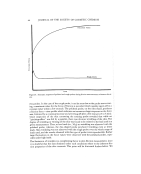
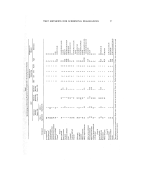
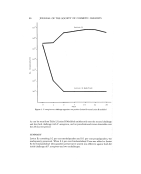
SKIN FRICTION MEASUREMENTS '• • • • .5• • •. '•. -v ,•-:' •- •,•'• ,•,. • ..... '•, ß '.-•'•.•.• • ? ..=,• .. • - • -'• . - . •:: -.,,.r ' :•'"• • a• ..... ' •'• .. ' . :• .... ":' •. •.' • ' :•- • '• .•-- • .... ?•.•-.•:•.'•.•,• ' '2• •:' '•:E ':. ,•, Figure 3. Friction measurement set-up tive humidity). In general, measurements can be carried out on almost any part of the body, but for the sake of convenience, the test site used in this study was restricted to the volar forearm of about 20 female panelists ranging in age from 20 to 50 years. Normal loads of 0 to about 200 g were used. The friction force was determined 3 to 4 times at any given load to compute an average value. A number of factors were examined and these will be discussed separately. EFFECT OF PROBE SHAPE Initial attempts, using a disc-shaped highly polished stainless steel probe to measure the friction force, led to an interesting observation. It was found that in the course of the measurement, the friction increased with time accompanied by a certain degree of discomfort to the panelist, especially at higher loads. A closer examination of the skin in contact with the rotating disc revealed obvious "wrinkling," leading to what could be described as a "pinching-effect." This type of probe was discarded, and to alleviate this difficulty, we resorted to the use of a hemispherical probe (radius 0.6 cm). Two such probes were employed in this work one probe was highly polished, and the other was intentionally roughened using emery paper. Both probes were of the same dimensions and made of stainless steel. The response of the two probes at a given load is shown schematically in Fig. 4, which demonstrates clearly the difference in behavior of the
Purchased for the exclusive use of nofirst nolast (unknown)
From: SCC Media Library & Resource Center (library.scconline.org)