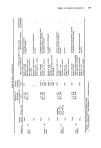
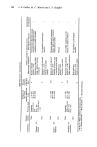
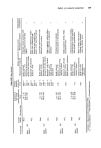
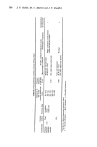
J. Soc. Cosmet. Chem. 28 377-393 (1977)¸ 1977 Society of Cosmetic Chemists of Great Britain Safety evaluation of cosmetic raw materials J.P. GUILLOT*, M. C. MARTINIt' and J. Y. GIAUFFRET+ + Presented at the Xlth European Week of Dermocosmetology on 21 January 1977 at Lyon, France. Synopsis Tests were carried out for safety evaluation using the rabbit on twenty-six cosmetic components. The ocular and cutaneous tolerance was evaluated using official French methods with some additions. The results show that thirteen samples gave adverse reactions after repeated skin exposures eight of them appeared to be significantly more irritant--four isopropyl myristates and four oleyl alcohols each from different sources. Eleven were well tolerated when applied undiluted during 60 days and two gave un- certain results. INTRODUCTION This work represents the first stage of a more ambitious programme, as it is proposed to test several series of products of various chemical compositions which form the basis of the majority of cosmetic formulations. The aim is three-fold: to allow the formulation chemists to know the tolerance to different categories of raw materials to try to under- stand the origin of phenomena observed in tolerance tests of finished products to establish 'skeleton' formulae for each type of product (milks, creams o/w and w/o etc.) composed of tested raw materials that have been qualified as non-irritant and to study in parallel the finished products based on the corresponding skeletons. It is believed these results are significant because, carried out by the same personnel, they permit reliable comparisons. Ocular and cutaneous tolerance to raw materials should be an essential consideration in the formulation of products intended for local use, whether they be cosmetic or pharmaceutical. Paradoxically, it would appear that this is a field which has not been extensively studied (10) (17). Often the formulatot relies on information gathered over the years, information which is often falsified by the presence of other materials in the formula. In other cases, certain products are accepted as favourable without taking into account the fact that impurities can exist. In short, the rare experiments related are often fragmentary and unmethodical: they concern only a small percentage of raw materials and seldom serve to enlighten the users. * Institut Fran9ais de Recherches et Essais Biologiques. Les Oncin 69210--L'Arbresle, France. ? Institut de Pharmacie Industrielle, 8 av. Rockefeller 69008--Lyon, France. :I: R. & D. Lancaster (Beecham Products), 7 av. d'Ostende•Monte-Carlo, Monaco. 377

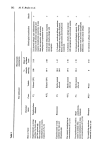
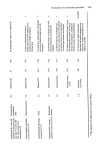
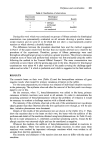
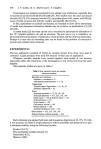
378 J. P. Guillot, M. C. Martini and J. ¾. Giauffret Toxicologists are primarly concerned by the allergic type intolerance, especially that to lanolin (1) (2) (3) (5) (6) (8) (9) (16) (20) (29). Also studied were the cetyl and stearyl alcohols (9) (12) (31), isopropyl alcohol (21), propylene glycol (14), stearic acid (24) (6), waxes (5) (30), propane diol (24) (6), vaseline and paraffin (30) (7) (31). In fact, experiments on animals and humans are intended to show all the phenomena of ocular and cutaneous intolerance whether they be irritation or sensitisation (13) (19) (26) (28). A recent study (25) has been carried out to examine the percutaneous absorption of five x4C- labelled synthetic oils and an emulsion. The aim was to try to establish a re- lationship between the degree of penetration of the product and the observed intolerance. Perhaps it is here that an interesting start can be found to the problem of tolerance to natural and synthetic fatty materials. EXPERIMENTAL The test substances consisted of twenty-six samples chosen from those most used in cosmetics. Liquid products were tried first because of their ease of application. Whenever possible, samples from several suppliers were tested. It was however impossible within the constraints of the investigation to test several lots from the same supplier. The materials studied are given in Table I. Table I. Raw materials tested and sample reference numbers Squalane and substitute squalane = substance n ø/1/ hydrogenated polyisobutene = n ø/2/ Triglycerides Caprylic/capric triglycerides =/3/,/4/,/5/ Synthetic triglyceride =/6/ Esters Isopropyl myristate =/7/,/8/,/9/,/10/ Isopropyl palmitate =/11[,/12/,/13/,/14/ Decyl oleate .=/15/& Isodecyl oleate =/16/ Octyl palmitate =/17/ Octyl stearate =/18/ Ceto-stearyl octoate =/19/ Stearyl heptoate =/20/ Arachidyl propionate ester =/21/ Oleyl alcohol =/22/,/23/,/24/,/25/ Polyoxyethylene sorbitan stearate =/26/ Each substance was applied both pure and in aqueous dispersion at 10-15•o. For this it was necessary to obtain a simple suspension with an emulsifier and preservative to give a minimum stability, using the following formula: Product 10-15•o Polyoxyethylene sorbitan stearate 3•o Preservative 0'2•o Water to 100•o
Purchased for the exclusive use of nofirst nolast (unknown)
From: SCC Media Library & Resource Center (library.scconline.org)